
Lieferung heute & morgen

Qualitätsgarantie

Willkommens-Angebote freischalten: KOSTENLOSE Lieferung | Bis zu 80 % RABATT | Kostenlose 30-Tage-JoyPlus-Testphase
App herunterladen
The concept is compelling: Adjustable inline skates for kids grow with them through several shoe sizes, promising years of fun. In reality, however, many models turn out to be a poor investment that quickly ends up collecting dust in the basement. The reason is often subtle flaws that can ruin the experience and compromise safety.
As your Joybuy Product Recommendation Officer, I'm here to help you avoid the common pitfalls. This guide will show you the three critical features to look for to find a durable, safe, and worthwhile pair of grow-with-me inline skates.
Many well-intentioned purchases fail due to two common problems that often only become apparent after the first few rides.
To avoid these problems, focus your attention on three core technical features. These are what determine safety, durability, and overall enjoyment.
The chassis (also called the frame) is the component that connects the boot to the wheels. There are two common materials:
The quality of the wheels and bearings is crucial for the skating experience.
A secure fit is paramount. Size-adjustable inline skates should conform well to the foot not just in length, but also in width. A three-part system offers the best security:
For beginners, a hard-shell boot (Hardboot) can be particularly beneficial as it offers maximum stability, whereas a Softboot often provides more comfort and better ventilation.
Based on these criteria, we've curated a selection of products suitable for various needs and budgets.
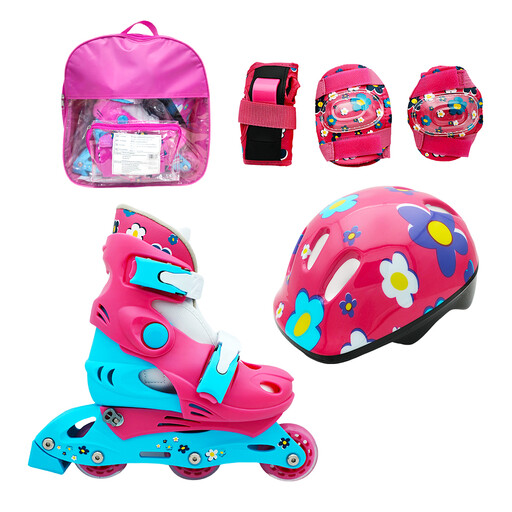
Why This Fits Their Persona: Ideal for parents looking for a cost-effective, all-in-one solution. This kids' inline skate set includes not only the adjustable skates but also a helmet and a complete set of skates with pads. It's perfect as a gift and for those first attempts, eliminating the need to buy accessories separately.
Although it uses PVC wheels, the focus here is on the complete package. It solves the problem of skimping on essential protective gear. The hard-shell boot also provides solid support, which compensates for the wheel's drawbacks for absolute beginners.
Comprehensive safety package (helmet, knee, elbow, and wrist guards) included. Four-size push-button adjustment for long-term use.
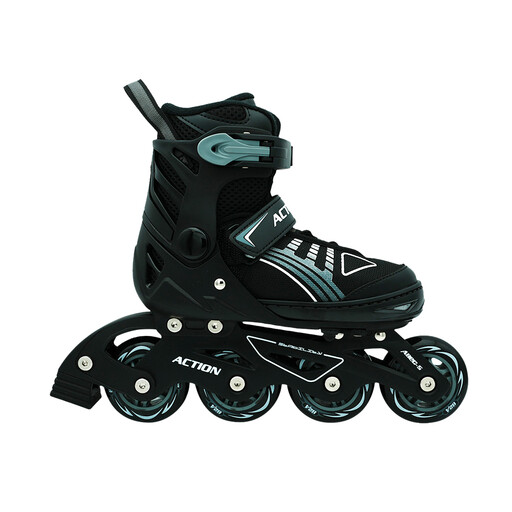
Why This Fits Their Persona: For parents who value high-quality components and an optimal ride experience. This model is an investment in long-lasting fun and is suitable for both boys and girls who love to be active.
This model avoids both main pitfalls: It features a sturdy aluminium chassis for stability and high-quality 82A PU wheels with ABEC-5 bearings for a smooth, quiet ride. The soft boot with a reinforced toe cap offers both comfort and durability.
Excellent rolling performance thanks to PU wheels and ABEC-5 bearings. A stable aluminium chassis ensures good power transfer and durability.
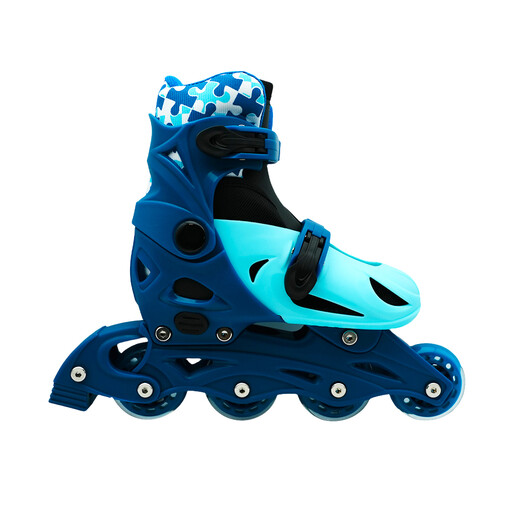
Why This Fits Their Persona: Perfect for parents of beginners whose top priority is safety and secure ankle support. The hard-shell boot offers maximum lateral support and effectively protects the foot.
The high-impact durable skate shell effectively counteracts the problem of poor support. It firmly encases the foot and ankle, preventing lateral roll. Plus, this model already comes equipped with the better PU wheels.
High stability and protection from the hard-shell design. Good rolling performance thanks to 82A PU wheels and ABEC-5 bearings.
We have compiled a complete, up-to-date list of products that fully meet these strict selection criteria and safety standards.
First, loosen all buckles and straps. Find the adjustment button, usually located on the side or heel of the skate. Press the button while pulling the toe cap forward to change the size. Most models have markings (e.g., A-B-C-D or S-M-L-XL) corresponding to the different sizes. Ensure the mechanism clicks back into place after adjustment. The boot should fit snugly without pinching, and the toes should be able to lightly touch the front.
The main difference is the wheel arrangement. Inline skates have four or more wheels in a single line (inline), allowing for higher speeds and greater manoeuvrability. Kids' roller skates have four wheels in a 2x2 "quad" arrangement, which provides a wider base and more stability at low speeds. For absolute beginners, roller skates can make it easier to get started, while inline skates are often seen as more athletic and are better for developing balance.
A universal age recommendation is difficult, as it depends heavily on the child's motor skill development. As a general rule, children can start inline skating from around 4 to 5 years old, provided they already have a good sense of balance. More important than age is that the skate's smallest adjustable size fits correctly and the child is motivated. A complete set of protective gear and adult supervision are always essential.