
Lieferung heute & morgen

Qualitätsgarantie

Willkommens-Angebote freischalten: KOSTENLOSE Lieferung | Bis zu 80 % RABATT | Kostenlose 30-Tage-JoyPlus-Testphase
App herunterladen
Choosing the right bed for a child's room is a decision that goes far beyond mere aesthetics. It's about safety, functionality, and promoting healthy sleep. However, the market is filled with tempting offers that, upon closer inspection, can prove to be impractical or even unsafe. This guide will help you identify common pitfalls and make an informed choice.
As a Joybuy Product Recommendation Officer, I see it as my duty to provide you with objective information so you can make a decision that meets your child's needs in the long term.
Many parents invest in a child's bed only to find out after a few months that it doesn't stand up to the demands of daily life. Pay special attention to these three weak points:
To avoid the mistakes mentioned above, you should focus on three essential criteria. These form the foundation for a durable, safe, and comfortable child's bed.
The longevity of a child's bed depends directly on the material used. While furniture made of MDF (Medium-Density Fibreboard) is often more affordable, a solid wood bed for kids offers significantly greater stability and resilience. Solid wood, especially pine or beech, withstands rough-and-tumble play better and remains stable for years. Look for solid corner posts and clean workmanship on the joints. This is particularly important for loft beds or beds with integrated features.
A child's bed with a guardrail is essential for toddlers and for mid-sleeper or loft beds. The guardrail should be continuous and have a height that prevents the child from rolling out during sleep. The DIN EN 747 standard provides guidelines for this, for instance, on the height of the fall protection. Equally important are rounded edges and corners on the entire bed frame to minimise injuries during play.
The mattress is just as important as the bed frame itself. For babies and toddlers, a breathable baby cot mattress with a firm yet point-elastic core is crucial to create a safe sleeping environment and reduce the risk of CO? rebreathing.
For older children and teenagers, proper spinal support becomes increasingly important. A kids' mattress 90x200 should be chosen according to body weight. Models like a 7-zone mattress or an orthopaedic mattress can promote an ergonomically correct sleeping position by yielding at the shoulders and hips while supporting the lumbar spine. Look for removable and washable covers to ensure hygiene.
Based on the criteria above, we have identified some products that represent a considered choice for specific needs and age groups.

Why This Fits Their Persona: Ideal for the transition from a cot to the first "big" bed. The focus is clearly on safety and durability, which reassures parents of active toddlers.
The construction from solid pine wood counters the pitfall of unstable beds. The continuous guardrail with a narrow entrance directly addresses the safety risk.
Sturdy solid wood construction; 44 cm high storage space under the bed; low ladder for independent access.

Why This Fits Their Persona: Perfect for smaller kids' or teen rooms where every square metre counts. It combines a sleeping area, workspace, and storage in one piece of furniture.
Despite its multifunctionality, this bed is made of solid wood and MDF, which promises greater stability than pure particleboard constructions. The rounded edges and corner protectors address safety concerns.
Integrated teen bed with a desk; two large drawers and additional storage space; raised sides for mattress security.
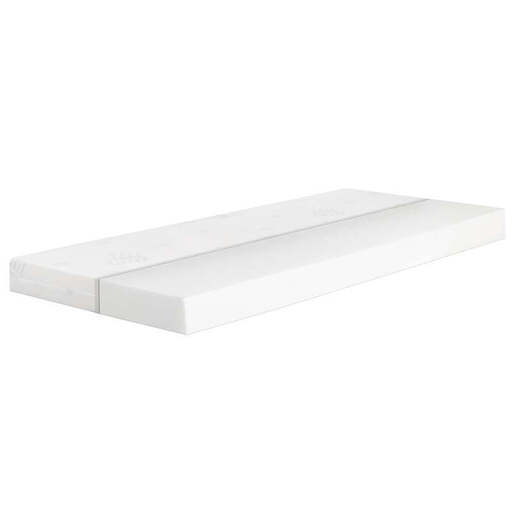
Why This Fits Their Persona: For parents who don't want to compromise on the baby cot mattress. The focus is on breathability and a safe sleeping climate for the little ones.
This mattress counters the danger of a wrong mattress choice with its perforated foam core and breathable cover. According to the manufacturer roba, the principle was developed to reduce CO? rebreathing.
Point-elastic, perforated core for air circulation; removable and washable cover; suitable for allergy sufferers.
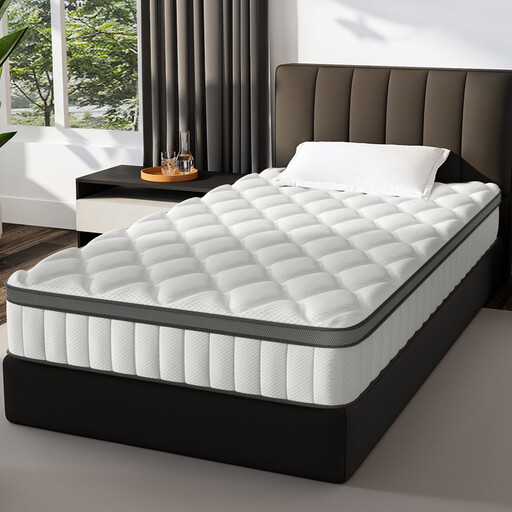
Why This Fits Their Persona: For growing teenagers whose bodies need targeted support. This orthopaedic mattress offers an ergonomic solution for restful sleep.
Instead of a simple foam mattress, this model offers a 7-zone structure with a pocket spring core. This ensures differentiated pressure relief and support, which counteracts the pitfall of an inadequately supportive mattress.
Ergonomic 7-zone design for targeted body contouring; durable pocket spring core; breathable materials for a hygienic sleep climate.
We have compiled a complete, up-to-date list of products that fully meet these strict selection criteria and German safety regulations.
1. How high should a guardrail on a child's bed be? For loft and bunk beds, the DIN EN 747 standard requires a minimum height of 16 cm above the mattress surface. Even for lower beds for toddlers, the protection should be high enough to reliably prevent rolling out during sleep. A height of 20-30 cm is a good guideline here.
2. From what age is a teen bed with a desk practical? Such a combination piece of furniture is generally useful from primary school age, when children begin to do homework regularly and need their own workspace. It is important that the height of the desk and chair matches the child's height to enable an ergonomic sitting posture.
3. How often should you replace a child's mattress? The lifespan of a child's mattress depends on its quality and use. Generally, it is recommended to replace a mattress every 5 to 7 years. If there are visible sags, a loss of support, or for hygiene reasons, it should be replaced sooner. A removable, washable cover can extend its lifespan.