
Lieferung heute & morgen

Qualitätsgarantie

Willkommens-Angebote freischalten: KOSTENLOSE Lieferung | Bis zu 80 % RABATT | Kostenlose 30-Tage-JoyPlus-Testphase
App herunterladen
Choosing the right kids' bike can be a challenge. The market is filled with models that vary widely in size, features, and design. As a Joybuy Product Recommendation Officer, I'm here to help you understand the key criteria and avoid common purchasing pitfalls, so you can make an informed decision for your child.
Many well-intentioned purchases quickly prove to be impractical or even unsafe. Be sure to avoid these three common mistakes:
To avoid a bad purchase, you should focus on objective, measurable criteria. These three aspects are fundamental to your child's safety and enjoyment.
Tire size, measured in inches, is the most common indicator of bike size. Common sizes are 12-inch bikes for the little ones, 16-inch bikes for kindergarteners, and 24-inch bikes for school-aged children and teens.
However, the most crucial measurement is the child's inseam length. Measure this from the floor to the crotch while the child is standing. With their legs slightly apart, the child should be able to securely touch the ground with both feet while sitting on the saddle at its lowest position. This provides the necessary confidence for stopping and mounting.
For beginners, a coaster brake is often the most intuitive choice, as it's activated by pedalling backwards—a natural counter-movement. Many entry-level models combine this with an additional hand brake (V-brake) for the front wheel to slowly acclimate the child to using hand brakes.
For older children who are already confident riders, two hand brakes (often V-brakes or mechanical disc brakes) are the standard. They offer greater stopping power and are essential for a youth bike or kids' mountain bike.
A child's development is reflected in the type of bike they use:
Here are some models tailored to specific needs and developmental stages.
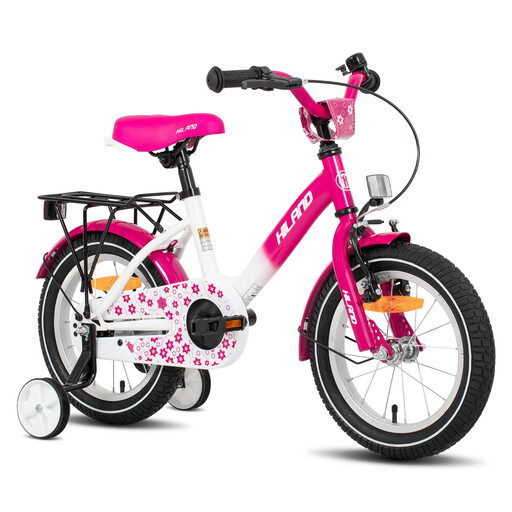
Why This Fits Their Persona: Ideal for toddlers transitioning from a balance bike to their first real bicycle. The design focuses on easy handling and maximum safety for their first attempts at pedalling.
This model avoids the trap of being overwhelming. It combines an intuitive coaster brake with a front-wheel hand brake and has no gears. The low step-through frame and included training wheels simplify the learning process.
The Hi-Ten steel frame is robust, while the total weight of approx. 9 kg remains manageable for this size. A full chain guard prevents contact with the chain.

Why This Fits Their Persona: For children who are already riding confidently without training wheels or are about to. This bike provides the necessary stability for longer trips to the playground or through the park.
It avoids the mistake of choosing a bike that is too heavy. At approx. 11.5 kg, it is easy for children in this age group to handle. Instead of training wheels, a kickstand is included, which encourages the transition to independent riding.
The dual braking system (V-brake and coaster) is retained, continuing to offer a high level of safety. The wide 1.95-inch tires ensure good stability on various surfaces.
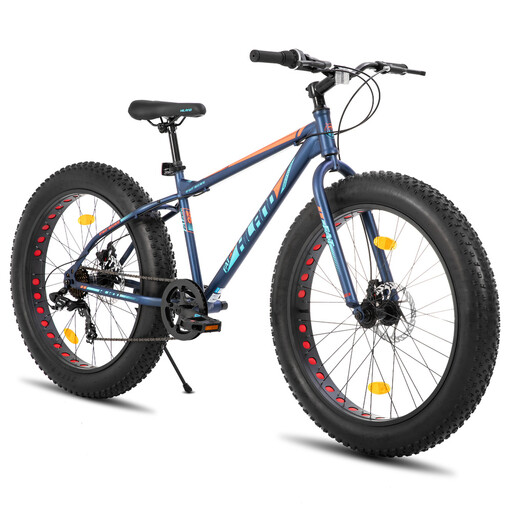
Why This Fits Their Persona: Perfect for older kids and teens who want to do more than just ride to school. This fat bike is designed for adventures on forest trails, gravel paths, or even at the beach.
This bike introduces complexity in a meaningful way. The Shimano 7-speed drivetrain is appropriate for this age group and allows them to tackle hills. The dual mechanical disc brakes provide the necessary stopping power for higher speeds and uneven terrain.
The wide 4.0-inch tires provide excellent traction and natural suspension. The robust Hi-Ten steel frame is designed for durability and off-road use.
We've compiled a complete, up-to-date list of products that fully meet these strict selection criteria and safety standards.
1. How do I determine the right bike size for my child? Measure your child's inseam length (from the floor to the crotch). While sitting on the saddle at its lowest setting, the child should be able to touch the ground with the balls of both feet. This method is more accurate than relying on age or tire size alone.
2. Are training wheels useful, or should my child start directly with a balance bike? A balance bike is an excellent way to train a sense of balance. Many children who have used a balance bike do not need training wheels later. However, training wheels can provide security for children who have skipped this step. They teach how to pedal, but not how to balance.
3. When is a child ready for a bike with gears? A child is ready for a gear system once they have safely mastered the basics of cycling (starting, steering, braking, balancing). This is usually around the age of 7 to 8. A simple shifter with a twist grip, as found on many kids' mountain bike models, is well-suited for getting started.