
Lieferung heute & morgen

Qualitätsgarantie

Willkommens-Angebote freischalten: KOSTENLOSE Lieferung | Bis zu 80 % RABATT | Kostenlose 30-Tage-JoyPlus-Testphase
App herunterladen
Choosing a child's first proper bicycle is a major decision. For most parents and grandparents, safety, the right size, and ease of handling are the top priorities. The market offers a vast array of models, which can make finding your way difficult.
This guide serves as an objective resource. It highlights the crucial criteria for selecting a kids' bike and presents a few models to provide you with a solid basis for making an informed decision.
Before you make a decision, several fundamental features should be considered. These factors are key contributors to the child's safety and enjoyment.
The correct bike size is crucial for the child's control and safety. The size of kids' bikes is usually given in inches, referring to the diameter of the wheels. However, more important than age are the child's height and, specifically, their inseam measurement.
A lightweight kids' bike is easier for a child to handle, accelerate, and control. A low weight makes a noticeable difference, especially when starting off, on slight inclines, or when the bike needs to be lifted.
An aluminium kids' bike is often a great choice here. Aluminium frames are significantly lighter than classic steel frames without sacrificing stability. A low overall bike weight relative to the child's body weight improves balance and riding safety.
The brakes are the most important safety feature. For kids' bikes, there are two main systems:
A fully enclosed chain guard prevents clothing from getting caught in the chain and protects against dirt and injuries.
Here is a selection of models that cater to different needs and age groups. The descriptions are based on the objective features of the products.
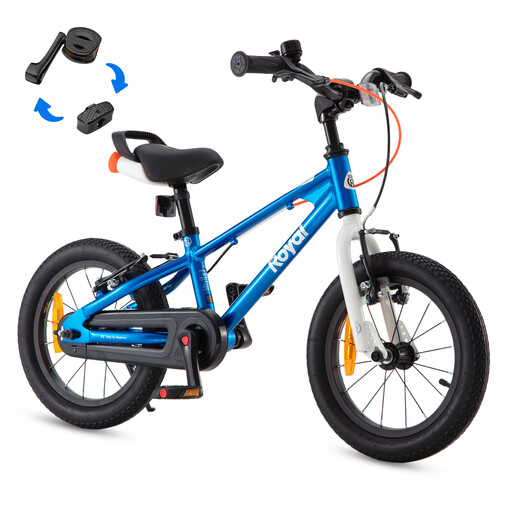
Why It Stands Out: This model is distinguished by its 2-in-1 design. According to the manufacturer, a patented quick-release system allows for a tool-free switch between balance bike and pedal mode. This can ease the transition to independent riding.
Advantages:
Who It's For: This model is an option for a bike for children aged 4 and up (manufacturer's recommended age range: 4–7 years), especially for those learning to ride without training wheels for the first time.
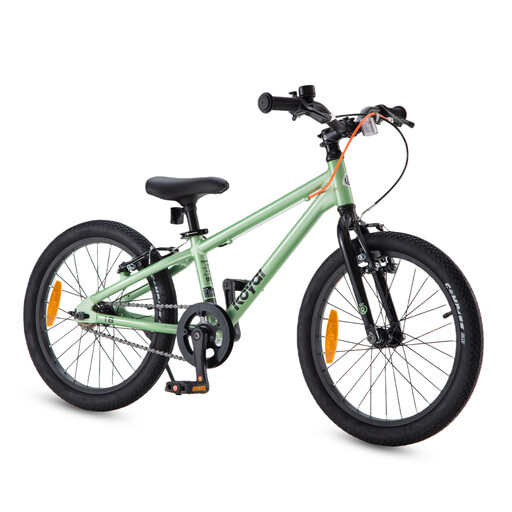
Why It Stands Out: The Freestyle PRO focuses on an extremely low weight. According to the manufacturer, the aerospace-grade aluminium alloy frame weighs just 0.9 kg, resulting in a total weight of only 6.9 kg.
Advantages:
Who It's For: This lightweight kids' bike is designed for confident riders aged 5 and up (manufacturer's recommended age range: 5–9 years) who are looking for an agile and responsive bike for daily use.
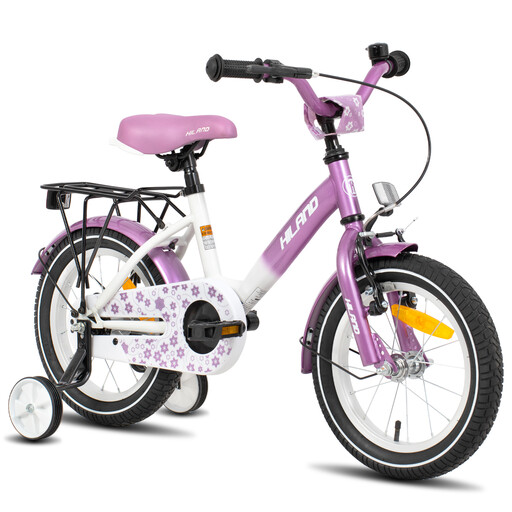
Why It Stands Out: This model combines a robust steel frame with a dual braking system, consisting of a V-brake at the front and a classic coaster brake at the rear. It comes as a complete package with training wheels.
Advantages:
Who It's For: Suitable for beginners aged 4 to 7 who want to start with a classic kids' bike with training wheels. The weight of 11.5 kg is due to the durable Hi-Ten steel frame.
The models presented here cover common requirements. However, if you are looking for a different size, a specific design for a boy's bike or girl's bike, or other features, there are further alternatives available.
Explore our full range of kids' bikes to compare more models and brands.
1. What size bike does my child need? The most important measurement is your child's inside leg length (inseam). While seated, the child should be able to securely reach the ground with the balls of both feet. As a rough guide:
2. When is a kids' bike without training wheels a good idea? This is highly individual. Many children who already have experience with a balance bike often make the transition to riding a pedal bike without training wheels more quickly, as their sense of balance is already developed. If a child starts on a bike with training wheels, the right time to remove them is when they can pedal, steer, and brake confidently and feel ready to balance on their own.
3. What is more important: a lightweight kids' bike or gears? For beginners and young children, a lightweight kids' bike without gears is usually the better choice. A gear system can be overwhelming at first and distract from essentials like steering, pedalling, and braking. A low weight makes the bike easier to handle and increases the fun of riding. Gears become relevant on larger kids' bikes (from about 20 inches upwards) when longer distances or hills need to be tackled.