
Lieferung heute & morgen

Qualitätsgarantie

Willkommens-Angebote freischalten: KOSTENLOSE Lieferung | Bis zu 80 % RABATT | Kostenlose 30-Tage-JoyPlus-Testphase
App herunterladen
The right children's bookshelf is more than just a piece of furniture. It's a cornerstone for developing a sense of order and a love for reading. However, the market can be overwhelming, and not every attractively designed shelf meets the necessary standards for safety and functionality. Before you make a decision, it's crucial to understand the most common pitfalls, which often only become apparent after the purchase.
Many shelves seem practical at first glance but prove to be a poor choice in daily use. Pay close attention to these three points to avoid disappointment:
To find the right storage for a child's room, focus on objective, verifiable features. These three parameters are crucial for safe and long-lasting use.
Your child's safety is the top priority. An essential feature is the anti-tip kit. This is a device (usually a bracket or a strap) used to securely anchor the shelf to the wall. It prevents the furniture from tipping over if a child attempts to climb on it. Ensure that such a mechanism is included with your purchase. Equally important are meticulously rounded corners and edges to minimise injuries from bumps and falls.
Many pieces of children's furniture are made from MDF (Medium-Density Fibreboard) or particleboard (PB). For these materials, the emissions class is critical. The E1 standard is a European norm that ensures the material's formaldehyde emissions are below a specified limit, making it a safe choice for indoor environments. Look for this certification in the product details. Alternatively, shelves made from solid wood, such as pine, are known for their durability.
A good children's shelf promotes independence. This is where the concept of a Montessori shelf comes into play. These shelves are typically low to the ground and designed so that children can reach books and toys without adult help. Books are often displayed with the cover facing forward, which visually appeals to children and encourages them to read. A child-friendly height (typically between 60 cm and 110 cm) is a key feature for functional book storage and toy storage.
Instead of an overwhelming list, here are three recommendations tailored to specific needs and living spaces.
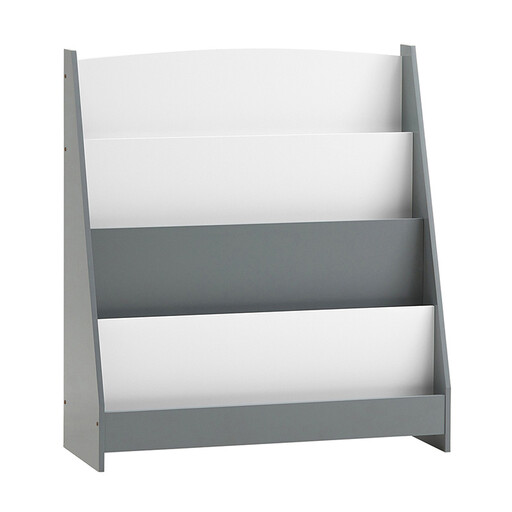
Why This Fits Their Persona: Ideal for parents who want to foster their child's independence according to Montessori principles. The front-facing book display sparks curiosity, and the low height allows for easy access.
The 88 cm height is explicitly designed for children, bypassing the trap of impractical, overly high shelves. Rounded corners and an included anti-tip kit directly address safety concerns.
Actively promotes an interest in reading through its front-facing book display. Made from E1-grade MDF, which meets safety standards.
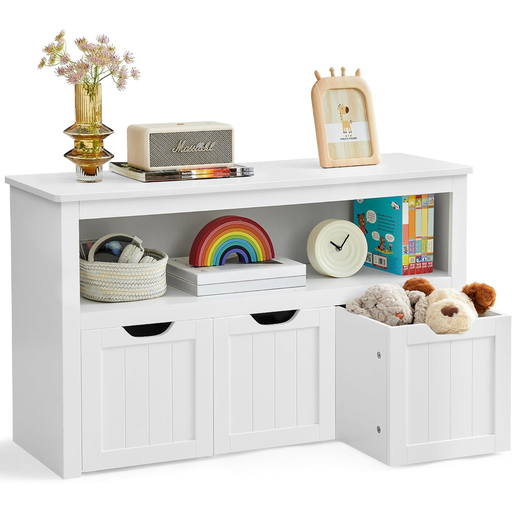
Why This Fits Their Persona: Perfect for parents looking for an all-in-one solution for books and toys. The combination of open shelves and removable bins creates order for items of various sizes.
This shelf with bins solves the problem of impractical compartments by offering flexible storage for bulky toys. The very low height of 60 cm is ideal for toddlers, and the rounded cut-outs minimise the risk of injury.
It combines a toy shelf with book storage. The three removable bins on casters make tidying up easy and mobile for children.
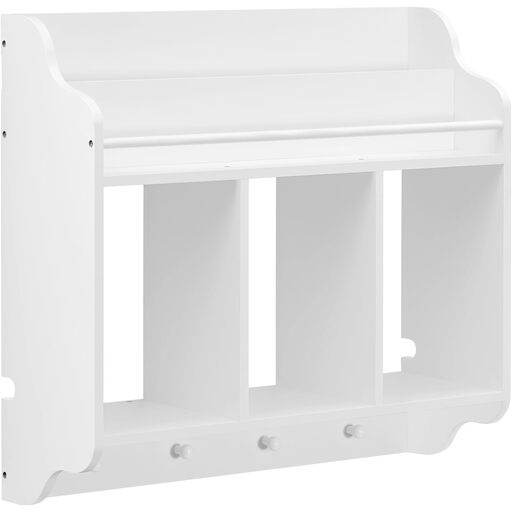
Why This Fits Their Persona: The solution for smaller children's rooms where every square foot counts. As a wall shelf, it creates storage without taking up valuable floor space and can be flexibly mounted at the perfect height.
When mounted correctly to the wall, the risk of tipping is completely eliminated. The rounded corners and the rail on the top shelf, which prevents items from falling, provide additional safety.
Maximum space-saving through wall mounting. The four hooks offer extra space for bags or jackets, making the shelf a multi-functional organisational piece.
We have compiled a complete, up-to-date list of products that fully meet these strict selection criteria and rigorous safety standards.
Every freestanding shelf should be secured to the wall using the included anti-tip kit. Make sure to use wall anchors and screws appropriate for your wall type (e.g., special anchors for drywall or solid brick walls). Install the anti-tip hardware according to the manufacturer's instructions, usually at the top of the shelf, to maximise leverage and effectively prevent it from tipping over.
A Montessori shelf is beneficial for toddlers as soon as they start to crawl or stand independently. The low-profile design and front-facing book display are designed to engage even the youngest children, allowing them to explore their environment and learn to tidy up on their own.
MDF (with an E1 standard rating) is a cost-effective and dimensionally stable engineered wood. Its surface is usually smooth and coated, making it easy to clean and available in many colours. Solid wood, such as pine, is a natural material valued for its durability and warm aesthetic, but it often comes at a higher price point. Both materials are good options as long as they meet safety standards and are sturdily constructed.