
Lieferung heute & morgen

Qualitätsgarantie

Willkommens-Angebote freischalten: KOSTENLOSE Lieferung | Bis zu 80 % RABATT | Kostenlose 30-Tage-JoyPlus-Testphase
App herunterladen
By Joybuy Product Recommendation Officer, August 29, 2026
The selection of building blocks for children is vast, ranging from classic wooden blocks to complex construction sets. However, behind colourful packaging and marketing promises, there are often pitfalls that lead to disappointment and unnecessary expense. Instead of relying on vague advertising claims, it's more effective to focus on verifiable facts. This guide will show you what to look for to make an informed decision.
Many products are promoted with convincing arguments, but not all of them stand up to closer scrutiny. Here are three common problems you should be aware of:
To avoid these pitfalls, focus on three objective core parameters. These will help you assess the quality and long-term play value of a product.
The most important foundation for any children's toy is safety. Look for labelling in accordance with the European standard EN 71. This standard regulates, among other things:
Common materials have different properties:
The suitability of building blocks depends heavily on the child's developmental stage.
A good building block system grows with the child. Before buying, check whether the set is compatible with other products from the same brand or even with those from other manufacturers. This is especially true for magnetic blocks and interlocking blocks, where standard dimensions significantly expand creative possibilities. An open system secures the investment long-term and ensures lasting fun.
Based on the criteria mentioned, we have compiled a selection of products suitable for different profiles and age groups.

Why This Fits Their Persona: This set is designed for the youngest children who discover their environment through movement. The large, soft foam elements and the integrated ball pit (balls sold separately) create a safe play environment that encourages climbing, crawling, and building, thereby promoting gross motor skills.
The set avoids the material trap by using certified, high-density foam and, according to the manufacturer, meets safety standards EN 71-1, -2, and -3. It is clearly aimed at a specific age group and purpose (motor skills development).
The covers are removable and machine-washable, which simplifies hygiene. Non-slip bottoms and Velcro connectors ensure stability during play.
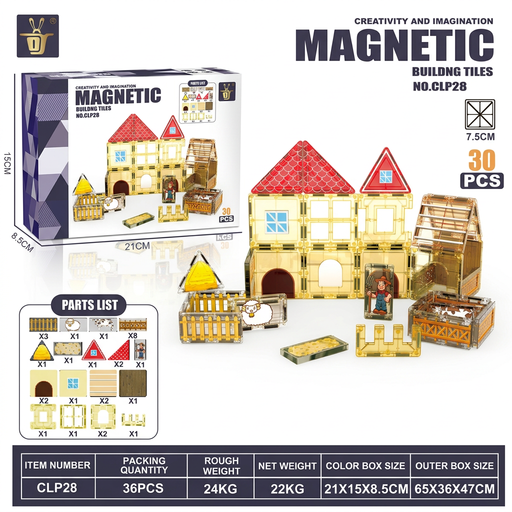
Why This Fits Their Persona: For children who are beginning to turn their imagination into structures, magnetic blocks are ideal. This forest-themed set not only encourages building but also storytelling. It promotes spatial awareness and an understanding of geometric shapes.
This set avoids the compatibility trap as it is, according to the manufacturer, compatible with other 7.5 cm magnetic block systems. Safety is ensured through the use of non-toxic ABS plastic and securely welded magnets (CPC/ASTM certified).
The magnets are strong enough for stable constructions. The set comes with a practical storage bag, which makes cleanup easier.
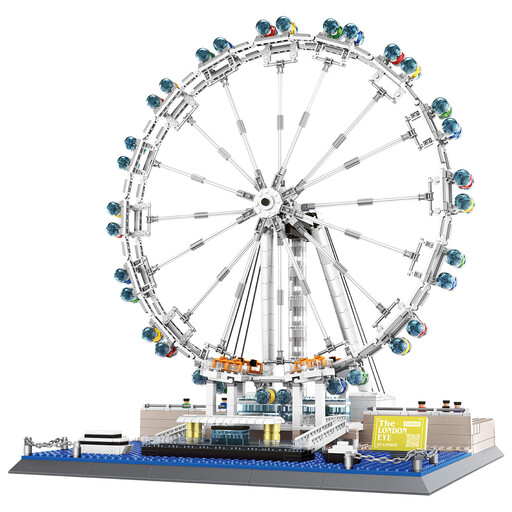
Why This Fits Their Persona: This set is aimed at older children, teenagers, and families looking for a shared challenge. Recreating a famous landmark is a goal-oriented project that trains concentration, patience, and fine motor skills. The finished model also has decorative value.
This set avoids the trap of vague "educational value" by offering a clear, tangible benefit: the development of concentration and spatial reasoning through a complex construction project. The material, according to the manufacturer, is high-strength ABS plastic.
The model is a detailed replica with a functional rotating mechanism. It serves as a collector's or decorative piece after assembly.
We've compiled a complete, up-to-date list of products that fully meet these strict selection criteria and European safety regulations.
1. At what age are building blocks useful? Simple, large building blocks are suitable for children from around 12 to 18 months to train basic motor skills. More complex systems like magnetic blocks become interesting from age 3. Detailed interlocking block sets with small parts are aimed at children aged 6 to 8 and older, as indicated on the packaging.
2. How can I identify safe building blocks for my child? Look for the CE mark, which confirms that the product meets EU requirements. Even more informative is the explicit mention of the EN 71 standard. For plastic products, a "BPA-free" label is a good sign. For wooden toys, the paints should be declared "saliva-resistant."
3. How do you properly clean different types of building blocks?