
Lieferung heute & morgen

Qualitätsgarantie

Willkommens-Angebote freischalten: KOSTENLOSE Lieferung | Bis zu 80 % RABATT | Kostenlose 30-Tage-JoyPlus-Testphase
App herunterladen
Kids’ clogs are a practical choice for many families: they’re quick to slip on, easy to clean, and depending on the model, suitable for the garden, leisure time, the beach, or the walk to the playground. However, not every clog suits every foot or every use. Buying purely on colour or brand name means you can easily overlook important details about fit, support, and care.
This guide highlights what parents should look for when buying, and which models from Crocs and PUMA may suit different needs.
A shoe bought a size larger may fit for longer in the short term, but it mustn’t be so loose that the heel slips out when walking. Particularly with clogs that have an open heel, an adjustable heel strap is important. It can improve hold, but it doesn’t replace a correct base size.
The foot length should be measured from the furthest point of the heel to the longest toe. After that, the size chart for the specific model is what matters. Crocs uses US children’s sizes such as C1 to J6, while PUMA lists sizes in the product description with foot lengths in centimetres.
Ventilation holes can aid air circulation and, on certain models, help water drain away. However, they don’t automatically make a clog a closed water shoe. For longer play in water or in heavy rain, you should check whether the specific model is designed for that purpose.
Manufacturer claims such as “anti-slip” or “non-slip tread” refer to the design of the outsole. The actual grip also depends on wetness, dirt, the surface, and wear. For stairs, smooth tiles, or active play, it’s especially important to ensure a secure fit and a suitable sole pattern.
Many Crocs models are made from Croslite or EVA, according to the product description. The material is described as lightweight, flexible, and easy to care for. For children who want to put on and take off their own shoes, a low weight can be practical. The PUMA Epic Flip V2 Power Sandals combine textile straps with an EVA outsole and a CMEVA midsole, according to the manufacturer.
However, material details are no substitute for checking the fit. A lightweight shoe can still be unsuitable if it presses on the instep or is too wide on the sides.
A rotating strap on kids’ clogs can switch between a looser slip-on and a more secure fit. For active children, the strap should be adjusted so the heel doesn’t slip out of the shoe with every step. At the same time, it mustn’t dig in.
With slip-on sandals such as certain PUMA sandals for children, it’s particularly important to check the length of the straps and the position of the foot on the footbed.
According to the product details, Crocs clogs are mostly cleaned with water and soap or a damp cloth. They should then be left to air dry away from direct heat. Some models should not be machine washed, bleached, or ironed, according to the instructions.
White kids’ clogs look versatile but show dirt more quickly. Black kids’ clogs, navy kids’ clogs, or blue kids’ clogs are often less prone to visible signs of wear in everyday use. So the colour choice shouldn’t just be based on the outfit, but also on the intended use.
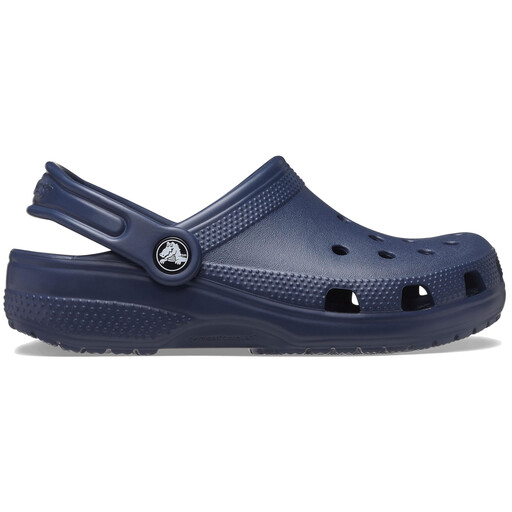
Why this product suits the profile: The classic design offers ventilation holes, a rotating heel strap, and a size range from EU 17–18 to 38–39, as stated in the product details.
The size chart and adjustable strap help you avoid buying solely based on the child’s age.
Lightweight EVA material according to the product details, ventilation holes, and cleaning with a damp cloth.
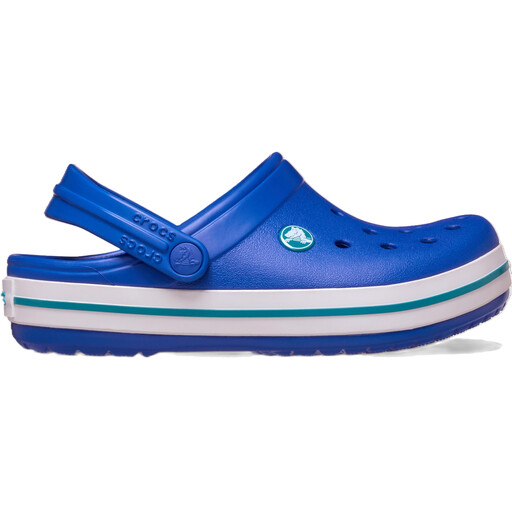
Why this product suits the profile: The Crocband version combines Croslite material with a sporty stripe, contoured insole, and rotating strap.
The fit should be chosen based on the measured heel-to-toe length, not the eye-catching design.
Lightweight, flexible material according to the product description; compatible with Jibbitz charms and cleanable with water and soap.
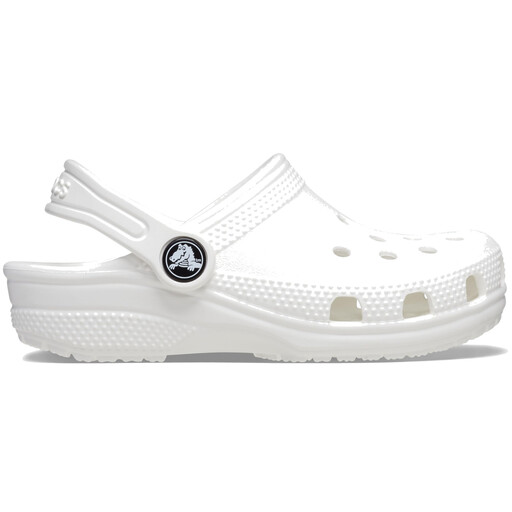
Why this product suits the profile: The white version is interesting for families who want a neutral shoe for different outfits and can clean off marks straight away.
The stated cleaning method with a damp cloth supports easy care, but doesn’t replace regular cleaning after play.
Ventilation holes, rotating strap, and a non-marking, slip-resistant sole according to the product description.
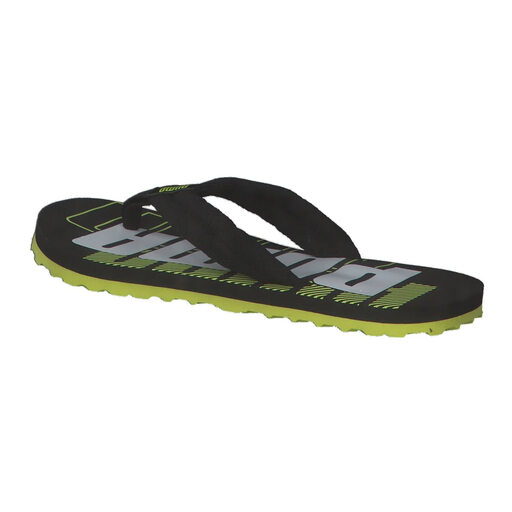
Why this product suits the profile: The PUMA sandal is described as a lightweight slip-on with a woven strap, contoured EVA footbed, and sizes for selected children’s foot lengths.
The specific foot length chart helps you choose the sandal based on more than just the EU label. For half sizes, the larger size is recommended according to the details.
Textile straps, EVA footbed, and an outsole with a described anti-slip tread; care with a damp cloth.
Kids’ clogs largely cover the forefoot and can be secured with a strap. That makes them practical for the garden, leisure time, and short trips. On very warm days, the ventilation holes can be helpful.
More open kids’ sandals, such as the PUMA Epic Flip V2 Power Sandals, let more air reach the foot. However, they offer less protection over the toe area. For younger children and uneven paths, the fit should be checked particularly carefully. For both types of footwear, the sole must be clean, undamaged, and suitable for the intended surface.
We’ve put together a full, regularly updated list of products that fully meet these strict selection criteria and the safety regulations in force in the EU.
Measure the foot length from the heel to the longest toe and compare the result with the size chart for the specific model. For Crocs Classic Clog Kids and Crocs Crocband Clog Kids, US, UK, and EU sizes are given. If the measurement falls between two sizes, the product details often suggest the next size up as a guide.
The lifespan depends on how often they’re worn, the surface, the child’s weight, care, and storage. Visible cracks, a heavily worn outsole, or a damaged strap indicate it’s time for a replacement. Clogs shouldn’t be exposed to direct heat for long periods, as this can deform the material.
That depends on the school rules and the intended use. For short walks or outdoor areas, clogs can be practical. For longer distances, sports, or areas with specific requirements for closed shoes, you should check the school’s guidelines and choose a suitable shoe model accordingly.