
Lieferung heute & morgen

Qualitätsgarantie

Willkommens-Angebote freischalten: KOSTENLOSE Lieferung | Bis zu 80 % RABATT | Kostenlose 30-Tage-JoyPlus-Testphase
App herunterladen
A kids' doctor kit is more than just a toy. It offers children a way to explore the adult world through role-playing, develop empathy, and even alleviate fears about visiting the doctor. However, with a vast selection of models available, choosing the right set can be challenging.
This article serves as your guide. We will present a curated selection of doctor kits and provide you with objective criteria to assist in your choice. Our goal is to offer an informed basis for your decision, helping you find the perfect doctor playset to suit a child's needs.
Before making a decision, a few objective criteria can help you compare the different models.
A good doctor kit with accessories should include the basic instruments children recognise from a real clinic. This typically includes a stethoscope, a syringe, and a thermometer. More advanced sets may also offer tools like an otoscope (for ears), a reflex hammer, or plasters. Check the contents to ensure they align with the child's play style and allow for varied role-play as a doctor.
Safety is the most important criterion for any children's toy. Look for the CE marking, which confirms the product meets EU safety standards. The materials used should be durable and free from harmful substances. Most models are designed for children aged three and up (doctor kit for ages 3+), as they may contain small parts that pose a choking hazard to younger children. Rounded edges and sturdy construction of both the case and the instruments are also hallmarks of a high-quality product.
The design of the case and its instruments should be child-friendly. Ergonomically shaped handles that fit comfortably in small hands make play easier. Some models, like the Theo Klein doctor kit, are known for their realistic yet child-appropriate design. Features such as a transparent lid can help promote tidiness, while electronic elements like sound effects on a toy mobile phone can further enhance the play value.
Here is a selection of models suited for different play needs, based on their features and equipment.
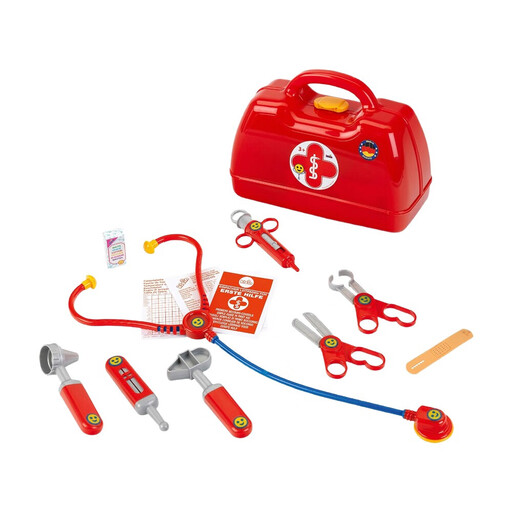
What Makes It Stand Out: This set is a classic toy doctor kit that offers comprehensive equipment for realistic check-ups. The sturdy case features a practical carrying handle and includes an otoscope and a reflex hammer in addition to the standard instruments.
Benefits:
Who It's For: For children looking for a comprehensive and classic set to begin their doctor role-playing adventures.

What Makes It Stand Out: This model enhances the classic doctor playset with an interactive element: a mobile phone with sound effects. It combines traditional role-play with modern technology, offering additional incentives to play.
Benefits:
Who It's For: For children who enjoy interactive toys and like to incorporate electronic functions into their role-play.

What Makes It Stand Out: This doctor's kit for kids stands out with its transparent lid, which provides a quick overview of the contents. It's a practical and well-organised option for young, aspiring medics.
Benefits:
Who It's For: For children who value organisation and like to keep their toys in sight. Ideal as a lightweight and handy starter set.
Haven't found the right case for your needs yet, or are you looking for other types of toy cases? In our Kids' Luggage category, you'll find more models and alternatives to suit different interests and age groups.
Discover our entire selection of Kids' Luggage here
Most manufacturers recommend a doctor kit for ages 3 and up. This is due to small parts, such as syringe caps or pill boxes, which could pose a choking hazard for younger children. For children aged three and over, this doctor playset is ideal for developing motor skills and social competencies through role-play.
Through role-playing as a doctor, children can familiarise themselves with the procedures and instruments of a medical visit in a safe, controlled environment. They take on the active role of the practitioner, examining dolls or family members, thereby demystifying a situation that is often perceived as frightening. This has been shown to help reduce anxiety and build trust.
A well-equipped toy doctor kit typically contains a stethoscope, a syringe, and a thermometer. These three instruments alone allow for versatile play. Sets with extended accessories, such as a reflex hammer, an otoscope, tweezers, or plasters, offer additional play opportunities and encourage an even more realistic experience.