
Lieferung heute & morgen

Qualitätsgarantie

Willkommens-Angebote freischalten: KOSTENLOSE Lieferung | Bis zu 80 % RABATT | Kostenlose 30-Tage-JoyPlus-Testphase
App herunterladen
A kids' electric car is at the top of many wish lists. The idea of children exploring the garden or yard in a miniature version of a real car is certainly appealing. However, the selection is vast, and not every model delivers on its promises. Before you make a decision, it's crucial to understand the most common pitfalls that can lead to disappointment and unnecessary expense.
As your Joybuy Product Recommendation Officer, I'm here to help you separate marketing hype from facts. Let's focus on the crucial features that define a quality electric car for kids.
Many well-intentioned purchases end in frustration because fundamental aspects were overlooked. Pay close attention to these three points:
To avoid these traps, you should carefully examine three technical specifications. These are the primary determinants of the vehicle's safety, performance, and durability.
The battery's voltage is the single most important factor for the vehicle's performance capabilities.
A good ride-on car with a remote control gives parents full control and ensures safety.
The dimensions and maximum weight capacity are crucial for the vehicle's long-term usability.
Instead of presenting a confusing list, we have selected models that fit specific user profiles and avoid the pitfalls mentioned above.

Why it's a good fit: Ideal for the youngest riders (ages 3 and up) getting their first experience on flat surfaces like a patio or paved paths. The three wheels provide extra stability.
This model is clearly positioned as a 6V vehicle for solid surfaces. It doesn't create false expectations of off-road capability, thus avoiding the "power trap."
Simple controls and a stable three-wheel design that makes balancing easier and provides safety for new riders.
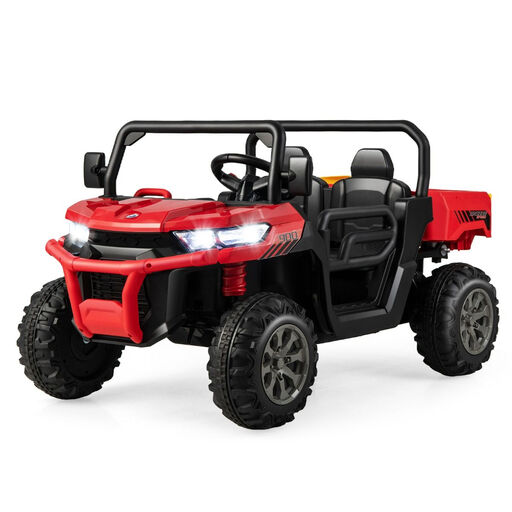
Why it's a good fit: With two seats and a high weight capacity of 50 kg, this vehicle is ideal for two children. The 12V dual motors provide the necessary power for rides on grass and uneven ground.
It solves the performance problem with a strong 12V system and addresses safety concerns with its 2.4 GHz remote control, safety belts, and a soft-start function.
The two-seater capacity and high 50 kg weight limit allow for shared fun and ensure a long usable life, even as the children grow.
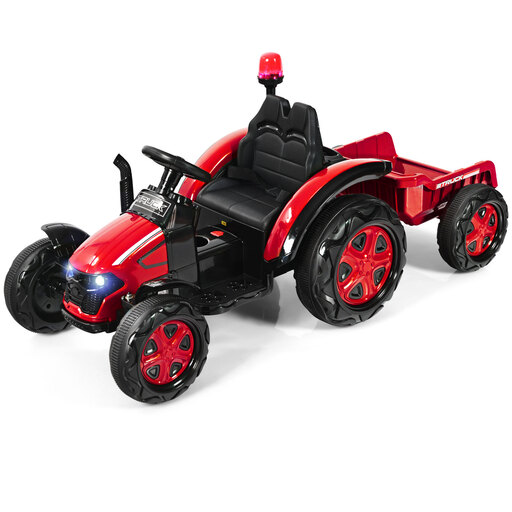
Why it's a good fit: The detachable trailer vastly expands the play experience. Kids can transport toys, sand, or leaves, developing imaginative role-playing games themed around the farm or a construction site.
The 12V system is designed to handle the additional load of the trailer. The robust wheels are built for use on various surfaces, including grass.
The detachable trailer offers high, long-lasting play value that goes beyond just driving and encourages creativity.
We've compiled a complete, up-to-date list of products that fully meet these strict selection criteria and safety standards.
The actual runtime depends heavily on factors like the child's weight, the surface texture, and the driving speed. On average, you can expect a runtime of 45 to 90 minutes per full charge. The charging time is typically 8 to 12 hours.
Whether an electric toy car can drive on grass depends on its power. Models with a 6V battery are generally unsuitable for this. For use on grass, gravel, or slight inclines, a 12V kids' car, preferably with two motors and treaded wheels, is required.
The difference lies in their power and intended use case.