
Lieferung heute & morgen

Qualitätsgarantie

Willkommens-Angebote freischalten: KOSTENLOSE Lieferung | Bis zu 80 % RABATT | Kostenlose 30-Tage-JoyPlus-Testphase
App herunterladen
A kids' electric car is at the top of many wish lists. The idea of little ones driving their own vehicle through the garden or park excites children and parents alike. However, the market is crowded and full of options that promise more than they deliver. Before you make a decision, it's crucial to understand the common pitfalls to avoid disappointment and choose a safe, durable vehicle.
As your Joybuy Product Recommendation Officer, I'll help you distinguish the important features from the trivial ones and make an informed choice.
Many vehicles look impressive at first glance, but a closer look often reveals weaknesses that can quickly spoil the fun. Pay special attention to these three points:
To make the right choice, you should focus on the technical fundamentals that ensure safety and long-lasting fun.
The battery's voltage and capacity are the most important performance indicators for a kids' electric car.
A seatbelt is standard, but modern kids' vehicles offer more. The most important feature for parents is a reliable ride-on car with a remote control.
The selection of vehicle types is vast. Consider what best suits your child and their play habits.
Here are some models that, based on objective features, are suitable for different needs and age groups.
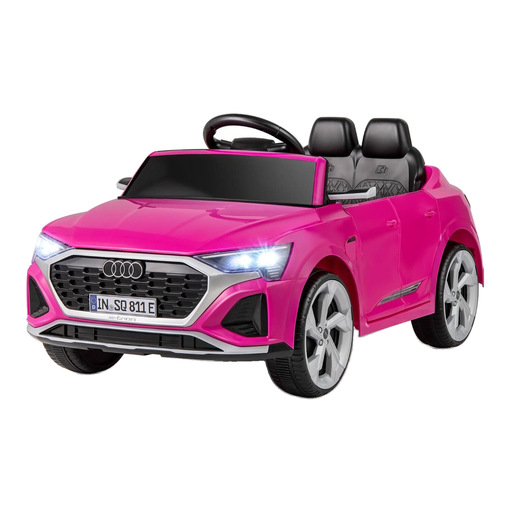
Why This Fits Their Persona: This model combines an appealing, licensed design with a comprehensive safety package. It's ideal for parents who value control and a smooth driving experience for their child.
The integrated soft-start function prevents abrupt take-offs. The 2.4 GHz remote control gives parents full control, bypassing the problem of inadequate safety.
Features two driving modes (manual and remote control) and four-wheel suspension for a stable ride on various surfaces.
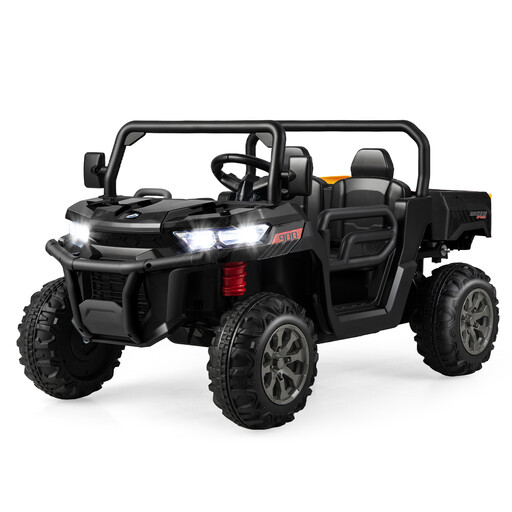
Why This Fits Their Persona: This 2-seater kids' car is designed for families with two children. The high weight capacity and two seats allow for shared rides, while the dump truck feature adds extra play value.
The four-wheel suspension and robust tires counteract the problem of poor grip on uneven ground. The clearly stated weight capacity of 50 kg ensures the vehicle is designed for two children.
Two seats with seatbelts and an automatic tipping function for the cargo bed provide realistic fun. Dual motors ensure sufficient power.
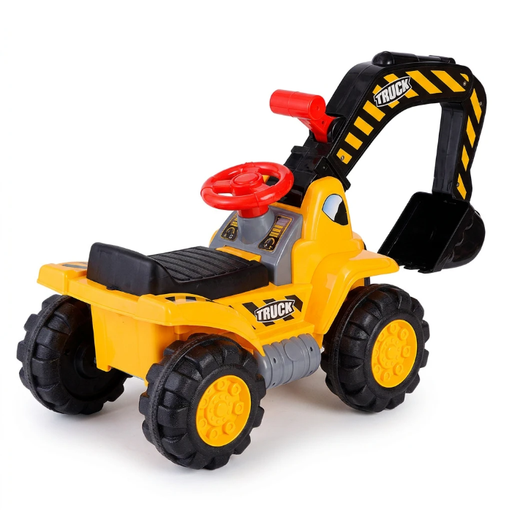
Why This Fits Their Persona: For children who are less interested in driving and more in creative role-playing. This ride-on excavator is purely a toy that stimulates imagination and motor skills.
As a manually operated ride-on vehicle, it completely bypasses the pitfalls of battery life and electronics. The focus is on robust mechanics and durable fun without charging times.
Promotes hand-eye coordination through manual control of the excavator bucket. A storage compartment under the seat and included accessories enhance the play value.
We've compiled a complete, up-to-date list of products that fully meet these strict selection criteria and safety regulations.
The actual battery life depends on several factors: the battery's capacity (Ah), the child's weight, the driving surface, and the speed. Realistically, most 12V models offer runtimes between 45 and 90 minutes per charge. Models with batteries under 5 Ah often achieve only shorter times. The charging time is typically 8 to 12 hours.
Most manufacturers recommend an age range of 3 to 8 years. For children at the lower end of this range (3-4 years), an electric kids' vehicle with a remote control and soft-start function is essential for parents to maintain control. For younger children under 3, manual push cars or pedal cars are often the safer and more developmentally appropriate choice.
It is strongly advised not to use electric vehicles for children in the rain or on wet surfaces. The electronics and battery are generally not waterproof and can be permanently damaged. Additionally, there is an increased risk of slipping on wet ground. Always store the vehicle in a dry place.