
Lieferung heute & morgen

Qualitätsgarantie

Willkommens-Angebote freischalten: KOSTENLOSE Lieferung | Bis zu 80 % RABATT | Kostenlose 30-Tage-JoyPlus-Testphase
App herunterladen
A kids' electric car is often more than just a toy—it's their first vehicle, a symbol of adventure and independence in the backyard or at the playground. But the selection is vast, and the technical specifications can be confusing. As a Joybuy Product Recommendation Officer, I'm here to help you distinguish the important features from the superfluous ones and make an informed decision. This guide will show you what to look for to purchase a durable and safe electric ride-on vehicle for your child.
Many well-intentioned purchases end in disappointment because certain details were overlooked. Watch out for these three typical problems to avoid buyer's remorse.
To find the right model, you should focus on three technical aspects. These are the primary determinants of the vehicle's performance, safety, and usability.
The battery's voltage is the single most important factor for performance.
A good kids' car with a remote control gives parents full control and is an indispensable safety feature, especially for younger children. Look for a 2.4 GHz remote control. Unlike older technologies, this frequency is interference-free, preventing conflicts with other devices. An emergency stop button, which can halt the vehicle instantly, provides additional peace of mind. Also, check the installed harness system.
Consider whether the vehicle will be used by just one child or shared by siblings.
Here are some models tailored to specific use cases that meet the criteria mentioned above.
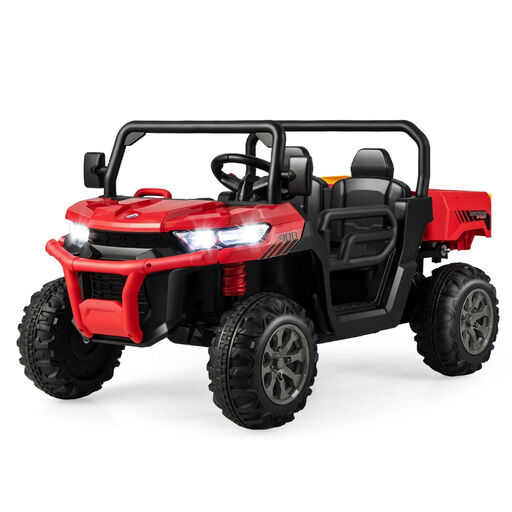
Why It's a Great Fit: Ideal for families with two children. The two seats and high weight capacity of 50 kg allow for shared rides. The dual-motor setup ensures there's enough power, even with two passengers.
This model uses a powerful 12V system with two motors to overcome underperformance. The construction is designed for a high payload, and the 2.4 GHz remote with an emergency stop provides essential safety.
Two seats for shared fun. High weight capacity up to 50 kg. Wheel suspension for a smoother ride.
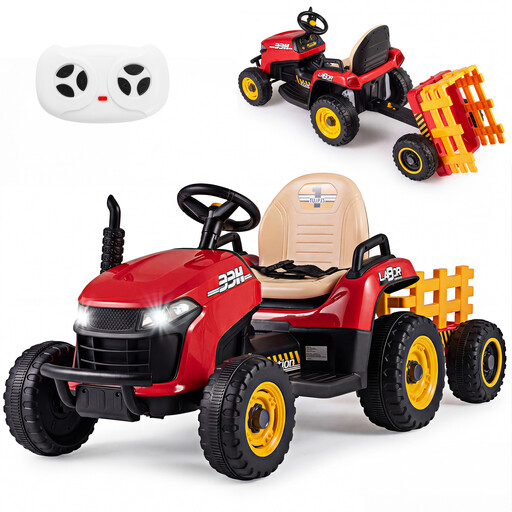
Why It's a Great Fit: For kids who love playing outdoors and engaging in realistic role-play. The powerful 24V system effortlessly handles grass and uneven terrain, while the trailer adds extra play value.
With its 24V battery, this electric ride-on avoids the performance issues of 6V or weaker 12V models. It's designed for outdoor use and features a robust build and a secure remote control.
Powerful 24V system for off-road capability. Includes a trailer for hauling fun. Realistic tractor design with a horn.
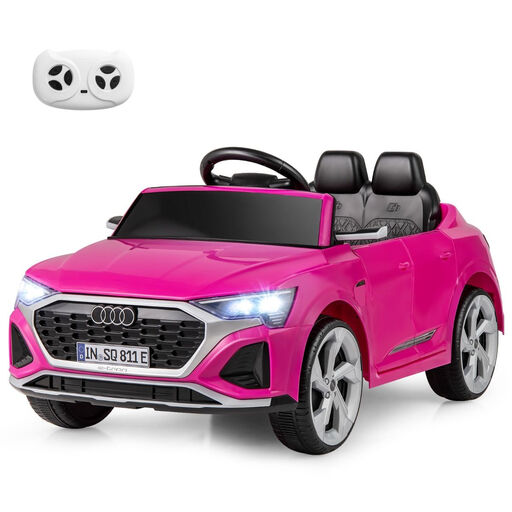
Why It's a Great Fit: Perfect for kids and parents who appreciate a realistic design. As a licensed model of the Audi SQ8, it offers authentic details and is equipped with a solid 12V system for rides on paved surfaces.
The 12V system is a proven standard that provides sufficient power for its intended environment (paved paths). The safety features, including a 2.4 GHz remote, soft start, and seatbelt, are comprehensive.
Officially licensed Audi design. Comprehensive safety features including soft start. Integrated media center with music and LED lights.
We have compiled a complete, up-to-date list of products that fully meet these strict selection criteria and UK safety regulations.
1. How long does the battery of a 12V kids' electric car last, and how long does it take to charge? The actual runtime depends on factors like the child's weight, the speed, and the terrain. On average, you can expect 45 to 90 minutes of continuous runtime from a 12V model. Fully charging a depleted battery typically takes 8 to 12 hours. It is recommended to charge the battery after each use.
2. What surfaces can a kids' electric car drive on? This heavily depends on the battery voltage and the wheels. 6V models are almost exclusively suitable for smooth, flat indoor surfaces. 12V vehicles handle asphalt, pavement, and flat lawns well. For uneven terrain, taller grass, or slight inclines, a powerful 24V model with treaded wheels is the appropriate choice.
3. How difficult are assembly and maintenance? Most kids' electric cars are delivered partially assembled. You will typically need to attach the wheels, steering wheel, seat, and possibly the mirrors. This usually takes about 30 to 60 minutes. Maintenance is straightforward: keep the vehicle clean, charge the battery regularly, and store it in a dry place to protect the electronics. Periodically check that all screws are tight.