
Lieferung heute & morgen

Qualitätsgarantie

Willkommens-Angebote freischalten: KOSTENLOSE Lieferung | Bis zu 80 % RABATT | Kostenlose 30-Tage-JoyPlus-Testphase
App herunterladen
A kids' electric car is a dream come true for many children and a popular gift for special occasions. However, the vast selection and array of technical terms can make the decision overwhelming. To ensure long-lasting enjoyment and a smart investment, it's crucial to understand the key features and avoid common buying pitfalls. As your Joybuy Product Recommendation Officer, I'm here to help you cut through the noise and make an informed choice.
Many products advertise impressive features that fail to deliver in practice. Pay close attention to these three points to avoid disappointment:
To find the right model, you should focus on a few essential technical parameters. These will provide an objective basis for your decision.
The battery's voltage is a good indicator of the vehicle's fundamental performance capabilities.
Regardless of the voltage, the capacity in amp-hours (Ah) determines the runtime. A higher Ah value (e.g., 7Ah instead of 4.5Ah) means a longer driving time per charge cycle.
An electric car for kids with a remote control offers an extra layer of safety, but quality can vary here as well.
Instead of presenting an overwhelming list, we have selected models that meet specific needs and avoid the pitfalls mentioned earlier.
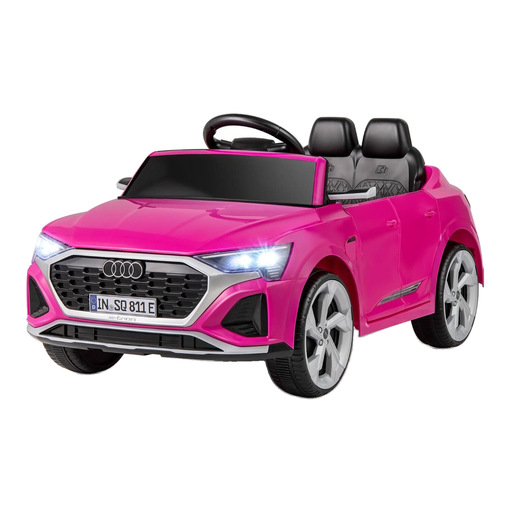
Why this model is a great fit: Ideal for younger children getting their first car. The licensed design offers high brand recognition, while its compact dimensions and moderate speed (3-5 km/h) make it easy and safe for beginners.
This model features soft-start technology to prevent jerky acceleration and a 2.4 GHz remote control that gives parents complete oversight. It avoids the trap of superficial safety features.
The combination of a licensed design, comprehensive safety features (soft-start, remote control, suspension), and multimedia equipment (music, LED lights) offers a well-rounded package for beginners.
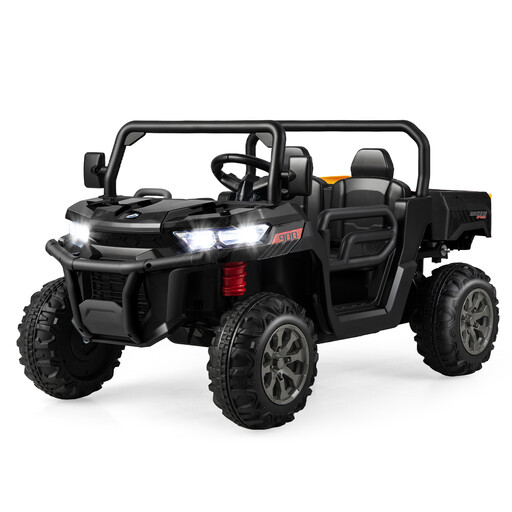
Why this model is a great fit: Perfect for siblings or playdates. With two seats and a high weight capacity of 50 kg, two children can ride at the same time. The dual motors ensure there's enough power even when fully loaded.
This model avoids the trap of vague size recommendations by being explicitly designed as a two-seater with a 50 kg weight capacity. The dual motors ensure its performance isn't just on paper.
The combination of two seats, a high weight capacity, and a dual-motor setup makes it a practical solution for families with more than one child. The tipping cargo bed adds extra play value.
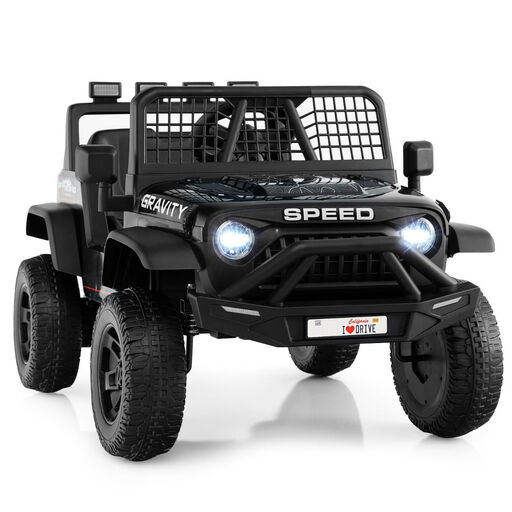
Why this model is a great fit: For families whose children want to drive not just on the patio, but also in the garden on grass or rougher paths. The 24V system with two 35W motors delivers the necessary power to tackle inclines and more challenging terrain.
This model avoids the "voltage alone" myth by intelligently pairing its 24V system with two powerful motors and suspension. Here, performance isn't just a marketing claim—it's engineered for off-road use.
The superior power of the 24V system and the front-wheel suspension allow for more versatile use on various surfaces, significantly expanding a child's play area.
We have compiled a complete, up-to-date list of products that fully meet these strict selection criteria and rigorous safety standards.
Battery life depends on several factors: the battery's capacity (Ah), the child's weight, the driving surface, and the intensity of use (e.g., frequent stopping and starting). On average, you can expect a continuous runtime of 45 minutes to 1.5 hours. The charging time for a fully depleted battery is typically between 8 and 12 hours.
There is no one-size-fits-all "better" option; it depends on the intended use. A 12V model is perfectly adequate for most children and for driving on flat, solid surfaces, often making it the more sensible choice. A 24V model is worthwhile if the vehicle will be used regularly by two children, if the child is heavier, or if it will frequently be driven on grass, uneven ground, or slight inclines.
Most manufacturers recommend their vehicles for children aged 3 and up. However, more important than age are the child's motor skills, size, and weight. Ensure your child can touch the ground with their feet when standing next to the vehicle and that they can sit securely in the seat. The parental remote control is an essential tool, especially in the beginning, to maintain control and gradually introduce the child to independent driving. Constant adult supervision is required at all times.