
Lieferung heute & morgen

Qualitätsgarantie

Willkommens-Angebote freischalten: KOSTENLOSE Lieferung | Bis zu 80 % RABATT | Kostenlose 30-Tage-JoyPlus-Testphase
App herunterladen
Buying an electric cross bike for a child is an exciting decision, often met with sparkling eyes and eager anticipation. However, the market presents a dizzying array of options, and as a parent or grandparent, you face the challenge of finding a model that is not only fun but, above all, safe and appropriate for your child's skill level. Many products advertise impressive performance specs that can be unsuitable or even risky for young riders.
This guide will serve as your compass. We'll highlight the most common purchasing pitfalls and explain the crucial technical features, enabling you to make a well-informed decision.
Before letting designs and marketing promises guide your choice, it's important to be aware of typical missteps that often only become apparent after the purchase.
To separate the wheat from the chaff, you should carefully examine three technical aspects. These are the primary determinants of the vehicle's safety, enjoyment, and longevity.
The motor's power, measured in watts (W), is a central factor. For beginners and younger children (approx. 3-6 years), motors with 100W to 250W are often sufficient. For older or more experienced children from age 6, an electric cross bike for ages 6 and up with 350W to 500W can be a sensible choice.
However, the crucial element isn't just the maximum power, but the ability to regulate it. Look for models with multiple speed settings (e.g., 8 km/h, 15 km/h, 25 km/h). Ideally, these settings can be locked by parents, preventing the child from independently switching to a mode that is too fast. A brushless motor is often a great choice, as it is considered lower-maintenance and more efficient.
The wheel size, specified in inches, significantly influences handling. Smaller wheels (10-12 inches) are more agile and suitable for younger children. Larger wheels, like those on a 16-inch electric kids' motorcycle, offer more stability at higher speeds and roll over obstacles in terrain more easily.
For a true kids' off-road bike, functional suspension is essential. A suspension fork at the front and a shock absorber at the rear absorb impacts from uneven ground, which not only increases comfort but also enhances control and safety. Without suspension, rides on forest trails or meadows quickly become unpleasant and unsafe.
The battery capacity, often given in amp-hours (Ah) or watt-hours (Wh), determines the range. A higher capacity means more ride time but also more weight. A good compromise, depending on the model, is between 4 Ah and 7 Ah. Pay attention to the charging time and whether the battery is removable for charging.
The brakes are the most critical safety feature. Mechanical disc brakes are the standard and provide reliable stopping power. For more powerful models, hydraulic disc brakes are preferable as they deliver greater and more finely-tuned braking force with less hand effort.
Instead of making a one-size-fits-all recommendation, we have identified models tailored to different rider types and requirements.
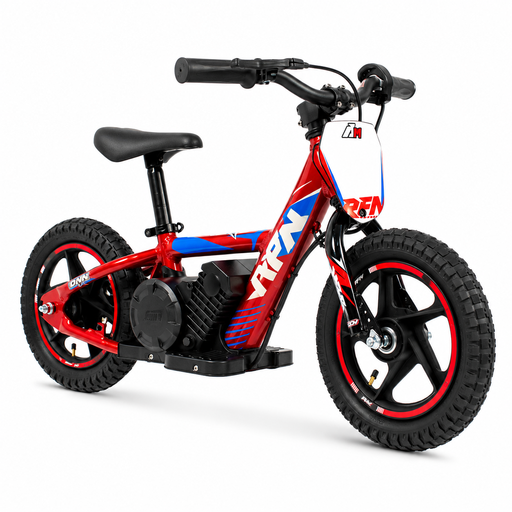
Why this model is a great fit: Ideal for the first off-road attempts. The low weight and moderate power build confidence without being overwhelming. The 12-inch wheels and adjustable seat height are tailored to the ergonomics of children from age 3.
The two selectable speed settings (up to 13 km/h) prevent the rider from being overwhelmed. Its child-friendly size avoids the problem of a vehicle being too large.
Lightweight aluminium frame: Makes the bike easy to handle. Removable battery: Allows for convenient charging indoors.
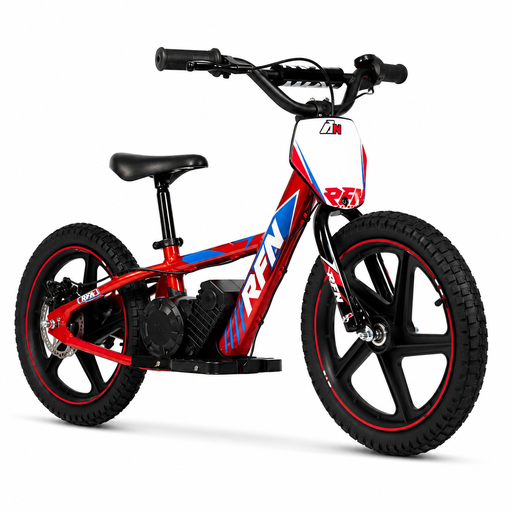
Why this model is a great fit: This electric kids' dirt bike is designed for primary school-aged children who are ready for the next step. The 16-inch wheels and front suspension provide the necessary stability for rides on unpaved trails.
Three speed modes (up to 19 km/h) allow for gradual progression. The key start prevents unauthorised use and gives parents control.
Adjustable seat height: The motorcycle grows with the child. LED battery level indicator: Allows for easy monitoring of the remaining ride time.
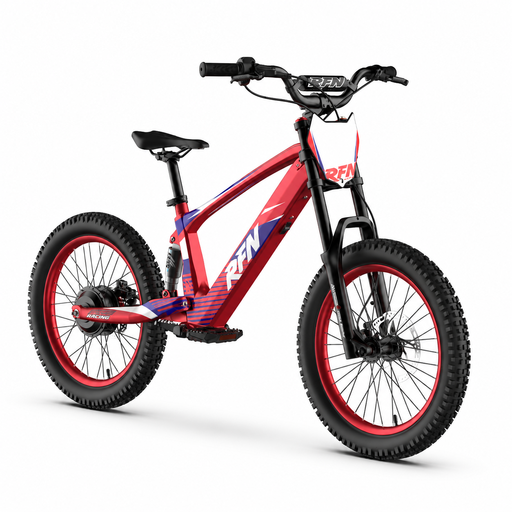
Why this model is a great fit: For older children and teens who already have experience and are looking for a high-performance vehicle for challenging terrain. The 20-inch wheels and high-quality full suspension are designed for true off-road conditions.
The high power is made safely controllable by hydraulic disc brakes and a robust aluminium frame. The three speed settings (up to 35 km/h) allow for adjustment to the rider's skill level.
Powerful 750W motor: Delivers high performance for inclines and difficult terrain. Quick-swap battery system: Enables longer rides without extended charging breaks.
We've compiled a complete, up-to-date list of products that fully meet these strict selection criteria and UK safety regulations.
1. From what age is an electric cross bike for kids a good idea? This largely depends on the child's developmental stage. There are entry-level models for children as young as 3, which have very low speeds and seat heights. For a typical electric cross bike for ages 6 and up, the child should have good coordination and a basic understanding of speed and braking. It is crucial that the child can safely touch the ground with both feet.
2. How long does the battery last on a kids' electric motorcycle? The battery life varies depending on the model, battery capacity, rider's weight, terrain, and riding style. On average, you can expect a ride time of 40 to 80 minutes. Models with larger batteries or those ridden in eco-mode will achieve longer runtimes.
3. What protective gear is necessary for riding an electric kids' dirt bike? Regardless of the speed, full protective gear is essential. This always includes a properly fitting and certified helmet, gloves, knee and elbow pads, and sturdy footwear. For more powerful models or in challenging terrain, a chest protector and neck brace are also recommended. Safety should always be the top priority.