
Lieferung heute & morgen

Qualitätsgarantie

Willkommens-Angebote freischalten: KOSTENLOSE Lieferung | Bis zu 80 % RABATT | Kostenlose 30-Tage-JoyPlus-Testphase
App herunterladen
Choosing an electric ride-on toy for your child can be a challenge. The market is flooded with models that all promise endless fun at first glance. However, behind the glossy exteriors and loud marketing claims, costly drawbacks are often hiding. As a Joybuy Product Recommendation Officer, I'm here to help you identify the crucial features and avoid common purchasing traps, ensuring your investment brings long-lasting enjoyment.
Many buyers focus on design, but in doing so, they overlook three critical weaknesses that can severely limit a vehicle's usability:
To avoid buyer's remorse, you should focus on objective, technical criteria. These three aspects are crucial for the safety, durability, and overall enjoyment of a kids' electric ride-on toy.
The performance of a battery-powered ride-on is determined by the interplay of voltage (Volts) and capacity (Amp-hours, Ah).
Safety should always be the top priority. A quality electric ride-on vehicle is distinguished by its well-designed safety features.
From a leisurely electric kids' car to a sporty kids' go-kart, the vehicle type must match the child's age, size, and abilities.
Here are some models that represent a considered choice for different user profiles, based on their technical specifications and design.
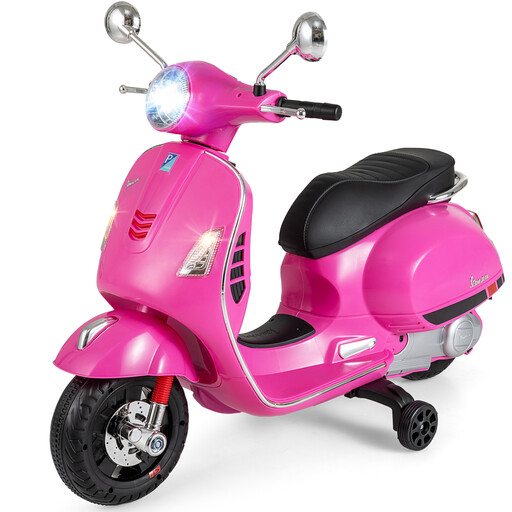
Why this model is a great fit: Perfect for children aged 3 to 6 who are just starting out. The classic design, stabilising training wheels, and simple controls create a safe and fun environment for beginners.
This model avoids the adaptability trap for beginners by focusing on safety and stability. The training wheels can be removed once the child becomes more confident.
Licensed Vespa design for a stylish look. Integrated music and horn functions add extra play value.
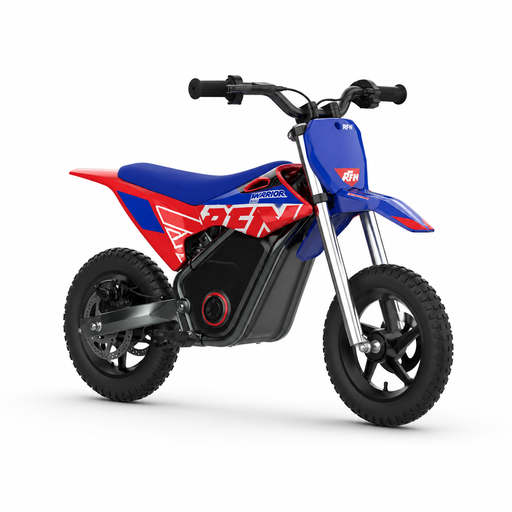
Why this model is a great fit: Designed for kids aged 4 to 8 who are ready for more adventure. With a 350W brushless motor, three speed settings (up to 30 km/h), and front and rear disc brakes, it's well-equipped for off-road riding.
It avoids the adaptability trap with three clearly defined speed modes. Parents can lock the speed, allowing the child to learn safely and progress gradually.
True off-road capability thanks to 14-inch knobby tyres and a suspension system. The 36V 5Ah battery offers a range of up to 18 km, according to the manufacturer.
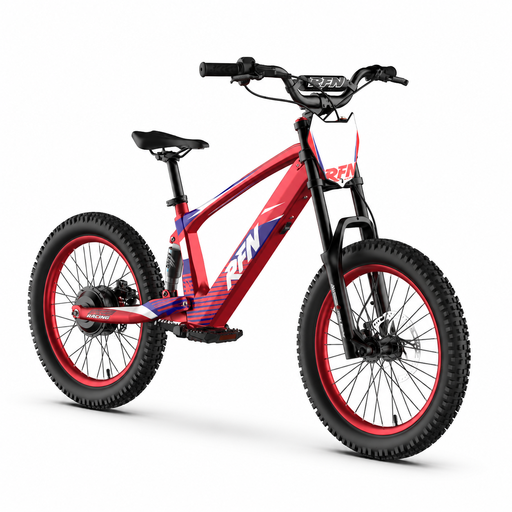
Why this model is a great fit: For older, experienced kids and teens looking for a high-performance vehicle. With a 750W motor, a top speed of 35 km/h, and hydraulic brakes, it delivers performance that goes far beyond that of an ordinary toy.
This model avoids the hidden safety flaws trap by using transparent, high-quality components. Hydraulic disc brakes on the front and rear, along with a robust aluminium frame, provide the necessary control and stability for high speeds.
High motor power (850W peak) and three speed settings (15/25/35 km/h). The patented quick-swap battery system minimises downtime for charging.
There is a huge variety of options, especially in the four-wheeled vehicle category. We have curated a current selection of products that meet our criteria for safety and functionality.
Battery life depends heavily on the battery capacity (in Ah), the child's weight, the speed, and the terrain. Entry-level models often provide 40-60 minutes of ride time. More powerful models with larger batteries can achieve ranges of 10 to 20 kilometres according to manufacturer specs, which can also correspond to about 60-90 minutes depending on riding style. Always check the Amp-hour (Ah) rating for a realistic comparison.
Regardless of the vehicle's speed, wearing a properly fitting, certified helmet is essential. For faster models, especially an off-road kids' electric motorcycle, knee and elbow pads, as well as sturdy, closed-toe shoes, are strongly recommended. All use should be supervised by an adult and should not take place on public roads.
Yes, many modern vehicles offer this important feature. Models with multiple gears or a speed limit that can be set via a switch or key are highly recommended. This allows you to adapt the vehicle's performance to your child's growing skills and ensures greater safety during the learning phase.