
Lieferung heute & morgen

Qualitätsgarantie

Willkommens-Angebote freischalten: KOSTENLOSE Lieferung | Bis zu 80 % RABATT | Kostenlose 30-Tage-JoyPlus-Testphase
App herunterladen
The selection of electric scooters for kids is vast, but not every model lives up to its promises. For parents and grandparents, safety is the top priority, closely followed by durability and riding enjoyment. Many products entice customers with colourful designs or supposed special features that, in practice, turn out to be impractical or even a safety hazard. This guide will help you recognise the important features, avoid common purchasing traps, and make an informed decision on the perfect gift for a child.
Before you decide on a model, you should be aware of three common problems that often only become apparent after the purchase:
To avoid a poor purchase, you should focus on objective, technical parameters that guarantee safety and utility.
A safe kids' e-scooter is distinguished by its well-engineered design. Look for a low centre of gravity, which enhances stability. Models with five wheels offer significantly better tip-over resistance than variants with two or three wheels. A wide, non-slip deck gives the child a secure footing, while puncture-proof solid rubber tyres minimise maintenance and prevent sudden air loss.
Modern models offer features that give parents more control. An e-scooter with app control is a sensible solution here. Via a smartphone app, you can adjust the maximum speed to match the child's skill level and the environment. Three levels are common, for example, 5 km/h for beginners, 10 km/h for intermediate riders, and 15 km/h for experienced children. This function is crucial for ensuring safety while the child builds confidence.
For daily use, practical details are essential. A kids' scooter that is electrically foldable can be easily transported in a car or stored in a space-saving manner at home. Also, pay attention to the maximum load capacity—an e-scooter up to 60 kg offers a longer service life as it grows with the child. Additional features like a kids' scooter with LED lights increase visibility and therefore safety during rides at dusk.
Instead of offering a one-size-fits-all recommendation, we are presenting models tailored to specific needs and user profiles.
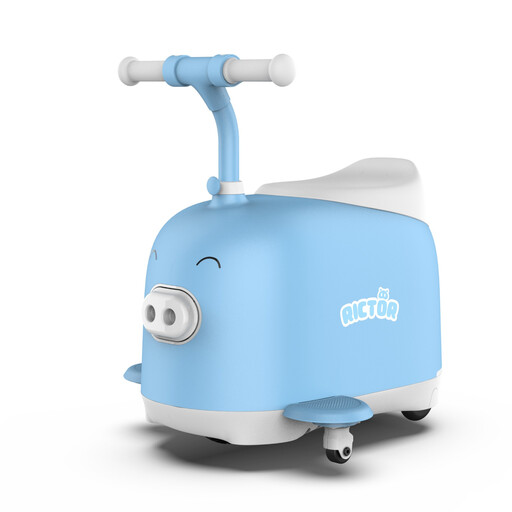
Why This Fits Their Persona: This model is designed for parents who won't compromise on safety. The combination of a stable 5-wheel system and the ability to limit speed via an app provides maximum control and minimises risks for children aged 5 to 12.
The 5-wheel system with a low centre of gravity directly counteracts the problem of unstable designs. The app control gives parents full command over the speed, preventing the child from being overwhelmed.
High Tip-Over Resistance: The 5-wheel system ensures exceptional stability. Full Control: Three speed levels (5/10/15 km/h) that can be set via the parent app.

Why This Fits Their Persona: For families who value smart features and interactive fun. This scooter combines modern technology like app control and interchangeable modules with practical utility and an appealing design.
Instead of superficial gimmicks, this model focuses on meaningful technology. The app control is not a toy but a genuine safety feature. The interchangeable modules (e.g., audio, soap bubbles) offer real added value and long-lasting fun.
Smart Features: App control, adjustable LED lights, and magnetic interchangeable modules. Practical Design: The scooter is foldable and has an integrated storage compartment for toys or a water bottle.
We have compiled a complete, up-to-date list of products that fully meet these strict selection criteria and safety standards.
Most electric scooters for children with a design-based maximum speed under 20 km/h and without road-use certification are legally classified as toys. This means they should not be ridden on public roads, cycle paths, or pavements. Usage is restricted to private property such as driveways, courtyards, or gardens. It is always advisable to check your local regulations.
The battery life depends on several factors: the child's weight, the speed of travel, the terrain (flat vs. hilly), and the outside temperature. While manufacturers often state a range of 15–20 km, a more realistic figure for mixed use is around 8–12 km or a ride time of 40–60 minutes. Plan for regular charging times.
Most manufacturers recommend their models for an age range of 5 to 12 years. However, more important than age are the child's motor skills and sense of responsibility. Younger children should be introduced to riding slowly, ideally on the lowest speed setting and always under adult supervision. Wearing protective gear such as a helmet and pads is essential.