
Lieferung heute & morgen

Qualitätsgarantie

Willkommens-Angebote freischalten: KOSTENLOSE Lieferung | Bis zu 80 % RABATT | Kostenlose 30-Tage-JoyPlus-Testphase
App herunterladen
Choosing a craft kit for making jewelry with children can quickly become overwhelming. The market is vast, and the packaging often overpromises and underdelivers. As a Joybuy Product Recommendation Officer, my goal is to provide you with objective criteria to help you make an informed decision and avoid disappointment upon unboxing. This guide focuses on the common pitfalls and the key features that define a quality kit.
Before deciding on a product, it's helpful to know the three most common problems with low-quality kits that lead to frustration instead of creative fun.
DIY jewelry kit that showcases magnificent creations on the box, but requires additional materials like glue, pliers, or special needles to complete them. These hidden extra costs are not only annoying but also prevent immediate crafting fun right out of the box.To avoid the problems mentioned above, you should check three key aspects before buying. These will help you objectively assess the quality and suitability of a kit.
The manufacturer's age recommendation is the first and most important indicator. A creative kit for kids for ages 6 and up should use larger beads for threading and simple knotting or linking techniques. For older children, aged 8 or 10 and up, the kits can be more advanced, such as a jewelry science kit that involves mixing materials or creating custom pendants. Check whether the part sizes and instruction complexity match the child's fine motor skills and patience level.
A good jewelry craft kit for kids is an "all-in-one" package. Make sure it includes all the components necessary to create the final product shown on the box. This includes:
This is the only way to ensure that a DIY bracelets for kids project can be started right at the table, without an extra trip to the craft store.
In Germany, toys are subject to strict regulations. Look for the CE marking, which confirms that the product meets the EU's essential health and safety requirements. Even more telling is a statement that the product complies with the EN 71 standard (Safety of toys). This gives you assurance that the materials have been tested for harmful substances and that there are no mechanical hazards (e.g., sharp edges). For kits intended for children under 36 months, the warning about swallowable small parts is legally required and must be strictly observed.
Here are some product recommendations tailored to different needs and age groups that meet the criteria mentioned above.
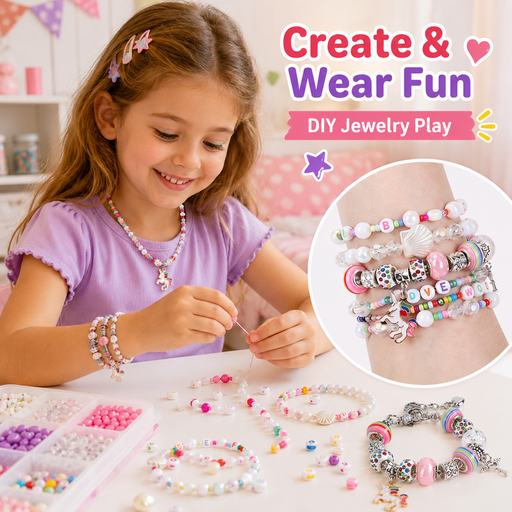
Why This Fits Their Persona: Ideal for children who want to design their first bracelets and necklaces. The focus is on the simple joy of threading colorful beads, which promotes fine motor skills without overwhelming them with complex techniques. A perfect kit for a creative afternoon.
This kit bypasses the pitfall of inappropriate complexity. It focuses on a single, easy-to-understand activity—threading beads—making it ideal for the specified age group.
The kit is designed for immediate use and sparks creativity with a wide variety of colorful beads. It's a straightforward and engaging activity.
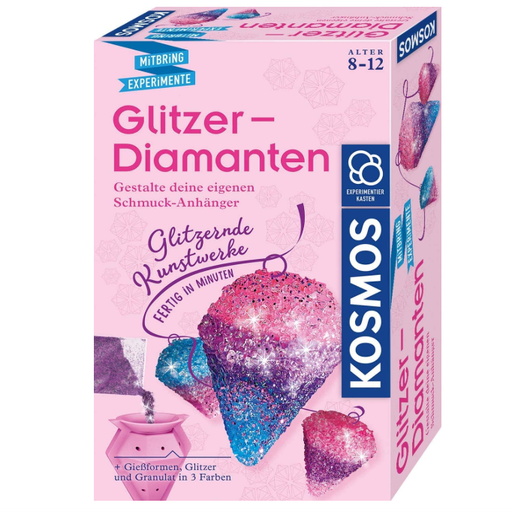
Why This Fits Their Persona: This kit is more than just threading beads. As a Kosmos Glitter-Diamonds experiment kit, it allows children to cast their own sparkling pendants. It's the ideal gift for girls and boys who enjoy projects with a visible, impressive result.
It solves the problem of incomplete kits by being designed as a complete system. All necessary materials, from the casting molds and granules to the jewelry cords, are included. The detailed instructions prevent frustration.
Combines creative design with a simple scientific process. Children create something unique while learning through play. Made in Germany by a renowned manufacturer of science kits.
Why This Fits Their Persona: When planning a birthday crafting activity, a straightforward kit is essential. This kit is excellent for groups because the activity is easy to understand, and each child can quickly make their own piece of jewelry as a party favor. Buying multiple packs is a cost-effective solution for a whole group.
A birthday party is not the place for complex, error-prone projects. The simplicity of this kit ensures that all children, regardless of their patience or prior experience, will feel a sense of accomplishment and have fun with the group activity.
Encourages social interaction and provides an entertaining, creative activity that requires little supervision. Each child goes home with a handmade keepsake.
We have compiled a complete, up-to-date list of products that fully meet these strict selection criteria and safety regulations.
1. At what age is jewelry making suitable for children? It largely depends on the individual child and the specific kit. Simple sets with large wooden beads for threading can be suitable for children as young as four. Most jewelry craft kits are aimed at primary school-aged children, from six years and up. Science kits, like those from Kosmos, are typically designed for children aged eight and older. Always check the manufacturer's age recommendation on the packaging.
2. What should be included in a good jewelry-making kit? A good kit should be complete. This means it contains all the necessary materials to finish the project shown on the box. This includes beads, charms, threading materials (cords, ribbons), and the appropriate clasps. A clear, well-illustrated guide is also a must-have to prevent frustration.
3. What should I look for regarding the safety of jewelry-making kits? Look for the CE marking as a minimum standard. Ideally, the product should also comply with the EN 71 standard for toy safety. For children under three, kits with small parts are completely unsuitable due to the choking hazard. Reputable manufacturers will clearly state this. Check the materials for sturdy, clean construction without sharp edges or unpleasant odors.