
Lieferung heute & morgen

Qualitätsgarantie

Willkommens-Angebote freischalten: KOSTENLOSE Lieferung | Bis zu 80 % RABATT | Kostenlose 30-Tage-JoyPlus-Testphase
App herunterladen
With so many models, materials, and features available, choosing a play kitchen can quickly become overwhelming. A well-chosen play kitchen is more than just a toy—it's a space for creative role-playing that helps develop social and motor skills. However, not every model lives up to its promises. To avoid a bad investment, it's helpful to know the common pitfalls and pay attention to crucial quality indicators.
This guide will help you separate the wheat from the chaff and make an informed decision. We'll highlight the most common flaws and show you what really matters when making your choice.
Many products look appealing at first glance but reveal their weaknesses only through daily use. Pay close attention to these three points to avoid disappointment:
To find the right play kitchen, you should focus on a few core parameters that ensure durability, safety, and fun.
The material is the foundation of a play kitchen's stability and longevity.
The right size is crucial for a comfortable play experience. The height of the worktop should be such that the child can interact with it comfortably while standing. A good rule of thumb is that the work surface should be at about the child's elbow height. Some models offer height-adjustable feet, allowing the kitchen to "grow" with the child over several years—a particularly sustainable solution.
Realistic features significantly enhance the appeal of role-playing. A play kitchen with lights and sound on the hobs or a microwave with a rotating sound makes the cooking experience more authentic. An integrated toy coffee machine or a sink with a water function can also stimulate creativity. Check which accessories are included. It is often better to purchase a solid base kitchen and selectively supplement it with high-quality accessories like metal pots, sturdy wooden vegetables, or a blender.
Every family has different needs and space constraints. Here are some recommendations tailored to different profiles.
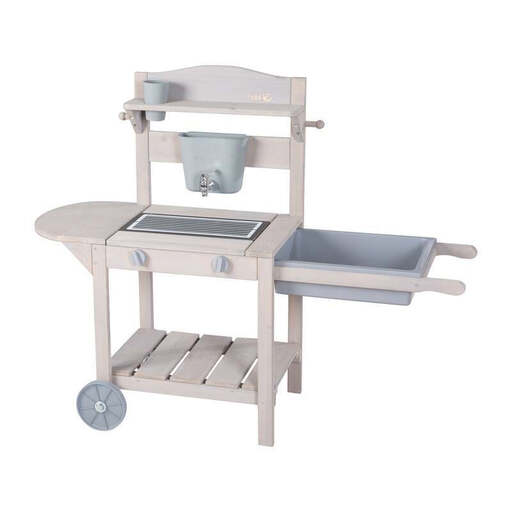
Why This Fits Their Persona: Ideal for families who like to move the play area outdoors. This mud kitchen is specially designed for use in the garden or on the balcony and encourages play with natural materials like water, sand, and leaves.
The weather-resistant glazed solid wood is explicitly intended for outdoor use, thus avoiding the pitfall of flimsy materials that would swell with moisture.
Mobile thanks to wheels, versatile (grill, sink), and made from FSC-certified wood. The worktop height of 52 cm is suitable for children aged 18 months and up.

Why This Fits Their Persona: Perfect for parents looking for a durable solution that grows with their child. This wooden Miele play kitchen combines a high-quality design with thoughtful functionality for years of fun.
The height-adjustability solves the problem of poor ergonomics. The kitchen adapts to the child's size, ensuring a comfortable playing posture at all times.
Grows-with-the-child design, hob with realistic light and sound effects, and high-quality stainless steel and wood accessories. FSC-certified material.
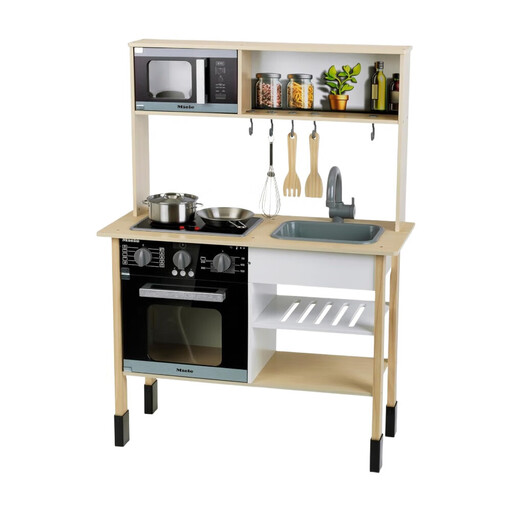
Why This Fits Their Persona: This elegant wooden Miele-design play kitchen blends seamlessly into modern living spaces. With a width of 70 cm, it's compact enough for smaller children's rooms or a play corner in the living room.
The clear dimensions and thoughtful, space-saving design prevent the purchase of a bulky kitchen that would overwhelm the room. It avoids the pitfall of misleading size specifications.
Compact and stylish design, battery-operated hob with light and sound functions, and a full set of features including a microwave and sink.
We have compiled a complete, up-to-date list of products that fully meet these strict selection criteria and all relevant safety standards.
1. From what age is a play kitchen suitable? Simple, sturdy models, often made of wood or durable plastic, are suitable for children from around 18 months. These encourage early grasping and motor skill exercises. More complex play kitchens with electronic features and small accessories are generally recommended for children aged 3 and up, as their understanding of kitchen role-play is more developed.
2. How high should the work surface of a play kitchen be? For an ergonomic posture, the worktop should be just below the standing child's elbows. Measure the distance from the floor to your child's elbow to get a guideline. A deviation of a few centimetres is not a problem. Height-adjustable models offer the most flexibility here.
3. What is the difference between a play kitchen and a mud kitchen? A classic play kitchen is designed for indoor use and mimics a real kitchenette with appliances like a hob, oven, and microwave. A mud kitchen, on the other hand, is built for the outdoors. It is made of weatherproof materials (e.g., glazed wood) and is designed for play with water, sand, soil, and plants. It often features a removable tub and a water container.