
Lieferung heute & morgen

Qualitätsgarantie

Willkommens-Angebote freischalten: KOSTENLOSE Lieferung | Bis zu 80 % RABATT | Kostenlose 30-Tage-JoyPlus-Testphase
App herunterladen
A play kitchen is more than just a toy—it's a space where children can get creative, explore social roles, and develop motor skills. But the selection is vast, and not every model delivers on its promise. As your Joybuy Product Recommendation Officer, I'll help you navigate the common pitfalls of purchasing and make an informed decision that guarantees long-lasting enjoyment.
Many well-intentioned purchases quickly turn into disappointments. Watch out for these three common problems to avoid making a poor choice:
play food and dishware gets lost or broken easily and distracts from what truly matters: the quality and functionality of the kitchen itself.To make the right choice, you should focus on a few core parameters that determine the quality and longevity of a play kitchen.
The choice of material is one of the most fundamental decisions and affects stability, feel, and features.
Consider where the kitchen will primarily be used. A classic play kitchen is designed for indoor use. If play is intended for the garden or balcony, a special outdoor play kitchen is essential. A so-called mud kitchen is made from weather-treated materials and is specifically designed for play with water, sand, and natural materials. It can withstand the elements, which a normal wooden kitchen cannot.
Modern play kitchens often offer realistic features that enhance the play value.
Based on these objective criteria, we have identified a few models that are suitable for different needs and budgets.
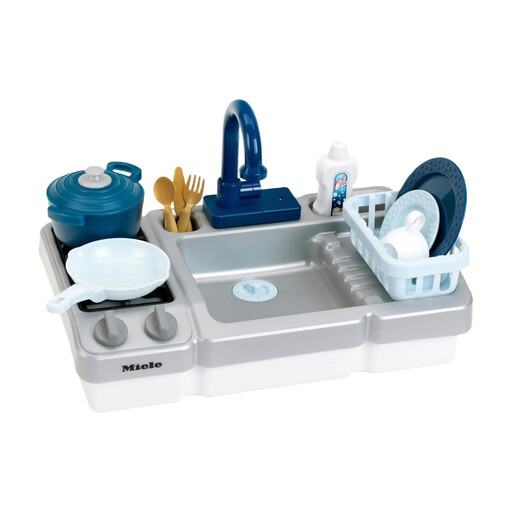
Why this model is a great fit: Ideal for beginners, smaller apartments, or as an add-on. It offers high play value with its water feature without the cost and space requirements of a full kitchen.
This model focuses on one core feature (the water pump) instead of a mass of useless accessories. The Theo Klein construction is known for its stability in the plastic segment.
The real water pump function promotes sensory play. The authentic Miele design provides a realistic role-playing experience.
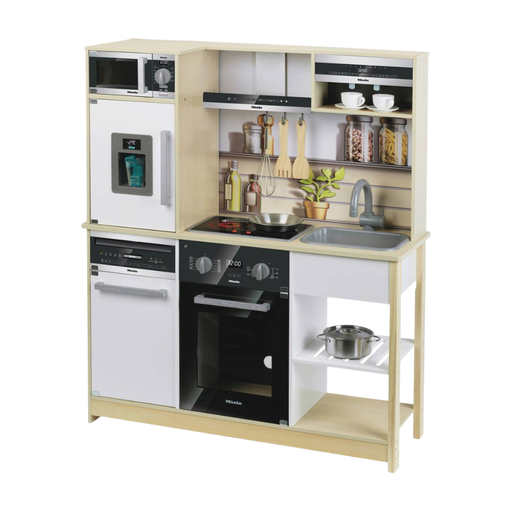
Why this model is a great fit: For anyone who values a high-quality, durable, and aesthetically pleasing wooden kitchen that blends harmoniously into the living space.
The construction from FSC-certified wood is robust and stable, avoiding the wobbly trap of cheaper models. The included accessories are also made of high-quality wood and metal.
High-quality wooden construction with thoughtful details like a hob with realistic light and sound effects, as well as an ice dispenser.

Why this model is a great fit: Perfect for use in the garden or on the balcony. This kitchen enables creative play with sand, water, and natural materials, fostering a connection with nature.
This outdoor play kitchen is made from weather-resistant glazed solid wood and is explicitly designed for outdoor use. It won't be damaged by moisture, unlike indoor-only kitchens.
Sturdy, weatherproof construction from solid wood. Includes a water container with a tap and a removable plastic tub for authentic "mud play".
We have compiled a complete, up-to-date list of products that fully meet these strict selection criteria and safety regulations.
Simple and very sturdy models, especially mud kitchens, are often suitable for children as young as 18 months. More complex play kitchens with many features and small parts are generally recommended for children aged 3 and up. Always pay attention to the manufacturer's age recommendation, as it is tailored to the safety and motor skills of that specific developmental stage.
As a rule of thumb, the work surface should be at about the child's hip or waist level, allowing them to play comfortably in an upright posture. For toddlers and preschoolers, this height is usually between 45 cm and 55 cm. Some models are height-adjustable and can grow with the child, extending their usability.
A play kitchen is intended for indoor use. It mimics a real household kitchen, is often made of finer wood or plastic, and may include electronic elements. A mud kitchen is a robust outdoor play kitchen made from weatherproof materials. It is designed to be used outside with water, sand, soil, and leaves, and typically features tubs and water containers.