
Lieferung heute & morgen

Qualitätsgarantie

Willkommens-Angebote freischalten: KOSTENLOSE Lieferung | Bis zu 80 % RABATT | Kostenlose 30-Tage-JoyPlus-Testphase
App herunterladen
A mini trampoline for kids might seem like a simple purchase, but the sheer number of options can quickly become overwhelming. Many parents are looking for a way to encourage their children's natural urge to move, even indoors, especially on rainy days. However, well-intentioned purchases often lead to disappointment. Certain product features highlighted in marketing can prove impractical or even pose a safety hazard in reality. This guide will help you identify the crucial features and sidestep common purchasing traps.
Before you make a decision, it's important to understand the typical problems that can arise with cheap or poorly designed models.
To avoid the problems mentioned above, you should focus on three core technical features when making your selection. These define the safety, durability, and everyday usability of a kids' trampoline.
The heart of any trampoline is its suspension system. There are two fundamental designs here:
For safe use by young children, the following components are non-negotiable:
A robust frame made of powder-coated steel ensures the necessary stability and longevity. For use in living spaces, storage is also a key factor. A foldable kids' trampoline can be quickly folded up when not in use and stored under a bed or behind a cabinet to save space. Models with a pre-assembled jumping mat and bungee cords significantly reduce assembly effort.
Here are some recommendations tailored to different user profiles that meet the criteria mentioned above.
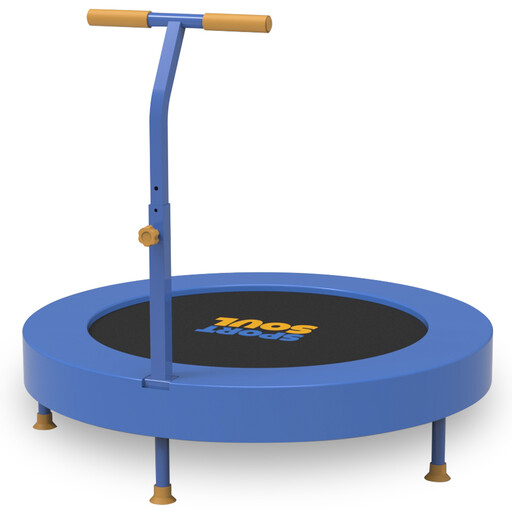
Why This Fits Their Persona: This model is specifically designed for the 2-to-5-year-old age group. The adjustable T-bar handle provides stability, and the 25 kg weight limit is perfectly suited for toddlers.
It uses 24 elastic bungee cords instead of noisy steel springs (avoiding the noise trap). The sturdy handlebar and foam safety pad directly address safety concerns.
Virtually silent operation thanks to the bungee cord system. The foldable design solves the space problem in smaller apartments.
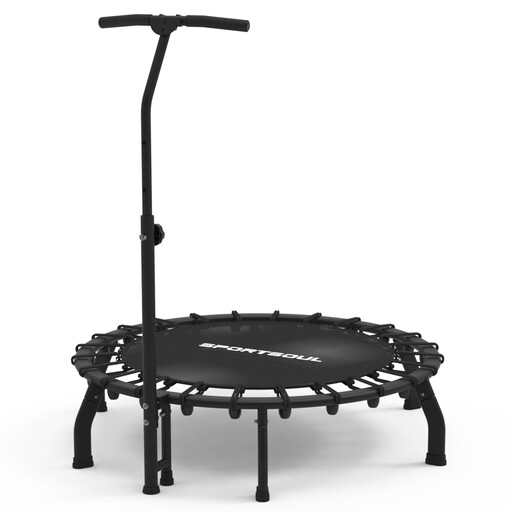
Why This Fits Their Persona: For families where not only the little ones but also older children or adults want to use the trampoline for fitness exercises. The high weight capacity makes it a versatile piece of sports equipment for everyone.
This model is designed as a robust fitness device, not just a child's toy. The sturdy construction and high weight capacity of 120 kg prevent the typical stability issues of cheaper models.
High maximum weight capacity of 120 kg. The larger 42-inch diameter (approx. 107 cm) provides more space for versatile fitness exercises.
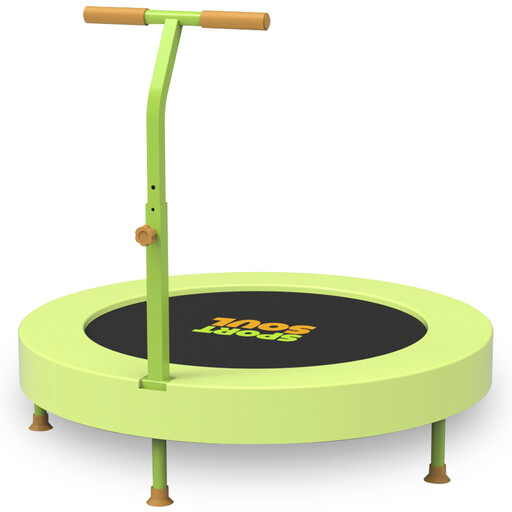
Why This Fits Their Persona: Ideal for families in city apartments where every square foot counts. It offers all the safety features for toddlers but can be stored quickly and easily when needed.
The foldable design is the direct answer to the "space-eater" trap. It doesn't have to stand permanently in the room but can be used and stored flexibly.
Easy folding mechanism for space-saving storage. The pre-assembled components, including bungee cords and jumping mat, allow for quick setup.
We've compiled a complete, up-to-date list of products that meet strict selection criteria and safety requirements.
1. From what age is a mini trampoline suitable for children? A toddler fitness trampoline with a handlebar is generally suitable for children from around two to three years old who can already stand and walk confidently. The child's motor development is more crucial than their age. Use should always be under the direct supervision of an adult initially.
2. How loud is a spring-free indoor trampoline really? A kids' rebounder with a bungee cord system is significantly quieter than models with steel springs. The main sound is the dull thud of feet on the jumping mat, not the metallic squeak of springs. This makes them particularly suitable for use in apartments and noise-sensitive environments.
3. How difficult is it to assemble a foldable kids' trampoline? Assembly is usually straightforward. On many models, the jumping mat and bungee cords are already pre-assembled on the frame. Typically, you only need to unfold the frame, screw on the legs, and attach the handlebar. The exact steps can be found in the respective assembly instructions, and the time required is often just a few minutes.