
Lieferung heute & morgen

Qualitätsgarantie

Willkommens-Angebote freischalten: KOSTENLOSE Lieferung | Bis zu 80 % RABATT | Kostenlose 30-Tage-JoyPlus-Testphase
App herunterladen
With a vast array of models, materials, and features, choosing a play kitchen can quickly become overwhelming. Many products promise more than they deliver, leading to disappointment in the playroom. As your Joybuy Product Recommendation Officer, I'll help you identify the crucial features and sidestep common purchasing traps, so you can make an informed decision.
Before we dive into the details, let's look at the three most frequent problems that arise when purchasing a play kitchen. Knowing these is the first step toward making a better choice.
To avoid these pitfalls, focus on three fundamental aspects that determine the quality and long-term play value of a play kitchen.
The choice of material has a direct impact on stability, durability, and tactile feel.
The right size is crucial for enjoyment. If the work surface is too high or too low, play quickly becomes uncomfortable and frustrating.
Less is sometimes more. Instead of numerous gimmicks, thoughtful and functional details are more important.
Here are some models tailored to different needs and scenarios that meet the quality criteria mentioned above.
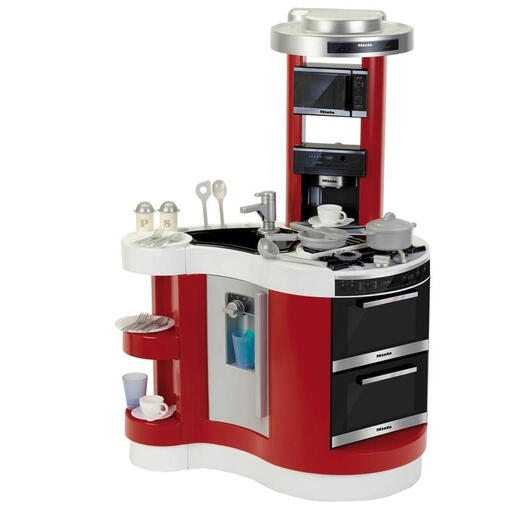
Why This Fits Their Persona: This set is ideal for parents looking for an all-in-one solution. It offers a fully equipped kitchen including an extensive Bosch breakfast set, so the fun can start immediately without any additional purchases.
It directly counters the hidden costs trap, as a toaster, coffee machine, kettle, and other accessories are already included in the package.
Comprehensive accessory package for immediate play; realistic cooking sounds for an interactive experience.
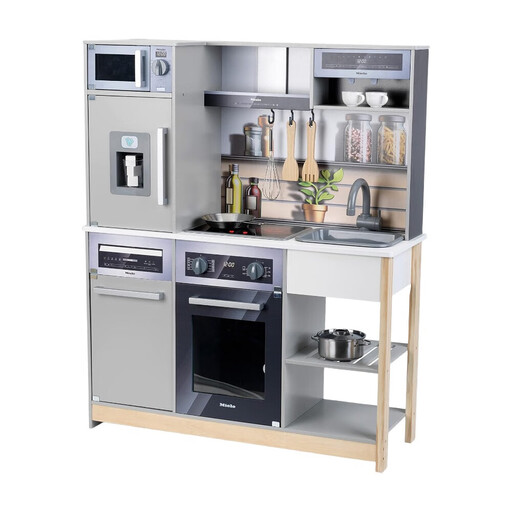
Why This Fits Their Persona: Made from FSC-certified wood, this kitchen promises high stability and a long lifespan. Its modern Miele design fits elegantly into living spaces and is intended for parents who value quality and aesthetics.
The robust wooden construction prevents the wobbling and instability that are often a problem with cheaper plastic models. The quality of the materials ensures long-term use.
High-quality wooden craftsmanship (FSC-certified); detailed features with light and sound functions on the hob, plus high-quality metal and wood accessories.
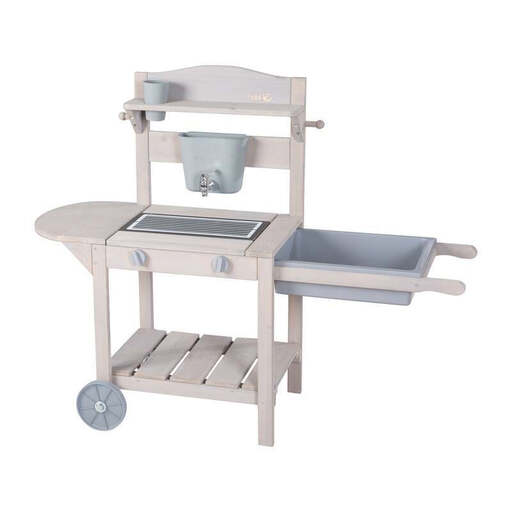
Why This Fits Their Persona: This mud kitchen is specifically designed for outdoor use. With weather-resistant sealed wood, wheels for mobility, and a durable plastic tub, it's perfect for creative play with sand, water, and natural materials in the garden.
The materials are explicitly designed for outdoor use. The water feature is a robust play basin, not a delicate electronic component that could fail when exposed to moisture.
Weather-resistant materials (sealed solid wood); mobility thanks to wheels; functional water tub for real muddy fun.
We have compiled a complete, up-to-date list of products that fully meet these strict selection criteria and UK safety regulations.
A play kitchen is generally suitable from the age of about 2 to 3 years. At this age, children begin to imitate everyday activities through role-playing. Simple models promote motor skills and creativity. For older children aged 4 and up, more complex kitchens with greater detail and interactive functions are suitable for enabling more sophisticated play scenarios.
The ideal height of the work surface depends on your child's height. As a guideline, the counter should be at about elbow or waist height, allowing the child to play comfortably while standing. For a three-year-old child (approx. 95 cm tall), a work height of 50 to 55 cm is appropriate. Some models are height-adjustable and can grow with the child.
A wooden play kitchen requires some care to stay beautiful for a long time. Spills should be wiped up immediately to prevent the wood from swelling. A slightly damp cloth is usually sufficient for cleaning. Periodically check that all screws are still tight. Unless it is explicitly labelled as an outdoor kitchen for kids or a mud kitchen, a wooden kitchen should only be used indoors.