
Lieferung heute & morgen

Qualitätsgarantie

Willkommens-Angebote freischalten: KOSTENLOSE Lieferung | Bis zu 80 % RABATT | Kostenlose 30-Tage-JoyPlus-Testphase
App herunterladen
A play kitchen is more than just a toy—it's a space for creativity, role-playing, and learning everyday routines through play. But the market is vast, and differences in quality are often only apparent on closer inspection. Before you decide, it's crucial to know the common pitfalls that can spoil the fun and turn your purchase into a bad investment.
As your Joybuy Product Recommendation Officer, I'm here to help you separate the great from the mediocre. In this guide, I'll show you what really matters and how to find a durable, safe play kitchen that will last.
Many products are advertised with impressive photos and long feature lists. In practice, however, flaws often emerge that can quickly lead to buyer's remorse. Pay special attention to these three points:
To make an informed decision, focus on objective, verifiable characteristics. These three parameters are crucial for safety, durability, and long-lasting fun.
The choice of material significantly impacts the stability, feel, and longevity of the play kitchen.
Your child's safety is the top priority. Certain labels can help guide your choice:
For a child to play comfortably and safely, the work surface height must be appropriate for their size. An ideal worktop is roughly at the child's hip level. Some models offer a height-adjustable design, allowing the kitchen to "grow" with your child over several years—a practical and sustainable solution. Before buying, measure the available space in the playroom to ensure the kitchen fits well while leaving enough room to move around.
Instead of an overwhelming list, we're presenting three models tailored to different needs and living situations.
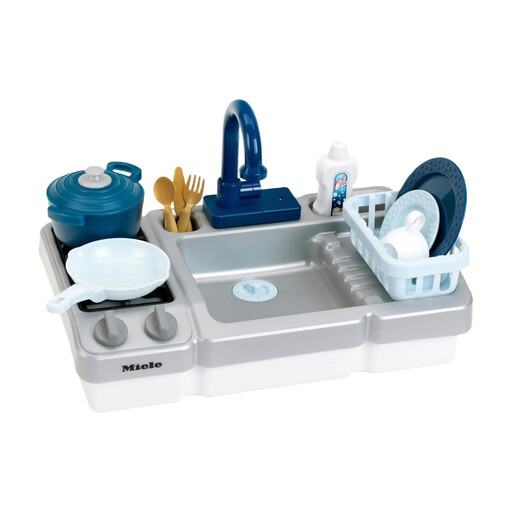
Why This Fits Their Persona: Ideal for families with limited space or as a first addition to existing toys. This set focuses on one key, well-executed feature, enabling initial role-play without committing to a full kitchen.
Avoids the 'overloaded features' trap. The water pump function is a clear highlight that works reliably, offering focused fun instead of overwhelming with poorly implemented extras.
Functional Water Pump: Allows for realistic play with real water. Compact Design: Easy to store and fits even in smaller playrooms.
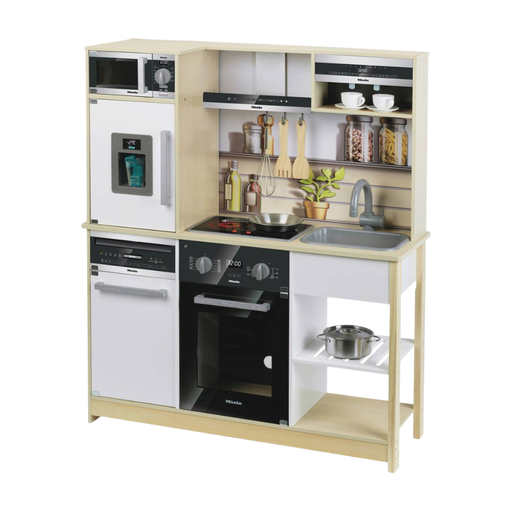
Why This Fits Their Persona: Perfect for parents and grandparents looking for a fully equipped, sturdy, and aesthetically pleasing wooden kitchen. It's designed to be a central piece of play furniture in a child's room, offering long-term value.
Sidesteps the 'inferior materials' trap by using FSC-certified wood. The stable construction and substantial weight ensure it won't tip over.
Comprehensive Features: Includes a stove, microwave, refrigerator, and espresso machine. High-Quality Accessories: Cooking utensils made of metal and wood are already included.

Why This Fits Their Persona: The pragmatic choice for forward-thinking buyers. Anyone looking for an investment that adapts to their child's development over several years will find a well-designed solution that combines ergonomics and longevity.
Solves the problem of poor ergonomics. While other kitchens quickly become too small, this model grows with the child, ensuring a correct and comfortable playing posture for years.
Height-Adjustable: The work surface can be adjusted to the child's height. Sustainable Materials: Made from FSC-certified wood.
We've compiled a complete, up-to-date list of products that fully meet these strict selection criteria and safety regulations.
At what age is a play kitchen a good idea? A play kitchen is generally suitable for children from around three years of age. At this age, they begin to develop complex role-playing games and imitate everyday activities. Simpler models are available for younger children, but constant adult supervision is required due to potential small parts.
What safety features should I look for in a wooden play kitchen? Three safety aspects are key for a wooden kitchen: a stable, tip-proof construction, smooth rounded edges to prevent injuries, and the use of non-toxic, saliva-resistant paints. Look for the CE mark and, ideally, the GS mark for tested safety.
How many accessories are needed to get started? A basic set including pots, a pan, and simple cooking utensils is often enough to begin. Many play kitchens already come with such a starter set. Additional accessories like play food or kitchen gadgets can be added later to enhance the play value and cater to the child's interests.