
Lieferung heute & morgen

Qualitätsgarantie

Willkommens-Angebote freischalten: KOSTENLOSE Lieferung | Bis zu 80 % RABATT | Kostenlose 30-Tage-JoyPlus-Testphase
App herunterladen
A robot kit for kids promises to spark an interest in technology and playfully develop STEM skills. However, the selection is vast, and not every kit lives up to the promises on the box. As a Joybuy Product Recommendation Officer, I filter market information to help you make an informed decision and avoid common purchasing errors. This guide highlights what to look for to prevent frustration and instead give the gift of long-lasting educational fun.
Many well-intentioned gifts end up collecting dust in a corner after a short time. This is often due to fundamental product flaws that weren't apparent at the time of purchase.
To avoid the pitfalls mentioned above, you should check three key aspects before buying. These will help you identify a suitable tech toy for kids.
The manufacturer's age recommendation is a starting point, but the actual suitability depends on the kit's design. For a STEM toy for ages 8 and up, detailed, illustrated step-by-step instructions are crucial. A good robotics experiment kit not only guides the child through the building process but also explains the "why" behind each step. Look for manuals that explain scientific concepts like leverage, circuits, or gear ratios in simple language.
A DIY robot should be robust enough to survive the building process and subsequent play without damage.
The true value of a learning robot lies in its ability to make complex STEM topics tangible. A good kit actively promotes logical thinking and problem-solving skills. Look for kits that:
Based on the criteria above, we have identified some products that are well-suited for different young tech enthusiasts.
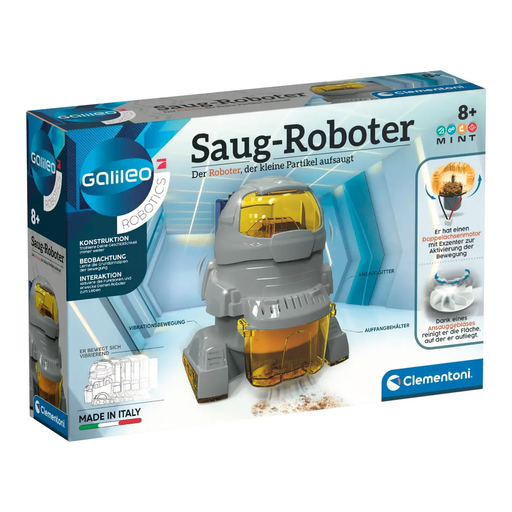
Why it's a great match: Ideal for children who want to understand how mechanical devices work. The focus is on tangible principles like vibration, suction, and power transmission. An excellent gift for 8-year-old boys and girls who love to tinker.
The illustrated manual explains the scientific principles behind the suction function and movement, actively avoiding the "empty educational promise" pitfall.
The result is a working robot that can vacuum up small crumbs. This direct, visible success is motivating and creates a deep understanding of the mechanics involved.
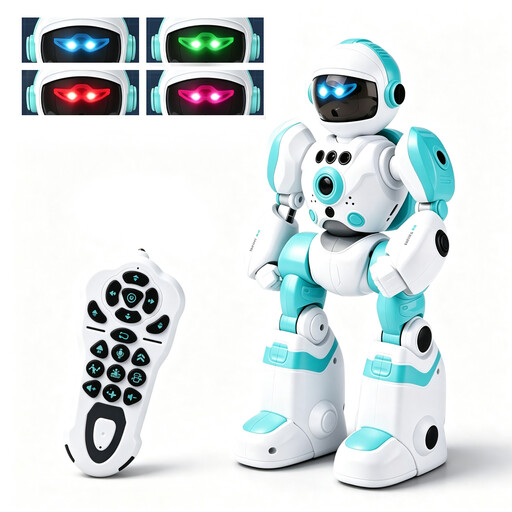
Why it's a great match: Perfect for kids fascinated by modern technology, controls, and interaction. The gesture control and programming function offer a contemporary play experience that goes beyond a simple remote.
With gesture control, voice recording, and a programming function, this model offers genuine educational value, sidestepping the trap of being just a toy with no learning content.
Promotes an understanding of if-then logic through its programming function and hones coordination with intuitive gesture control.
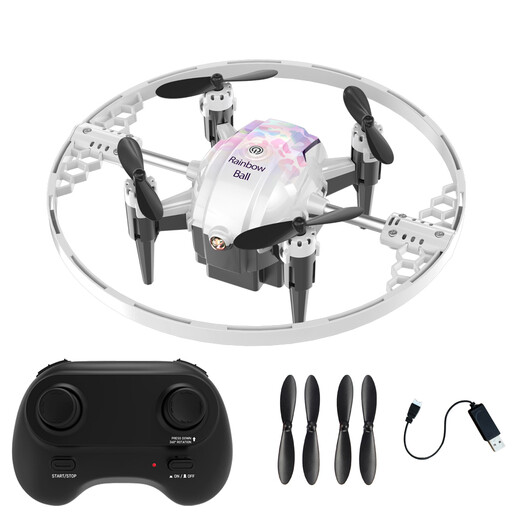
Why it's a great match: For kids who are more interested in flight dynamics and remote control than in pure assembly. It's a great entry point into the world of remote-controlled aircraft, specifically designed for safe indoor use.
The beginner-friendly controls with one-touch take-off/landing and three speed modes prevent the typical frustration that quickly arises with more complex drones.
Its stable flight and robust materials forgive beginner mistakes. The RGB lighting provides extra visual appeal and makes flying indoors an exciting experience.
If you'd like to compare more models, you can find a wide selection of products covering various interests and age groups in our main category.
1. From what age is a robot kit recommended? This largely depends on the kit's complexity and the child's individual development. Simple plug-and-play systems are often suitable for children as young as 6. More demanding kits with screws, wiring, and mechanical elements, like the Clementoni Galileo Robotics kit, are generally designed for children aged 8 and up. More important than age is good hand-eye coordination and the ability to follow illustrated instructions.
2. What batteries are needed for most learning robots, and are they included? Most robot kits require standard batteries, typically AA or AAA type. These are usually not included. It's wise to check the product description before purchasing to avoid disappointment on the big day. Some models feature an integrated, rechargeable battery that is charged via a USB cable.
3. Can you only build one model with a single kit? This varies by product. Many entry-level kits are designed for building one specific model. More advanced or modular systems often allow for building several different models from the same parts or encourage free experimentation. Information on this can usually be found in the product description or on the packaging. Sets that foster creativity often offer more flexibility here.