
Lieferung heute & morgen

Qualitätsgarantie

Willkommens-Angebote freischalten: KOSTENLOSE Lieferung | Bis zu 80 % RABATT | Kostenlose 30-Tage-JoyPlus-Testphase
App herunterladen
A children's rug can transform a room – it creates a cosy atmosphere, dampens noise, and defines a dedicated space for playing and dreaming. But the selection is vast, and not every model that catches your eye at first will prove its worth in daily life. Many parents quickly discover that their new rug was a poor investment. To make sure that doesn't happen to you, we'll show you which pitfalls to look out for and which criteria really count.
By a Joybuy Product Recommendation Officer, July 28, 2026
The decision to buy a rug is often made hastily, based on colour and design. But in a child's room, in particular, hidden drawbacks can severely limit its usefulness.
To avoid a bad purchase, you should focus on objective and measurable characteristics. These three parameters are crucial for the functionality and longevity of a children's rug.
The choice of material affects the feel, maintenance, and room climate.
The height of the rug fibres (the pile) determines its potential uses.
The shape can visually alter a room. A round children's rug placed in the middle of the room can create a harmonious focal point, while rectangular models fit well along walls or under furniture. When it comes to designs, the sky's the limit: a children's rug with animals, a children's rug with a rainbow, or themed play mats with streets encourage creativity and become toys in their own right.
We have selected a few models based on the criteria mentioned, tailored for different requirement profiles.
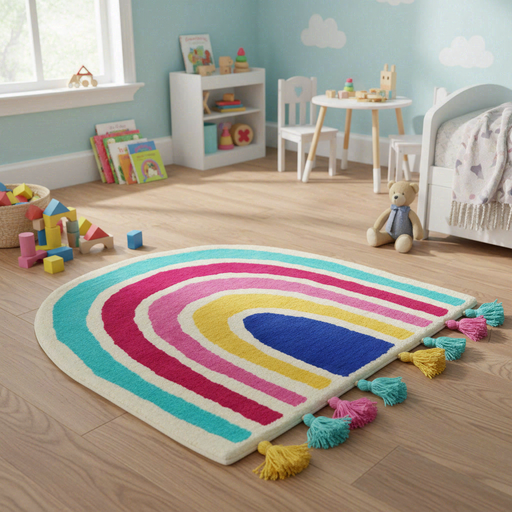
Why it's a great fit: Ideal for parents who value natural materials and a stylish, modern design. The boho look with the rainbow motif and tassels is a real eye-catcher in a trend-conscious girl's or boy's room.
This rug avoids the trap of vague material specifications. It is verifiably made from 100% wool, a high-quality and durable natural material known for its dirt-repellent properties.
The hand-woven construction ensures a robust structure and a unique texture. Wool provides natural warmth and softness underfoot.
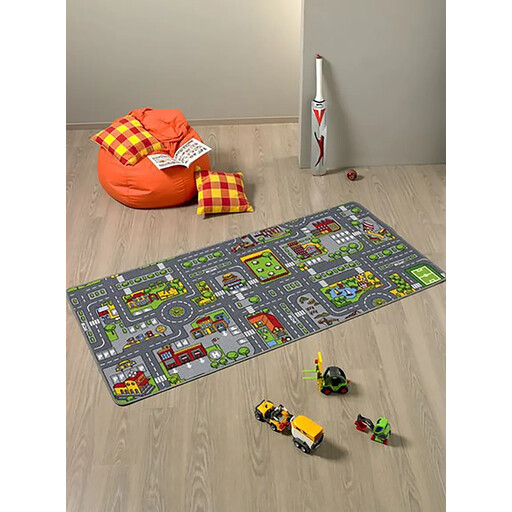
Why it's a great fit: Perfect for children who love playing with vehicles and figures. The city design stimulates the imagination and makes the rug itself the centre of the action. It's a classic choice for a functional play area.
This rug has a very low pile, avoiding the trap of an impractical high-pile rug. Toy cars roll effortlessly and small Lego bricks won't get lost. The textile backing provides stability.
Actively encourages imaginative play. The model is also suitable for underfloor heating and can be easily rolled up for storage.
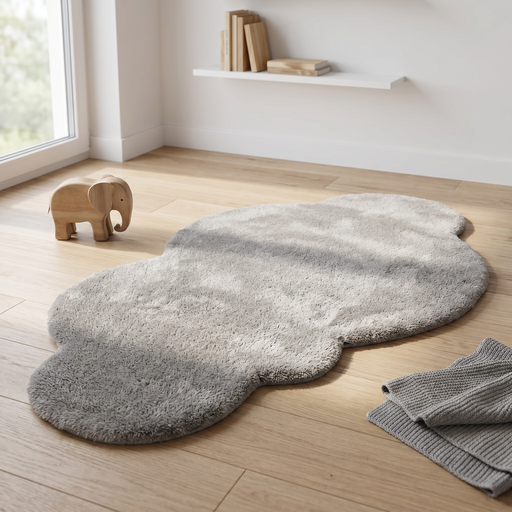
Why it's a great fit: The gentle cloud shape and neutral grey colour create a calming atmosphere, ideal for a nursery. The pure cotton material is soft for babies' delicate skin as they crawl and play on it.
This model relies on 100% cotton, thus avoiding the uncertainty of synthetic materials. It sidesteps the trap of an overstimulating design that would be inappropriate in a quiet space for babies.
The hand-woven cotton construction provides a soft, natural, and breathable surface. The shape is playful yet subtle and timeless.
We have compiled a complete, up-to-date list of products that fully meet these strict selection criteria and all applicable safety requirements.
1. How do you clean a children's rug that isn't machine-washable? For rugs made of wool or jute, "spot cleaning" is recommended. Dab spills immediately with a clean, dry cloth. For dried-in stains, a mild soap solution and a damp cloth can be used. Always test cleaning agents on an inconspicuous area first. Regular vacuuming without the brush attachment helps to keep the rug clean.
2. What is the ideal size for a children's rug? The size depends on the room and its intended use. A smaller, round rug (approx. 100 cm in diameter) can serve as an accent in the centre of the room or in a play corner. A large, rectangular rug (e.g., 120x170 cm or larger) can define the main play area and protect a large section of the floor. Measure the available space and ensure that doors can still open easily.
3. From what age is a play mat useful for a baby? For the first few months, a soft nursery rug made of cotton or a similar skin-friendly material is suitable for the baby to lie on and practise tummy time. As soon as the child becomes more mobile and starts to play with purpose (from around 1 year old), a more robust play mat with a low pile and stimulating motifs becomes more interesting.