
Lieferung heute & morgen

Qualitätsgarantie

Willkommens-Angebote freischalten: KOSTENLOSE Lieferung | Bis zu 80 % RABATT | Kostenlose 30-Tage-JoyPlus-Testphase
App herunterladen
A kids' scooter with light-up wheels is a big hit with many children. The flashing wheels turn every ride into an exciting adventure and increase visibility at dusk. However, when choosing the right model, many parents and grandparents fall into traps that not only strain their budget but can also compromise the child's safety and enjoyment. Before you make a decision, you should be aware of the most common problems.
The 3 most common mistakes when buying a kids' scooter:
To help you make an informed decision that combines durability, safety, and fun, we have broken down the crucial technical features.
Choosing the right model depends on objective criteria that go beyond design. Pay attention to the following three points to avoid a bad buy.
The most fundamental decision concerns the number of wheels. There are two main categories suitable for different age and developmental stages.
A height-adjustable kids' scooter is a worthwhile investment. The handlebar should be adjustable in several stages to fit the child's height. A good rule of thumb is that the child's hands should be able to comfortably grip the handlebars in an upright position without having to raise their shoulders or bend over.
A foldable kids' scooter offers additional advantages. It can be stored in a space-saving manner in the car boot, in the hallway, or when travelling. Look for a robust and easy-to-use folding mechanism that works reliably in everyday use.
The deck is the platform where the child stands. A wide deck with a non-slip coating gives beginners, in particular, a secure footing. The material should be sturdy enough to support the child's weight without issue. Most kids' scooters are equipped with a rear-wheel foot brake. This is activated by pressing on the rear wheel cover with the foot. It should be easily accessible and effective.
To make the choice easier, we have put together some models based on typical user profiles.
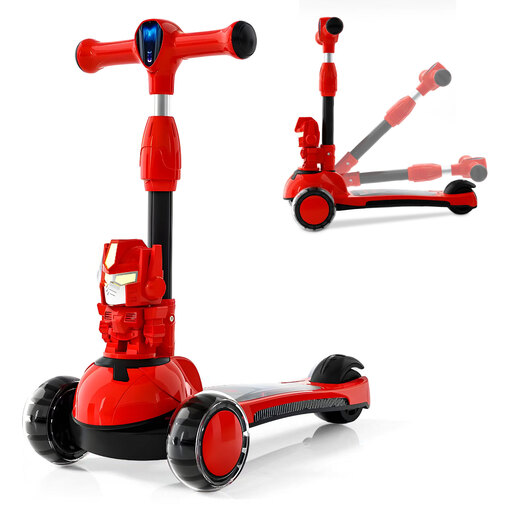
Why this model is a great fit: Ideal for toddlers getting their first experience on a scooter. The 3-wheel design provides the necessary stability to safely practice balance without the fear of tipping over.
This model avoids the "wrong stability" pitfall as it is specifically designed for beginners. The intuitive lean-to-steer system promotes motor skill development safely and effectively.
The wide, non-slip deck provides a secure platform, while the height-adjustable handlebar allows for use over several years.
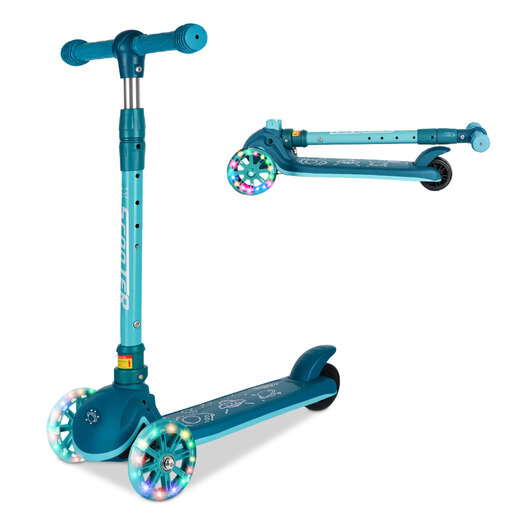
Why this model is a great fit: For families looking for a durable and practical companion. The combination of height adjustability and a folding function makes this scooter ideal for everyday use and outings.
This model directly counters the "lack of adjustability" pitfall. The handlebar grows with the child, and the folding mechanism ensures the scooter doesn't become a bulky obstacle.
The simple folding mechanism makes the scooter extremely portable—perfect for trips to the playground or taking on holiday.
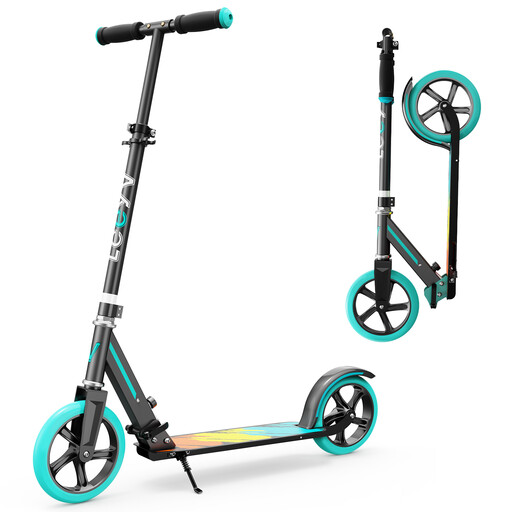
Why this model is a great fit: For school-aged children and teens who are already confident on two wheels. The larger wheels ensure a smooth, fast ride, ideal for the way to school or for longer distances in the park.
This model is intended for advanced riders, thus avoiding the pitfall of being an under-challenging toy. The robust aluminium and steel construction and high weight capacity of up to 100 kg (220 lbs) defy the impression of a short-lived product.
The large 205 mm polyurethane wheels offer a high level of riding comfort, even on rougher asphalt. The scooter is also suitable for teens and adults.
We've compiled a complete, up-to-date list of products that fully meet these strict selection criteria and German safety regulations.
1. How do the light-up wheels on a kids' scooter work without batteries? Most scooters with LED wheels use a dynamo mechanism. The rotational movement of the wheels generates kinetic energy, which powers small LEDs to light up. No batteries are required, which is practical and eco-friendly. The lights work as long as the scooter is in motion.
2. From what age is a 3-wheel scooter suitable for children? A 3-wheel scooter is generally recommended for children from 3 years of age. However, more important than the exact age is the child's individual motor skill development. If your child can walk and run confidently and is beginning to test their balance, they are usually ready for their first rides on a stable three-wheeled model.
3. What should I look out for when maintaining a kids' scooter? A regular, quick check ensures long-lasting safety and fun. Before each ride, check that all screws, especially on the handlebar and wheels, are tight. Keep the deck clean to maintain its non-slip properties. Check the brake function and remove dirt from the ball bearing area to keep the wheels running smoothly.