
Lieferung heute & morgen

Qualitätsgarantie

Willkommens-Angebote freischalten: KOSTENLOSE Lieferung | Bis zu 80 % RABATT | Kostenlose 30-Tage-JoyPlus-Testphase
App herunterladen
The selection of kids' scooters is vast, and choosing the right model can quickly become overwhelming. Many products advertise features that don't live up to their promises in practice. As a Joybuy Product Recommendation Officer, I'm here to help you distinguish the important features from empty marketing hype and make an informed decision.
Before you make a choice, you should be aware of two common pitfalls that often lead to disappointment:
To avoid these problems, you should focus on three core parameters that determine the safety, enjoyment, and longevity of a kids' scooter.
For beginners, stability is the most important criterion. A 3-wheel kids' scooter (two in the front, one in the back) offers significantly more stability and is less likely to tip over than a two-wheeled model. Many of these scooters for kids ages 3 and up use a "lean-to-steer" system. This allows the child to steer by shifting their body weight, which is intuitive and naturally trains their sense of balance.
Two-wheeled scooters require a well-developed sense of balance and are suitable for more experienced children. An exception is the stunt scooter, which features a fixed, non-height-adjustable handlebar designed for maximum stability during tricks and jumps.
The quality of the wheels determines ride comfort and speed. Pay attention to the following features:
A foldable kids' scooter is extremely practical if it needs to be frequently transported in a car or stored compactly at home. Look for a sturdy and easy-to-use folding mechanism that has no wobble or play when locked in the unfolded position.
For use in the skatepark, a fixed freestyle scooter or stunt scooter is essential. These models intentionally omit folding mechanisms and height adjustments, as these joints would be weak points under the high stress of jumps and stunts. Their construction is designed for maximum durability and longevity.
Here are three recommendations tailored to different age groups and use cases.
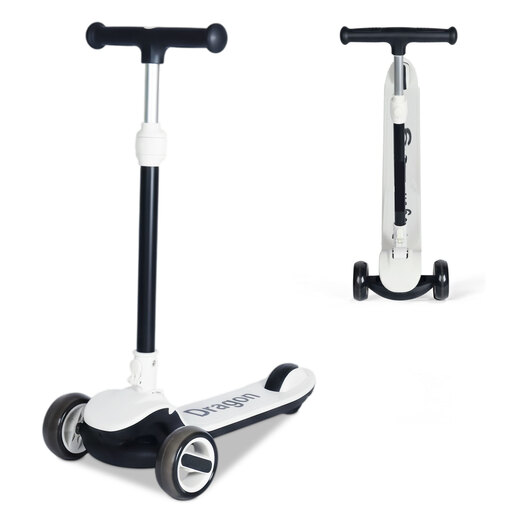
Why this model is a great fit: Ideal for toddlers getting their first experience on a scooter. The three-wheel design with an extra-wide, non-slip deck provides maximum stability and safety to build confidence.
This model is specifically designed for the 3+ age group and isn't an awkward compromise. The components are built to handle the weight and use by young children.
The intuitive lean-to-steer system playfully develops a sense of balance. The battery-free light-up wheels add extra visibility and fun.
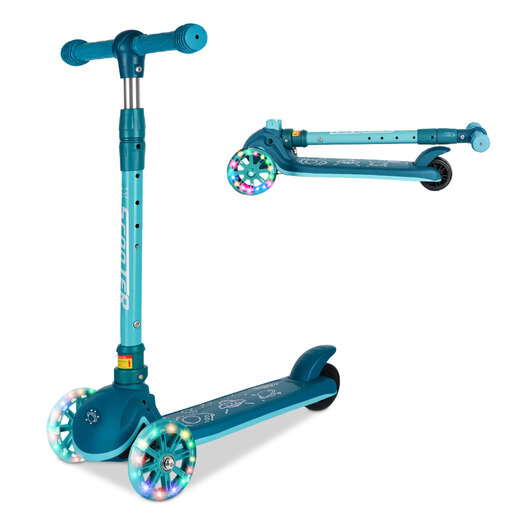
Why this model is a great fit: A practical solution for families looking for a versatile, everyday scooter. Thanks to its folding mechanism and height-adjustable handlebar, it adapts as the child grows and is easy to transport.
Although it covers a wide age range, its adjustment mechanism is robustly designed and provides stable support at every height setting, avoiding the typical weakness of "grow-with-me" models.
The combination of height adjustability and a folding function makes this scooter a durable and exceptionally practical companion for several years.
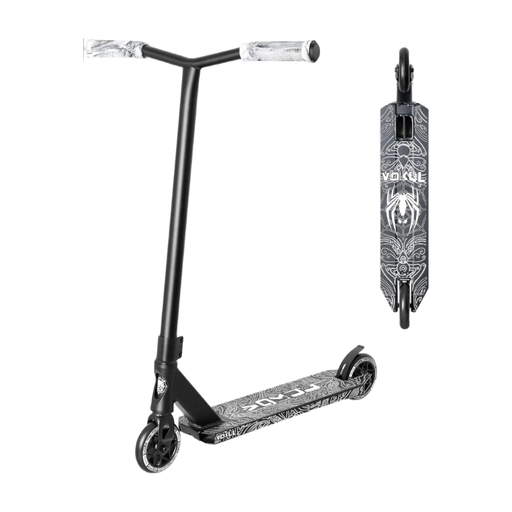
Why this model is a great fit: Specifically developed for entering the world of freestyle tricks. Its construction is designed for the high-stress demands of the skatepark, providing the necessary stability for jumps and grinds.
This model uses high-quality components like a T-6061 aluminium deck and ABEC-9 bearings. These are designed for intensive use and won't wear out as quickly as the parts on a conventional kick scooter.
The fixed, non-foldable construction offers maximum stability and safety during stunts. The high-quality ABEC-9 bearings enable a fast and smooth ride.
We have compiled a complete, up-to-date list of products that fully meet these strict selection criteria and safety regulations.
A scooter for ages 3 and up is generally a good choice, provided it's a stable model with three wheels and a low deck. These scooters help develop balance and coordination. For two-wheeled models, the child should already be able to run confidently and maintain good balance, which is usually the case from around age 5.
The optimal handlebar height is crucial for a comfortable and safe posture. The handlebars should be roughly at the child's navel level when they are standing on the deck. Their arms should be slightly bent. On a height-adjustable scooter, this position can be easily set and adapted as the child grows.
A conventional kids' kick scooter is designed for transportation and recreational use. It is often lightweight, foldable, and height-adjustable. A stunt scooter (or freestyle scooter) is a piece of sports equipment built for tricks and jumps in the skatepark. It has a fixed, reinforced construction, smaller and more robust wheels, and is not foldable to ensure maximum stability under high stress.