
Lieferung heute & morgen

Qualitätsgarantie

Willkommens-Angebote freischalten: KOSTENLOSE Lieferung | Bis zu 80 % RABATT | Kostenlose 30-Tage-JoyPlus-Testphase
App herunterladen
Choosing a kids' scooter can be a challenge given the many models on the market. Well-intentioned purchases often lead to disappointment when the scooter is quickly outgrown, becomes wobbly, or reveals safety flaws. As your Joybuy Product Recommendation Officer, I'll help you identify the crucial features and avoid common purchasing traps, so you can make an informed decision on a durable and safe toy.
Before we dive into the important features, let's look at three common problems that lead to purchase mistakes:
To avoid the problems mentioned above, you should focus on a few objective criteria during your selection. These form the foundation for safety, durability, and riding fun.
Especially for beginners and toddlers, a 3-wheel kids' scooter is a smart choice. Two wheels at the front and one at the back offer significantly more stability than classic two-wheeled models. This gives the child confidence in their abilities right from the start.
Modern three-wheel scooters often use lean-to-steer technology. Instead of turning the handlebar, the child steers the scooter by shifting their weight. This principle intuitively promotes balance and motor coordination. It's a system that has proven particularly effective for a scooter for toddlers and makes the transition to a two-wheeled model easier later on.
A height-adjustable kids' scooter is a sustainable investment. Look for models that offer multiple adjustment levels to precisely adapt the handlebar to your child's height. The ideal height is reached when the child's hands can grip the handles with their arms in a relaxed, slightly bent position. This ensures optimal control and an ergonomic posture while riding. Such a scooter can accompany a child for several years, which also makes it a practical gift for kids.
Safety is determined by the interplay of several components:
Here are some models that, based on the criteria above, are suitable for different user profiles.
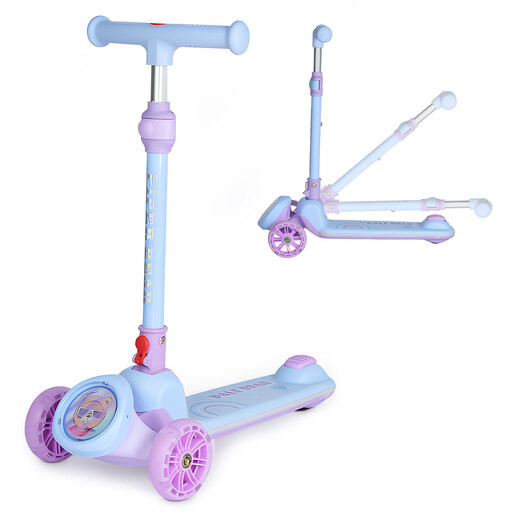
Why This Fits Their Persona: This model combines all the essential features for a safe start. It's ideal for families looking for a reliable scooter for their child's first rides without a large budget. It is suitable as a scooter for kids aged 3 and up.
Thanks to the height-adjustable handlebar, the scooter won't be outgrown after one season. The wide, non-slip deck and 3-wheel design directly address the pitfall of unstable, low-cost models.
Offers a balanced package of stability (3 wheels, lean-to-steer), durability (height-adjustable), and an appealing extra (light-up wheels).
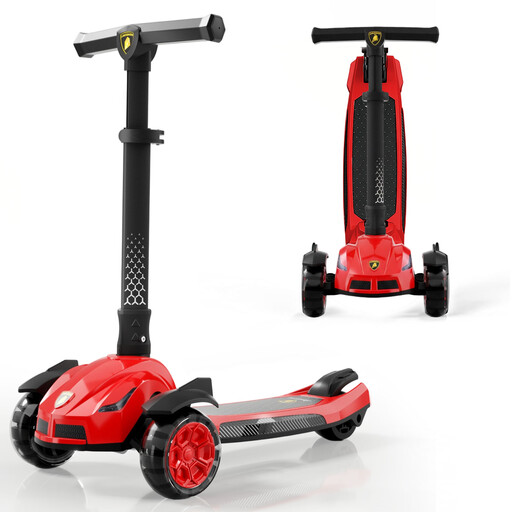
Why This Fits Their Persona: Perfect for families who often transport the scooter in the car or need to store it compactly at home. The folding feature offers maximum flexibility for a mobile lifestyle.
This model combines the crucial height-adjustability with a practical folding mechanism. It proves that functionality and convenience do not have to conflict with a solid, stable construction.
The key advantage is the handlebar's folding mechanism, which significantly simplifies storage and transport. It retains all core features like light-up wheels and a wide deck.

Why This Fits Their Persona: For kids where visual appeal is a top priority. This model goes beyond simple light-up wheels by integrating dynamic LED modes that create excitement while also ensuring enhanced visibility.
It debunks the myth that a focus on design compromises functionality. Despite the eye-catching LED effects, the scooter is built on a solid, foldable, and height-adjustable platform with a wide deck.
The dynamic LED modes are a clear distinguishing feature. Additionally, the model offers a complete feature set with its folding function and height adjustability.
We have compiled a complete, up-to-date list of products that meet these strict selection criteria and current safety regulations.
A scooter for ages 3 and up is generally a good guideline, especially for models with three wheels and lean-to-steer technology. However, more important than age are the child's motor skills and sense of balance. Start in a safe area away from traffic and let the child first explore the scooter by standing on it and pushing it.
The handlebar should be set to approximately the child's belly button height. Their arms should be slightly bent when gripping the handles. Setting it too high makes control difficult, while setting it too low leads to an uncomfortable, hunched-over posture. Check the adjustment regularly, as children grow quickly.
Most scooters with light-up wheels use a dynamo mechanism. The LEDs are powered by the rotational movement of the wheels. This means no batteries are required, and the lights work as long as the scooter is in motion. This is a maintenance-free and eco-friendly solution.