
Lieferung heute & morgen

Qualitätsgarantie

Willkommens-Angebote freischalten: KOSTENLOSE Lieferung | Bis zu 80 % RABATT | Kostenlose 30-Tage-JoyPlus-Testphase
App herunterladen
By the Joybuy Product Recommendation Officer, August 29, 2026
Choosing a kids' scooter can quickly become overwhelming. The market is flooded with models that advertise flashy lights and eye-catching designs. But behind the facade often lie critical flaws that not only dampen the fun but also compromise safety. Before you make a decision, it's essential to understand the most common pitfalls that lead to a bad purchase.
To find a durable and safe kids' scooter, you should focus on objective technical features rather than pure marketing promises.
The number of wheels and the associated steering mechanism are the most important criteria for determining if a scooter is age-appropriate.
The scooter's construction determines its durability and safety in daily use.
These components are directly responsible for control and ride comfort.
Here are some models tailored to specific use cases and age groups that meet the criteria mentioned above.
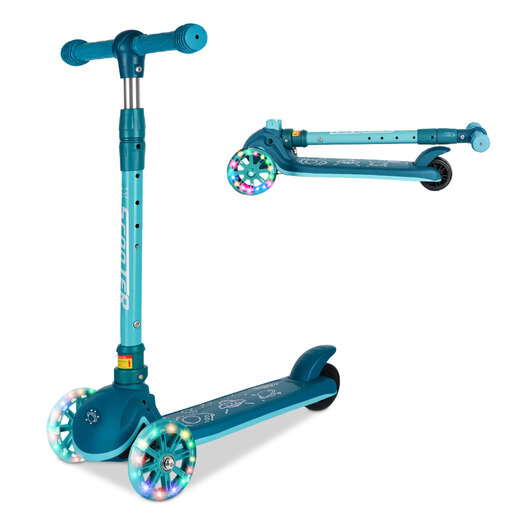
Why This Fits Their Persona: Ideal for toddlers getting their first experience on a scooter. The three-wheel design and intuitive lean-to-steer system promote balance without being overwhelming, ensuring a quick sense of achievement.
The height-adjustable handlebar avoids the "one-size-fits-all" trap and grows with the child. The 3-wheel system with lean-to-steer is age-appropriate and prevents frustration.
Combines a stable, safe ride with practical features like a folding mechanism and an anti-slip deck. The light-up wheels provide an extra motivational boost.
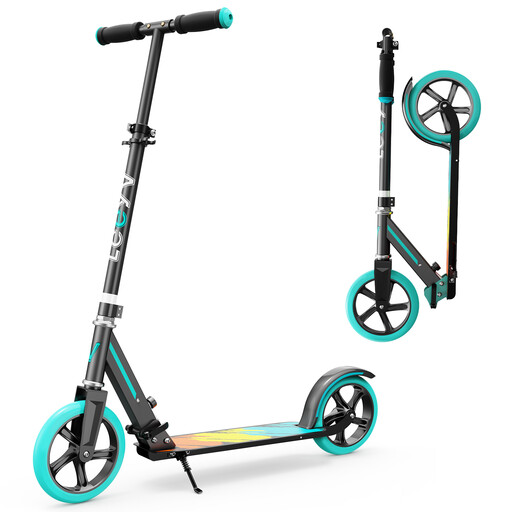
Why This Fits Their Persona: Suitable for school-aged children and teens who need a reliable kick scooter for daily use, commuting to school, or leisure rides. The large wheels also make it comfortable for longer distances.
The large 205 mm wheels offer significantly better ride quality than the small, often low-quality wheels on cheaper models. The high load capacity of 100 kg (according to the manufacturer) ensures a long service life.
The foldable aluminium frame makes the scooter lightweight and portable. The combination of large wheels and a height-adjustable handlebar offers comfort and flexibility for various age groups.
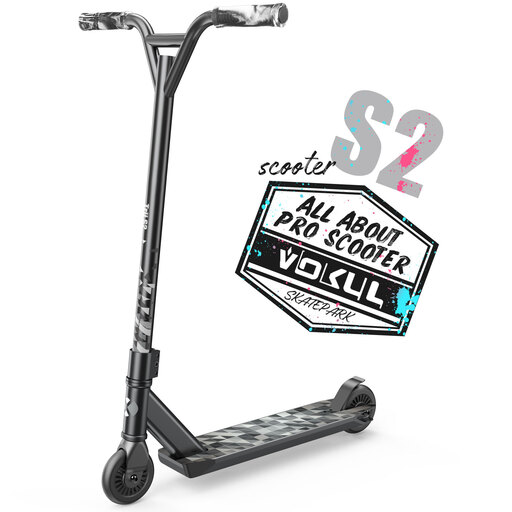
Why This Fits Their Persona: Specifically designed for kids and teens who want to get into the world of freestyle riding and learn their first tricks at the skatepark. The construction is focused on stability and durability for jumps.
This stunt scooter avoids the danger of using an unsuitable recreational scooter for tricks. The fixed handlebar, reinforced deck, and robust triple clamp are designed for stresses that a foldable scooter could not withstand.
The construction of 6061 aircraft-grade aluminium and 4130 chromoly steel offers high strength at a low weight. The design is optimised for the specific demands of stunt riding.
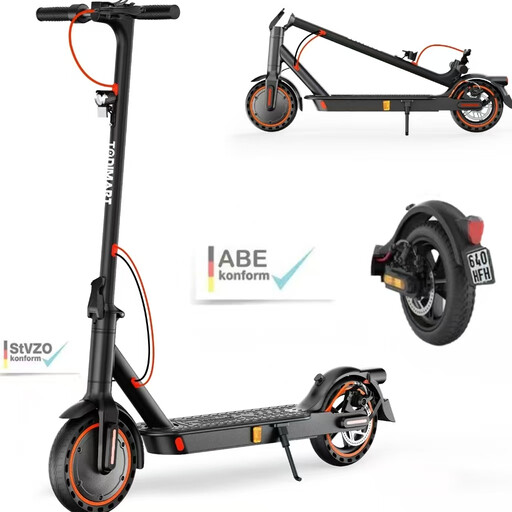
Why This Fits Their Persona: This e-scooter is aimed at teens and adults looking for a practical and legal solution for short-distance urban travel. It's designed for commuting to work, university, or for running quick errands.
The key feature is its General Operating Permit (ABE). This avoids the legal trap of using an unapproved e-scooter on public roads, which can result in fines.
Features an ABE for legal use on German public roads. The 350W motor and dual braking system provide reliable performance and control for urban use.
We've compiled a complete, up-to-date list of products that fully meet these strict selection criteria and German safety regulations.
A two-wheeled kick scooter is generally suitable for children from about five to six years old. The most important prerequisite is a well-developed sense of balance. If your child can confidently ride a bike without training wheels, they are usually ready for a two-wheeled scooter. For younger children, a 3-wheeled scooter is the safer choice.
Lean-to-steer is a steering mechanism used mainly on three-wheeled scooters for young children. Instead of turning the handlebars like on a bicycle, the child steers by leaning their body weight in the desired direction. This is very intuitive for small children, promotes motor coordination and balance, and prevents abrupt, unsafe turning of the handlebars.
Conventional kids' scooters and kick scooters without a motor are legally considered toys or sports equipment. They are allowed on pavements, in pedestrian zones, and on play streets, but not on the road or in bike lanes. A permit or insurance is not required. E-scooters are an exception: in Germany, they require a General Operating Permit (ABE) for legal use on public roads, as well as a valid insurance sticker.