
Lieferung heute & morgen

Qualitätsgarantie

Willkommens-Angebote freischalten: KOSTENLOSE Lieferung | Bis zu 80 % RABATT | Kostenlose 30-Tage-JoyPlus-Testphase
App herunterladen
Choosing a kids' scooter can quickly become overwhelming. The market is flooded with models that all look similar at first glance but differ in crucial details. As a Joybuy Product Recommendation Officer, I see every day which features truly matter and which are just empty marketing promises. Many parents invest in a scooter that becomes unusable after just a few months or fails to ensure their child's safety.
To save you from a similar experience, we'll highlight the three most common pitfalls when buying a kids' scooter and show you what to look for to make a durable and safe choice.
Pitfall 1: Non-Adjustable Models. A common mistake is buying a scooter with a fixed handlebar height. Children grow quickly, and a scooter that fits perfectly today can be too small and uncomfortable in six months. This not only leads to frustration but also promotes poor posture.
Pitfall 2: Unstable Folding Mechanisms. A foldable scooter is practical for transport and storage. However, many budget-friendly models use low-quality joints that quickly become wobbly or are difficult to operate. In the worst-case scenario, such a mechanism poses a safety hazard.
Pitfall 3: Inferior Wheels and Bearings. Hard plastic wheels or poorly made ball bearings result in a loud, jerky ride. This not only reduces the fun but also increases the risk of falling on uneven surfaces.
To avoid these pitfalls, you should carefully check three technical aspects before buying. These determine the scooter's safety, durability, and ride enjoyment.
The number of wheels is the most critical criterion for stability.
A height-adjustable scooter is a smart economic investment because it grows with your child and can be used for several years. Look for a handlebar that can be locked into several positions. The adjustment mechanism should be robust and show no play, even at its maximum height. Aluminium handlebars are lightweight and rust-proof, while steel offers greater durability, which is particularly relevant for stunt scooters.
The deck should be wide enough to accommodate both feet (at least initially) and feature a non-slip surface. This gives the child a secure footing, even in wet conditions.
For the wheels, the material is crucial. PU (Polyurethane) wheels are the standard for a quiet and smooth ride. They are abrasion-resistant and offer good grip. A special highlight for children is often a scooter with light-up wheels. These usually work via a dynamo effect from the rotational movement and require no batteries, making them a maintenance-free and fascinating extra.
Based on these objective criteria, we have identified some models suitable for different age groups and use cases.

Why This Fits Their Persona: Ideal for children aged 3 and up getting their first experience on a scooter. The three-wheel design and intuitive lean-to-steer mechanism provide immediate confidence and playfully promote balance without overwhelming the child. A perfect gift for preschoolers.
The extra-wide, non-slip deck and sturdy PU wheels counter the pitfall of inferior materials, offering a safe, smooth ride.
High stability due to the 3-wheel design; promotes motor skill development with lean-to-steer; battery-free light-up wheels.

Why This Fits Their Persona: Perfect for families looking for a long-term solution. Thanks to its adjustable handlebar, this scooter grows with the child and can be easily folded for transport on holidays or visits to the grandparents.
It avoids the "one-size-fits-all" trap with three adjustable handlebar heights. The folding mechanism is designed for simple, secure handling, countering the pitfall of unstable joints.
Multi-level height-adjustable handlebar; lightweight and secure folding mechanism; LED light-up wheels and illuminated deck for high visibility.
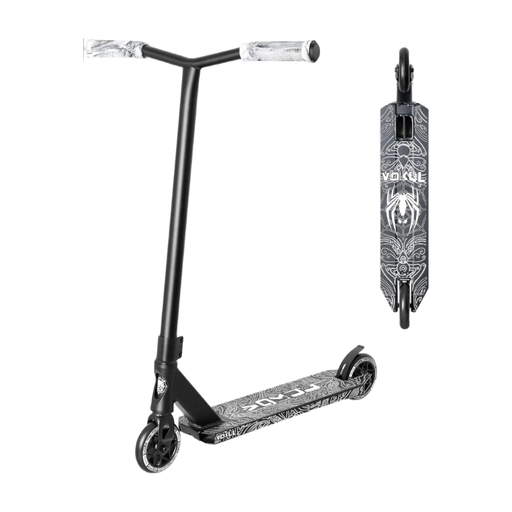
Why This Fits Their Persona: For older children (8+) who are outgrowing simple riding and want to try their first tricks at the skatepark. This scooter is not designed for comfort, but for maximum durability and performance.
It avoids the pitfall of unsuitable materials with a construction of T-6061 aluminium and an integrated fork that withstands the stress of jumps. The high-quality ABEC-9 ball bearings provide the necessary speed and smoothness.
Extremely robust construction for stunts; high-performance ball bearings (ABEC-9) for fast, fluid rides; lightweight yet sturdy aluminium construction.
We have compiled a complete, up-to-date list of products that fully meet these strict selection criteria and safety regulations.
A scooter for children aged 3 and up is generally a good choice, provided it is a stable three-wheeled model. At this age, motor skills and balance are sufficiently developed to achieve initial riding success with a lean-to-steer mechanism.
Yes, absolutely. A properly fitting, certified helmet is essential to protect the head during falls. Additionally, knee and elbow pads are highly recommended, especially for beginners and during first attempts at the skatepark. Safety should always come first.
Most scooters with light-up wheels use an integrated dynamo. The rotation of the wheels generates energy that powers the LEDs. No batteries are required, which makes this feature maintenance-free and eco-friendly. On some models, the deck may have additional battery-powered lights; this will be specified in the product description.