
Lieferung heute & morgen

Qualitätsgarantie

Willkommens-Angebote freischalten: KOSTENLOSE Lieferung | Bis zu 80 % RABATT | Kostenlose 30-Tage-JoyPlus-Testphase
App herunterladen
A well-chosen kids' shelf can tame the chaos of books and toys in the playroom while also fostering your child's independence. But the market is flooded with models whose weaknesses often only become apparent after a few months of use. As a Joybuy Product Recommendation Officer, I'll help you navigate the common pitfalls and make a safe, durable, and practical choice.
Many shelves look appealing at first glance, but prove to be impractical or even unsafe in daily use. Pay special attention to these three points to avoid a bad purchase:
To find the right toy storage, you should focus on objective and verifiable features. These three parameters are fundamental to a good purchasing decision.
Safety is the top priority. An indispensable feature is an anti-tip kit, a device for securing the shelf to the wall. This is included with most quality kids' room furniture, and its installation is mandatory.
Also, pay attention to the material specifications. Many shelves are made of MDF (Medium-Density Fibreboard). Here, the classification is crucial: The E1 standard indicates that the material is low-emission and complies with the legal limits for formaldehyde. Rounded corners and edges minimise the risk of injury during play.
Not every shelf is equally suited for every purpose. Consider what will primarily be stored:
Carefully measure the available space in the child's room. A freestanding kids' shelf requires more floor space than a narrow wall shelf but often offers more storage. The height of the shelf should match your child's height so they can reach the upper compartments without climbing. A kids' shelf in white is a popular choice as it fits neutrally into many interior styles and makes the room appear brighter.
Here are some recommendations tailored to different requirements and living situations.
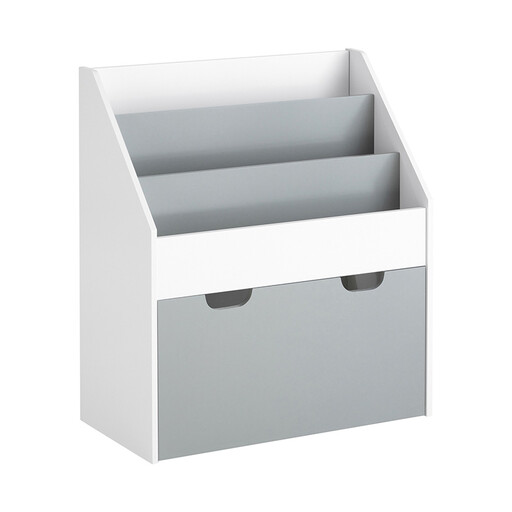
Why This Fits Their Persona: This solution is ideal for parents looking for a functional starter set that organises both books and toys without breaking the bank. The combination of book slings and a mobile toy box is extremely practical.
The child-friendly height of 70 cm prevents unreachable shelves. The removable toy box on wheels is more practical than deep, cluttered storage compartments.
Combined 2-in-1 solution for books and toys. The mobile toy box encourages flexible play and cleanup. Made from MDF (E1).
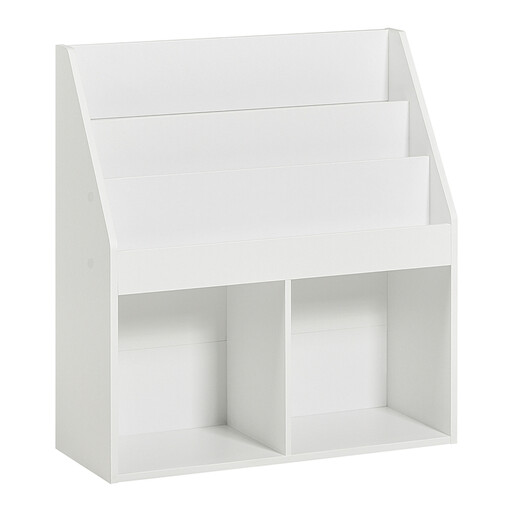
Why This Fits Their Persona: For parents who want to foster their child's independence according to Montessori principles. The low height and open compartments invite the child to act autonomously.
The design is explicitly tailored to the reach of toddlers, avoiding the frustration of shelves that are too high. According to the manufacturer, the sturdy construction can support up to 60 kg.
Promotes independence with a child-friendly height (80 cm) and open compartments. Offers a combination of front-facing book display and open bins for toys.
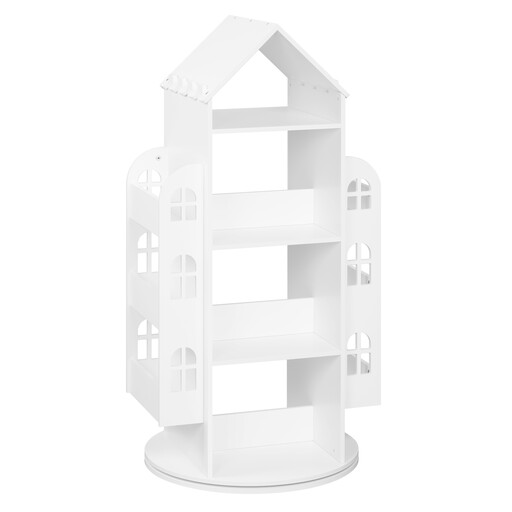
Why This Fits Their Persona: Perfect for smaller kids' rooms where every square metre counts. This shelf makes optimal use of space by offering a large amount of storage on a small footprint, thanks to its 360° rotating function.
Instead of going wide, it utilises height and 360° access, which avoids inaccessible corners. The wide, stable base (59 cm) is designed for stability to counteract the tipping hazard of rotating elements.
360° rotatable for easy access from all sides. Offers plenty of storage for books and toys on 4 levels and in side compartments. Rounded corners for added safety.
We've compiled a complete, up-to-date list of products that fully meet these strict selection criteria and safety regulations.
Most kids' shelves come with an anti-tip kit. This usually consists of a strap or bracket, screws, and wall anchors. Strictly follow the manufacturer's assembly instructions. Make sure you use the appropriate anchors for your wall type (e.g., drywall, brick). Securing the shelf to the wall is a crucial step to prevent tipping accidents, especially in households with small children.
Class E1 MDF boards are a common and good choice. They are sturdy, easy to clean, and low-emission. Solid wood is a more durable but often more expensive alternative. Regardless of the base material, you should ensure that the surfaces have been treated with non-toxic, water-based lacquers. This is particularly important as young children tend to put objects in their mouths.
A Montessori shelf is useful as soon as a child can stand and walk confidently, typically from around 1.5 to 2 years of age. The low profile and open access to materials are specifically designed to promote early independence and a sense of order in toddlers. It allows them to access their books and toys without help from adults.