
Lieferung heute & morgen

Qualitätsgarantie

Willkommens-Angebote freischalten: KOSTENLOSE Lieferung | Bis zu 80 % RABATT | Kostenlose 30-Tage-JoyPlus-Testphase
App herunterladen
For many children, having their own workbench is a dream come true. Hammering, screwing, and building not only fosters creativity but also develops motor skills. However, the selection is vast, and not every model lives up to the promises on the packaging. Before disappointment sets in because the toy wobbles or the tools break after just a few days, you should know the common pitfalls that can lead to a bad buy.
As a Joybuy Product Recommendation Officer, I see every day what features define a quality product. Here are the three most common problems with kids' workbenches and how you can avoid them:
To make an informed decision, it's helpful to focus on the essential product features. These three parameters are crucial for durability, fun, and safety.
Stability is the most crucial aspect of any workbench for kids. A model that wobbles at the slightest touch is unsuitable. Look for a wide base and an appropriate weight.
A kids' workbench with tools should include accessories made for children's hands. The tools must be ergonomically designed, robust, and functional to enable realistic role-playing. Ensure that screws, nuts, and other components are precisely manufactured and fit together well. An extensive set encourages creativity, but quality clearly takes precedence over quantity here.
The workbench from 3 years specification is a starting point, but the child's individual development is just as important. The official safety certifications are what truly matter.
Based on the quality features mentioned, we have identified some products that are suitable for different needs and age groups.
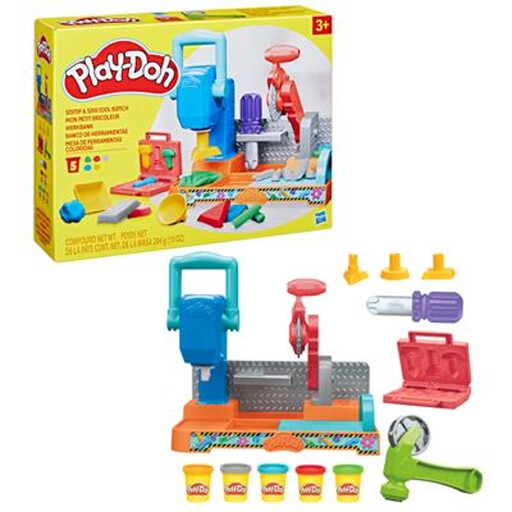
Why This Fits Their Persona: Ideal for younger children who want to develop their fine motor skills and creativity in a playful way. The focus is on sensory play with modelling compound instead of complex mechanics, making it a perfect entry-level model.
Avoids the "unusable tools" trap because the tools are specifically designed for use with Play-Doh compound and work reliably. The construction is a single piece and therefore inherently stable.
Promotes creativity and fine motor skills without the potential for frustration. No assembly required and the compound is non-toxic according to the manufacturer.
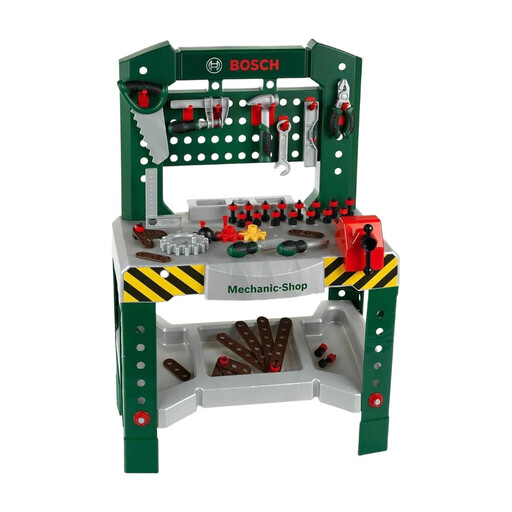
Why This Fits Their Persona: Perfect for children seeking a realistic craftsman experience. The authentic Bosch design and the multitude of tools allow for in-depth, imaginative role-play and promote technical understanding.
Counters the "unusable tools" trap with a 77-piece set whose tools are modelled on the original Bosch design and optimised for children's hands. The worktop with a learning function offers real added value.
Extensive accessory set for long-lasting fun. Specifically promotes dexterity and technical understanding through realistic screwing and building.
We have compiled a complete, real-time list of products that fully satisfy these strict selection criteria and UK safety regulations.
Generally, kids' workbenches are suitable from around the age of 3. However, the choice of the right model should be based on the child's developmental stage. For three-year-olds, models with larger, easy-to-grip parts and simpler functions, such as a workbench with modelling compound, are suitable. More complex kits with small screws and nuts are better recommended for children aged 4 or 5 who no longer put objects in their mouths. Always pay attention to the manufacturer's age recommendation on the packaging.
Both materials have their advantages. A wooden workbench for kids often scores with high stability and a premium feel. It is considered particularly durable. A high-quality toy workbench made of plastic, on the other hand, is lighter, often more colourfully designed, and easier to clean. The crucial factor is not the material alone, but the quality of the workmanship. A stable construction, rounded edges, and non-toxic paint or colouring are essential for both versions.
Look for official seals of approval. The CE mark is mandatory in the EU and signals that the product meets basic safety and health requirements. The EN 71 standard is specifically relevant for toys. An additional, voluntary test mark like the GS mark (Geprüfte Sicherheit / Tested Safety) from an independent institute (e.g., T?V) offers further assurance. Also, check the product for a sturdy build, secure connections, and the absence of sharp edges or pointed corners.