
Lieferung heute & morgen

Qualitätsgarantie

Willkommens-Angebote freischalten: KOSTENLOSE Lieferung | Bis zu 80 % RABATT | Kostenlose 30-Tage-JoyPlus-Testphase
App herunterladen
An interactive globe promises to bring the world into your child's room—a fascinating blend of play and learning. But the market is vast, and not every model lives up to its advertising. Before you make a purchase, it's crucial to understand the common pitfalls that can quickly turn a promising educational toy into a disappointment. This guide will help you separate the good from the bad and find a product that truly nurtures your child's spirit of discovery.
Many products advertise impressive features, but a closer look often reveals weaknesses that significantly diminish their educational value and fun factor. Pay special attention to these three points:
To avoid buyer's remorse, base your decision on objective features. These three parameters are crucial for the quality and longevity of an interactive globe.
The sheer number of facts isn't everything. Check which subject areas are covered. A high-quality educational globe for school-aged children should offer a broad spectrum:
The content must be age-appropriate and, most importantly, presented in clear, correct English. This is a key quality indicator that is often overlooked.
The user experience is at the heart of the toy. There are fundamental differences here:
An educational toy for ages 7 and up must be durable. Look for a stable base that won't tip over easily. The globe itself should be made of resilient plastic, and the surface should resist scratching even with frequent use. The electronics, especially cables and the battery compartment, must be child-safe and built to last. A toy like this is often a first-day-of-school gift and should therefore provide several years of enjoyment.
Based on the criteria above, we've identified a few products that represent a smart choice for different user profiles.

Why This Fits Their Persona: Ideal for elementary school children who appreciate visual and audio content beyond just facts. The combination of a physical globe and a video screen satisfies curiosity about countries, animals, and cultures in a modern, engaging way.
It counteracts "superficial interactivity" by combining over 9,000 facts with videos and animations. The four game modes offer variety and deeper knowledge transfer instead of simple recall.
The integrated video screen provides visual context that enhances understanding. According to the manufacturer, the content is specially prepared for the English-speaking market and is age-appropriate.
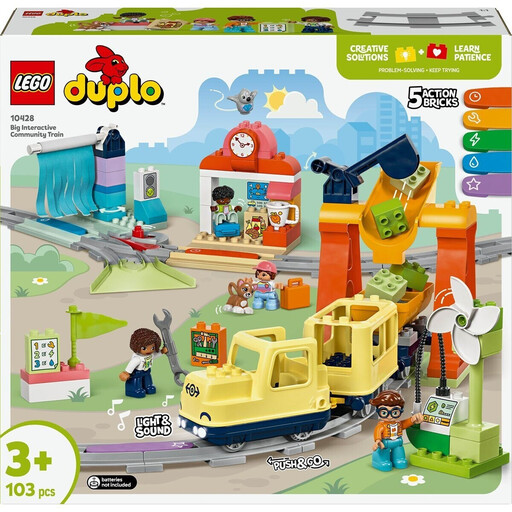
Why This Fits Their Persona: Perfect for younger children to playfully grasp basic technical concepts. The set promotes fine motor skills, creativity, and an understanding of cause and effect through tactile feedback.
Here, interactivity isn't abstract but directly tangible. The 5 Action Bricks trigger specific, understandable reactions (lights, sounds), playfully introducing the principles of coding.
It fosters problem-solving skills as children decide where the train goes and which action is triggered. Compatibility with other DUPLO sets and the app ensures long-lasting play value.
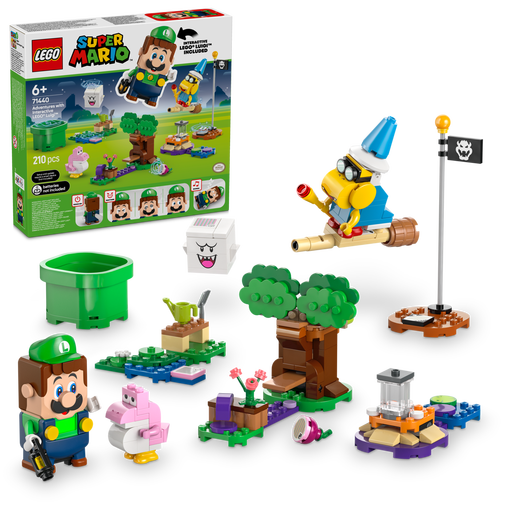
Why This Fits Their Persona: It combines the fascination of video games with creative building. Children who love exploring digital worlds can design their own physical levels and play through them with an interactive figure.
Instead of passive screen time, this toy demands active problem-solving and creativity. The interaction is direct and rewarding, as the figure reacts to the self-built environment.
The interactive LEGO Luigi figure with sensors and a display provides instant feedback and collects digital coins. The modular system is expandable with other LEGO Super Mario sets, promoting long-term creativity.
While a globe is a fantastic choice, there are many types of interactive toys. We've curated a selection of products that meet our criteria for educational value, quality, and durability.
Data currency is a key consideration. Models like the VTech Video Globe have an extensive database that is current at the time of production. For purely physical globes without an update function, the information is static. For geopolitical changes or new discoveries, it's wise to check with the manufacturer if digital content can be updated via an app or website. However, this is not a standard feature on all models.
A screen isn't a must-have, but it offers significant advantages. A globe with a screen can display videos, photos, and animations that make learning more visual and engaging. A good talking globe without a screen can also be highly educational if it offers high-quality audio content, various game modes, and precise controls. The choice ultimately depends on the child's learning style and your budget.
A good educational toy for ages 7 and up should challenge the child without overwhelming them. It should encourage independent problem-solving, creativity, and free exploration. Strong indicators of a durable and valuable toy include adjustable difficulty levels, expandability (like with LEGO systems), and the smart integration of physical and digital play that engages multiple senses.