
Lieferung heute & morgen

Qualitätsgarantie

Willkommens-Angebote freischalten: KOSTENLOSE Lieferung | Bis zu 80 % RABATT | Kostenlose 30-Tage-JoyPlus-Testphase
App herunterladen
A kids’ scooter should suit the child’s age, height and intended use. However, eye-catching designs and general advertising claims often lead to poor purchases. For example, a scooter may be described as “suitable for children” even though the handlebar height, weight limit or handling characteristics are not right for the child in question.
“Kids’ scooter from 3 years” or “kids’ scooter from 6 years” are only an initial guide. Height, coordination and experience also play a role. A 3-wheel kids’ scooter with a wide deck supports a different type of use from a two-wheeled kick scooter for children.
Kids’ scooters with LED wheels are highly visible and appealing to many children. However, illuminated wheels do not replace suitable protective equipment and do not automatically make the scooter suitable for use on public roads. Braking, the standing surface, steering and the intended area of use remain the key considerations.
A model with a stated load capacity of up to 100 kg may be technically stable, but still feel unsuitable for a small child. Weight, handlebar height and deck length affect how easily the scooter can be controlled. Measurements given in pounds should also be converted into kilograms: 220 lb is approximately 100 kg.
For younger children, low, wide decks and intuitive steering are important. With a 3-wheel kids’ scooter, turning is often controlled by shifting body weight. The so-called Lean-to-Steer system may be intended for children aged around 3 to 10, provided the manufacturer’s specifications and the child’s height are suitable.
For a kids’ scooter from 6 years, two-wheeled models with a hand or foot brake are often an option. A height-adjustable scooter can be used for longer if the handlebar locks securely and both its lowest and highest positions suit the child’s height. The handlebar should not be adjusted based solely on age, but according to the child’s actual posture.
Smaller wheels are generally more manoeuvrable, while larger wheels such as the 205 mm polyurethane wheels specified for the LEEYV LY205 or RV205 can roll more smoothly over suitable, even paths. According to the product specifications, these models feature rigid suspension and a rear brake.
Look for:
A foldable kids’ scooter is practical for the car, cellar or public transport. Before buying, check that the folding mechanism locks securely and is easy to operate. Children should not fold or unfold the scooter without supervision.
A leisure scooter is designed for short journeys, playgrounds and even surfaces. A stunt scooter for children, or freestyle scooter, is instead designed for tricks and skatepark use. These models often have a fixed handlebar, a rigid construction and smaller, robust wheels. These features are useful for tricks, but can make everyday journeys over uneven surfaces less comfortable.
For trick riding, pay particularly close attention to the minimum age, height, weight limit and safety instructions. A stunt scooter is not a substitute for a comfortable everyday scooter.
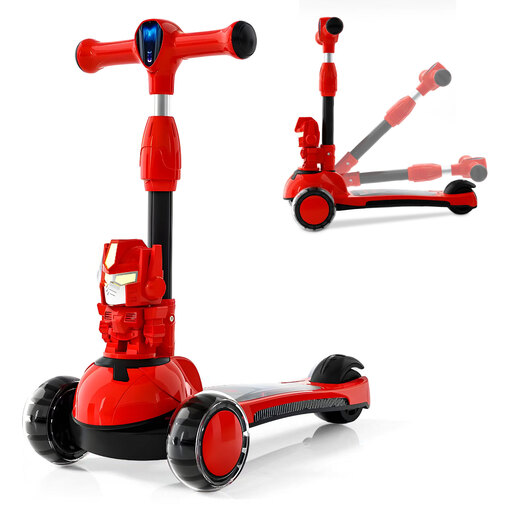
Why this product suits the profile: According to the product name, this model is intended for children aged 3 to 10 and combines three wheels, an adjustable handlebar and a wide, non-slip standing surface.
The age and construction information makes the intended use clearer. LED wheels are treated as a feature, not as a substitute for supervision or protective equipment.
Three-wheel platform, Lean-to-Steer steering and height-adjustable handlebar according to the product description.
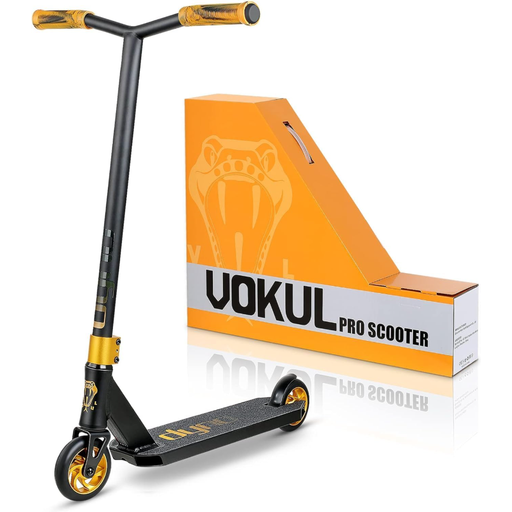
Why this product suits the profile: For children aged 8 and over, as well as teenagers and adults looking for a freestyle scooter for skatepark use and trick riding.
The specified minimum age of 8 distinguishes it from models for younger children. The scooter is explicitly designed for stunt riding.
T-6061 aluminium alloy, 110 mm polyurethane wheels, ABEC-9 bearings and integrated T4T6 fork according to the product specifications.
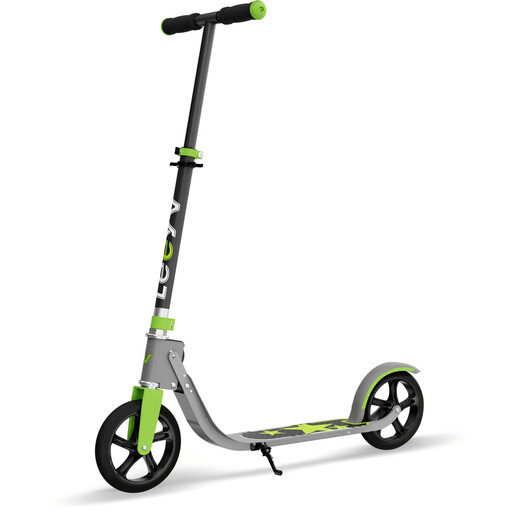
Why this product suits the profile: According to the specifications, this foldable scooter is aimed at children aged 6 and over, teenagers and adults, and is suitable for leisure rides and short everyday journeys.
The adjustable handlebar height and stated weight limit help when choosing a scooter for different age groups. The folding mechanism should be locked before every ride.
205 mm polyurethane wheels, rear brake, non-slip grips and foldable frame according to the product description.
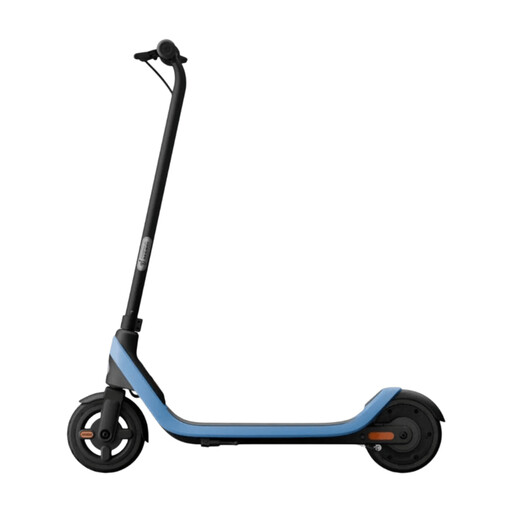
Why this product suits the profile: According to the product specifications, this electric model is intended for 6- to 10-year-olds with a height of 115 to 145 cm.
The specific limits for age, height and the maximum load of 50 kg prevent an overly general choice. According to the notice, this model is not approved for use on public roads.
Three riding modes, a top speed of 16 km/h according to the product specifications, foldable frame and 7-inch solid tyres.
We have put together a complete, regularly updated list of products that fully meet these strict selection criteria and the safety regulations applicable in the EU.
Before every ride, parents or riders should check the handlebar, clamps, wheels, axles and brake. Loose screws can affect handling. After riding on dusty surfaces, cleaning with a slightly damp cloth is usually sufficient. Pressure washers can damage bearings and moving parts.
The following clear rules of conduct also apply to kids’ scooters and stunt scooters:
For children aged 3 and over, 3-wheel kids’ scooters with a wide deck, low standing surface and Lean-to-Steer steering are often suitable. The specific manufacturer’s information, the child’s height and their ability to brake safely and maintain their balance are decisive factors.
Its service life depends on the materials, load, riding surface, care and riding style. Regular checks of the wheels, brakes, handlebar and screws can reveal signs of wear at an early stage. A height-adjustable scooter may remain suitable for longer, but it does not replace checks for damage or ensure that the weight limit is not exceeded.
With a classic kick scooter, the main costs are for replacement wheels, bearings or brake components. An electric scooter also requires electricity for charging and may later need a battery or servicing replacement. With electric models, buyers should also check where the product may be used and which safety requirements apply.