
Lieferung heute & morgen

Qualitätsgarantie

Willkommens-Angebote freischalten: KOSTENLOSE Lieferung | Bis zu 80 % RABATT | Kostenlose 30-Tage-JoyPlus-Testphase
App herunterladen
Kimchi Ramen combines instant noodles with a spicy, tangy flavour inspired by Korean kimchi. For students, professionals and fans of Korean cuisine, Korean instant noodles offer a quick meal with minimal preparation. However, kimchi noodles vary considerably in terms of spice level, ingredients, packaging, origin and portion size.
Anyone who buys based solely on an eye-catching product image or the word “authentic” may overlook important details. The following guide explains what shoppers in Germany should check before buying.
With instant ramen labelled as kimchi flavour, the aroma often comes from a seasoning blend, acidity regulators, chilli, garlic and flavourings. The actual proportion of dried kimchi may be small. For example, BAEKJE Rice Noodle Kimchi Flavour 92 g lists dried kimchi flakes at 3.4% in the soup base. In HaoHao Instant Noodles Kimchi 77 g, the declared kimchi powder content is 1.2%.
If you are looking for a more pronounced kimchi character, check the ingredients list and look for details such as “kimchi flakes”, “kimchi sauce” or “kimchi seasoning powder”. The product name alone does not provide enough information.
“Spicy”, “extra spicy” and red packaging are not standardised indicators of heat. The perceived spiciness depends, among other things, on chilli powder, chilli oil, acidity and the amount of water used. The preparation method also affects the result: using more water usually produces a milder soup.
For more sensitive palates, a single cup is often the better choice than a multipack. Conversely, regular consumers can use multipacks to try different preparation methods without having to buy a new brand each time.
A Ramen Cup Kimchi normally requires only hot water and around three minutes of steeping time. This is practical for the office, library or while travelling. However, portion cups create more packaging waste and often cost more per portion than packet formats.
It is therefore worth comparing the following before buying:
Many Korean instant noodles contain wheat or gluten and soya. Depending on the product, fish, anchovies, mustard, sesame, milk, egg or crustaceans may be included as ingredients or listed as possible traces. This also applies when the product initially appears to contain only vegetables and kimchi.
For example, the BAEKJE rice noodles contain fish or anchovies in the kimchi broth. Nongshim Bowl Noodle Kimchi lists wheat, soya and mustard as allergens and mentions other possible traces. If you have any intolerances, always check the current labelling on the packaging.
Nutritional information is often provided per 100 g, while the pack contains a different total quantity. A 60 g cup cannot therefore be compared directly with a 120 g portion. For example, VIFON Kimchi Flavor Cup 60 g lists 3.3 g of salt per cup, even though the value per 100 g is 5.5 g.
The following details are particularly relevant:
These figures are factual product details and do not constitute an assessment of your personal diet. Anyone who does not drink all the broth may consume less of these nutrients, but should still use the product labelling as a guide.
Most instant ramen with kimchi flavour is prepared with boiling water. For the BAEKJE cup, fill it to the internal line; the stated waiting time is 3 to 4 minutes. According to the product details, Nongshim cups are ready to serve after around 3 minutes.
Packet formats prepared in a saucepan are suitable for the kitchen. Instant noodles in a cup are ideal for the office or when you are out and about. With multipacks, you should also check the best-before date on the packaging delivered. Once opened, store the product in a dry place away from direct sunlight.
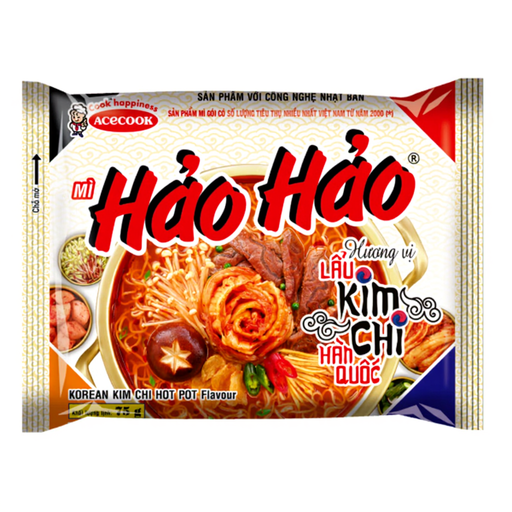
Why this product suits the profile: The individual 77 g portion offers a manageable introduction to kimchi noodles without having to buy a multipack straight away.
The product details state 1.2% kimchi powder as well as wheat and fish. Shoppers can assess the expected flavour and allergens realistically in advance.
77 g portion, prepared with 400 ml of boiling water and a waiting time of around 3 minutes.
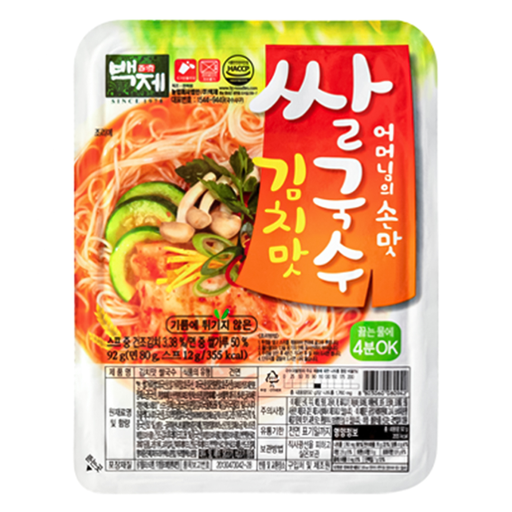
Why this product suits the profile: The combination of rice and wheat flour, together with the stated kimchi broth, offers a different product base from classic wheat noodles.
The ingredients list specifies 3.4% dried kimchi flakes in the soup base. Wheat, soya and anchovies are also clearly listed.
92 g cup, made in South Korea according to the product details, with a preparation time of 3 to 4 minutes.
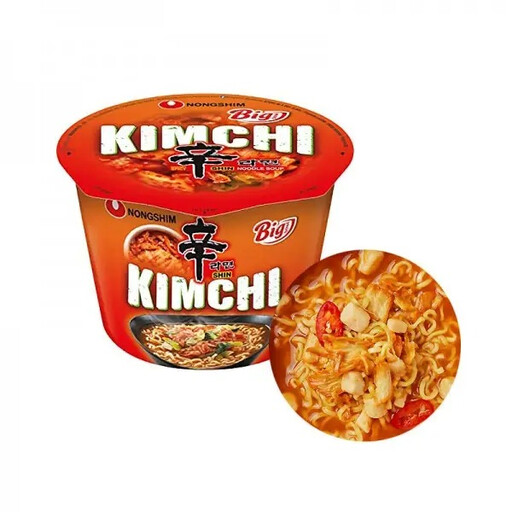
Why this product suits the profile: The sturdy cup is suitable for workplaces where no saucepan is available.
The portion is stated as 112 g and contains kimchi flakes and pak choi. The salt content of 5.8 g per portion is visible before purchase.
Internal water-fill line, 3 minutes of steeping time and Korea listed as the country of origin.
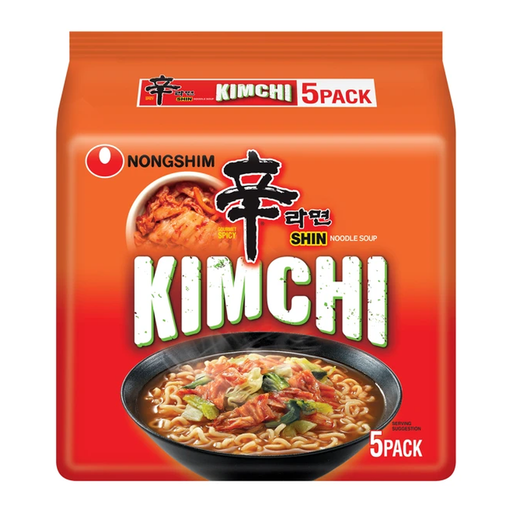
Why this product suits the profile: The five individual packs are ideal for stocking up at home and regularly enjoying Korean noodle soup prepared in a saucepan.
The total weight of 600 g and the individual portion of 120 g are clearly stated. The ingredients list wheat, soya and possible traces of other allergens.
Five individually wrapped portions, saucepan preparation and 4.5 g of salt per 100 g according to the product details.
We have put together a complete, regularly updated list of products that fully meet these strict selection criteria and the safety regulations applicable in the EU.
The exact instructions on the packaging are the most important guide. The usual method is as follows:
Adding egg, spring onions, tofu or fresh vegetables will change the flavour and portion size. Noodles prepared in cups should be eaten immediately after preparation.
Many instant noodles in cups require around 3 minutes. For saucepan varieties, the cooking time is often between 3 and 5 minutes. The specific information on the label takes priority, as noodle thickness and product format vary.
Not necessarily. Some products contain fish sauce, anchovies or animal-derived flavourings. Even with products containing vegetable flakes, you should check the ingredients list and allergen information. Vegetarian or vegan suitability should only be assumed when it is explicitly stated on the packaging.
Unopened Korean instant noodles should normally be stored in a dry, cool place protected from direct sunlight. Follow the manufacturer’s instructions after opening. Prepared noodles should not be kept for an extended period, but eaten promptly.