
Lieferung heute & morgen

Qualitätsgarantie

Willkommens-Angebote freischalten: KOSTENLOSE Lieferung | Bis zu 80 % RABATT | Kostenlose 30-Tage-JoyPlus-Testphase
App herunterladen
A children’s tool set can make a thoughtful gift for creative role play – provided the tools, age recommendation and storage suit the child. Parents, grandparents, nurseries and childcare settings should look beyond a high piece count or familiar-looking branding.
A set with 160 pieces may look impressive at first glance. But if it contains lots of very small fasteners, sorting and tidying everything away can become a chore. For younger children, a manageable set with a hammer, screwdriver, pliers, nuts and a few building pieces is often easier to use.
A children’s tool set with a cordless screwdriver and lights or sounds can add to imaginative play. However, you’ll need to buy the batteries separately, fit them correctly and check them regularly. The cordless screwdriver should only ever be used as a toy. A toy tool is no substitute for a real tool and isn’t suitable for repairs.
A children’s workbench won’t suit every bedroom. Models measuring 86 to 101 cm in height need a dedicated space and should stand securely to prevent them from tipping over. A portable toy tool case is more flexible: it can be stored on a shelf after play or taken to a childcare setting.
Many sets in this category are intended for children aged 36 months or over, or from 3 years. That’s because they may contain small screws, nuts, nails or removable parts that could be swallowed. Check that the age recommendation on the packaging and product page is right for the child’s stage of development.
Even when a product is labelled “from 2 years”, it’s important to check exactly what’s included. A set with lots of small parts may need closer adult supervision. For nurseries, it’s also a good idea to keep the pieces clearly organised and check regularly for damaged or missing parts.
Children’s tools are often made from plastic or wood. Look for:
For example, the hauck set is described as being made from FSC-certified wood; according to the product information, its materials comply with EN 71. Always check claims like these directly in the manufacturer’s or product information. A standards reference is no substitute for supervising children at play.
A tool case for children aged 3 and over is handy if you want your child to carry the tools independently and put them away after playing. A workbench gives them more room for longer play scenarios, but needs a permanent place.
Before you buy, check:
The term Montessori tool set often describes play equipment that encourages children to learn through hands-on activities. It shouldn’t be taken as a blanket promise of educational benefits. What matters are the specific activities it supports, such as gripping, turning, sorting and building.
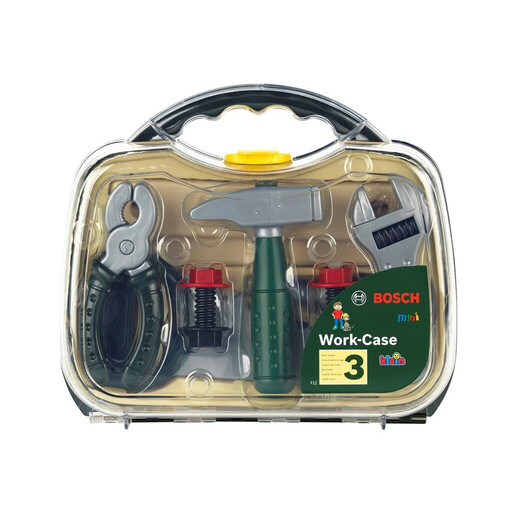
Why this product suits this need: The portable case contains basic tools as well as boards, screws and nuts. It’s suitable for children aged 3 and over and doesn’t need batteries.
The set focuses on hands-on play rather than extra electronics or ongoing battery costs. The case helps keep everything neatly stored.
No batteries needed; product dimensions 27 x 9,5 x 23 cm; suitable from age 3, according to the product information.
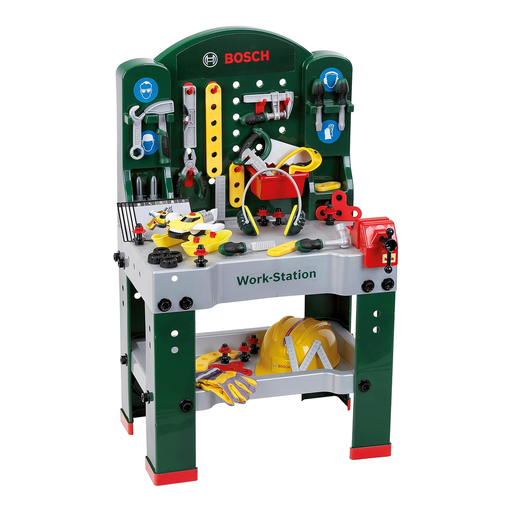
Why this product suits this need: This children’s workbench with tools provides a fixed work surface, vice, shelves, hooks and a wide range of hand tools for regular role play.
The generous range of tools is complemented by designated storage areas. Even so, check before buying that the dimensions of 61 x 44,5 x 101 cm will fit in the space you have in mind.
Vice, storage box and accessories; manual play with no batteries; age recommendation from 3 years.
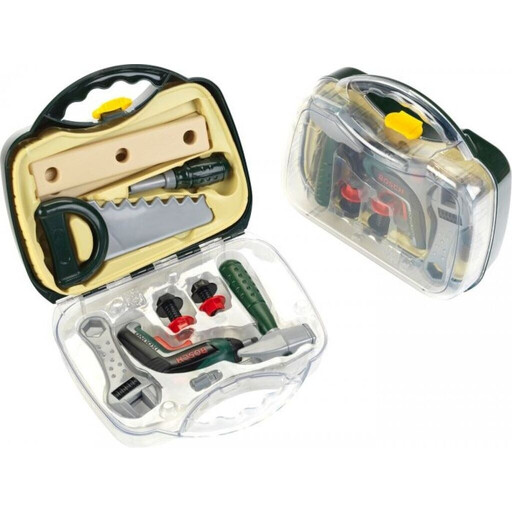
Why this product suits this need: This compact tool case combines a hammer, saw and other accessories with a Bosch Ixolino II cordless screwdriver for children aged 3 and over.
The product information clearly states that 2 AAA batteries are needed. This makes it easier to plan for extra costs and any additional items you’ll need before buying.
Light and rotation functions on the toy screwdriver; case dimensions 27 x 23 x 9,5 cm; weight 770 g according to the product information.
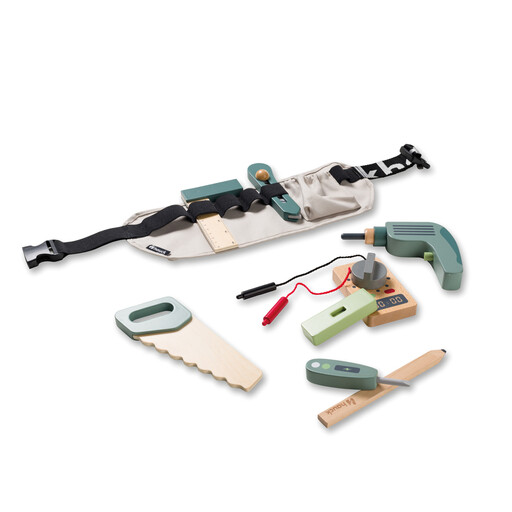
Why this product suits this need: This nine-piece wooden set with an adjustable belt is ideal for role play on the move, at home, in a nursery or when visiting friends and family.
The number of pieces is manageable. The belt keeps the tools organised, and the wooden set doesn’t need batteries.
FSC-certified wood according to the product information; adjustable belt; suitable from age 3.
We’ve put together a complete, regularly updated list of products that meet these strict selection criteria and fully comply with the safety regulations in force in the EU.
Many products are intended for children aged 3 and over. Always follow the information on the relevant product page and packaging. Children should always be supervised when playing with small screws, nuts or removable parts.
A children’s workbench is ideal for a dedicated play area and longer building and assembly games. A tool case takes up less space, is portable and suits different play areas. A case may be more practical in small rooms or childcare settings where play equipment is shared.
How long it lasts depends on the materials, how often it’s used and how it’s stored. Check plastic and wooden tools regularly for cracks, loose handles and damaged small parts. Battery-powered features may need extra care and, eventually, replacement batteries. Realistic expectations and tidy storage can help you keep the set in good condition for longer.