
Lieferung heute & morgen

Qualitätsgarantie

Willkommens-Angebote freischalten: KOSTENLOSE Lieferung | Bis zu 80 % RABATT | Kostenlose 30-Tage-JoyPlus-Testphase
App herunterladen
Organic baby food should suit your child’s age, development and daily routine. On shop shelves and online, many products look similar: organic certification, natural ingredients and claims such as ‘no added sugar’ often take centre stage. These details matter, but they don’t replace checking the ingredients list, age guidance and texture.
The EU organic logo describes the origin and processing of certain ingredients. On its own, it doesn’t tell you whether a product is suitable for a particular age or contains allergens. Parents should therefore check the age guidance, ingredients and nutritional information on organic baby food too.
Fruit purées and pouches with no added sugar naturally contain sugar from apples, bananas or other fruit. Checking the nutritional information helps avoid false expectations. How fruit products are eaten matters too: to care for your child’s teeth, don’t let them suck on a pouch for a long time. Serving it with a spoon can also encourage more varied eating habits.
Finely puréed products may be suitable for babies from 6 months, provided the label says so. From 8 or 12 months, finely chopped textures become more important. That’s why meals for children from 8 months and baby food from 1 year may have different textures. Choose the age guidance based on your child’s needs, not just the product size or packaging.
Labels such as ‘from 6 months’, ‘from 8 months’ or ‘from 1 year’ are an important guide. Small pieces in meals for older babies and toddlers can help them practise chewing. That doesn’t mean every child needs the same texture at the same age. Take your child’s individual development into account and supervise them while they eat.
The ingredients list tells you whether the product contains, or may contain, milk, yoghurt, egg, celery, mustard or grains. If you’re looking for gluten-free baby food, check the specific product labelling. A product containing spelt or wheat isn’t gluten-free, even if it’s made with organic ingredients. If your child has a known allergy or you’re unsure, it may be helpful to seek individual advice from a healthcare or nutrition professional.
Many organic baby meals are mildly seasoned or described as low in salt. The nutritional information on the specific product is what matters. Compare the energy, fat, carbohydrates, sugars and salt per 100 grams, as well as the amount in each jar or pouch. Multipacks such as 6 x 220 g or 6 x 250 g can be handy if you use a product regularly. For occasional meals, individual baby food jars often offer more flexibility.
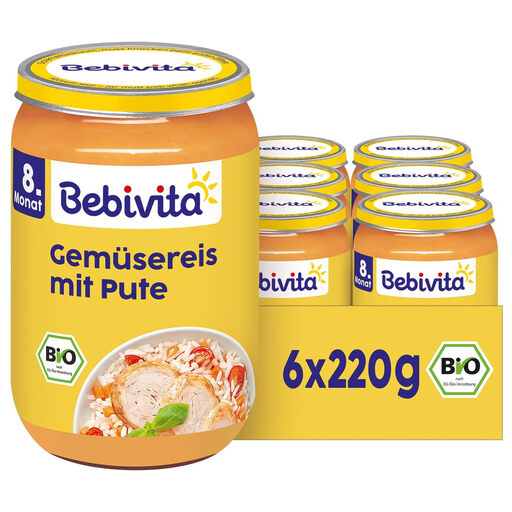
Why this product suits this profile: The multipack contains six 220 g portions, making it a good choice for families who regularly need a mild meal for babies from 8 months and want to plan the cost per portion.
The age guidance of from 8 months and the finely textured recipe make it easier to choose than buying based on the brand name or packaging design alone.
EU organic certification and the German organic seal, according to the product information; 6 x 220 g, with vegetables, rice and 8% turkey on the ingredients list.
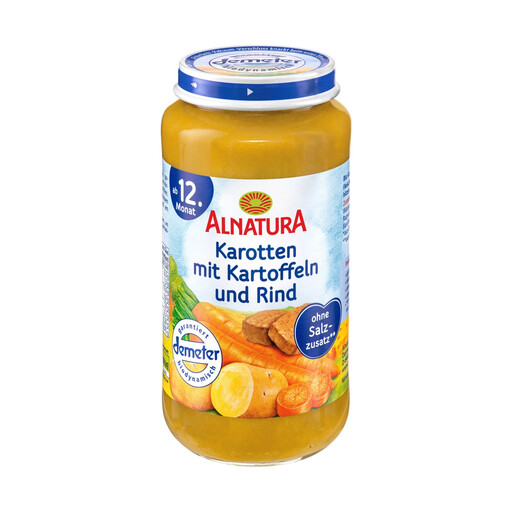
Why this product suits this profile: This organic meal for children from 12 months combines carrots, potatoes, peas and beef in a chunkier recipe for toddlers.
The product information says ‘no added salt’ and ‘naturally gluten-free’. Parents should still check the current packaging for ingredients and any changes.
Demeter quality according to the product information, 49% carrots and a chunky texture; a 250 g portion for a meal from 1 year.
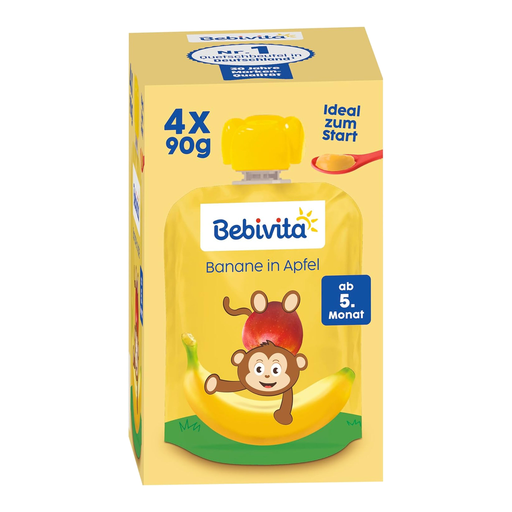
Why this product suits this profile: The resealable 90 g pouches are a handy baby food option when you’re out and about, for example on trips or in a lunchbox.
According to the product information, the ingredients are 85% apples and 15% bananas. There’s no added sugar, but the fruit still contains natural sugars.
Gluten-, lactose- and egg-free according to the product description; 4 x 90 g, ready to eat and to be used within 24 hours of opening.
For warm meals from 12 months, HiPP baby food and children’s meals are also options, including meals with potatoes, vegetables, chicken or salmon. For fruity options, you’ll find fruit purée for babies, organic baby cereal with grains, and fruit and yoghurt products for the age shown on the pack. Check allergens carefully in recipes containing oats, spelt or yoghurt.
We’ve put together a complete, regularly updated list of products that meet these strict selection criteria and fully comply with the safety regulations in force across the EU.
It depends on the product. Packaging may give age guidance such as from 6, 8, 10 or 12 months. Check that this age guidance is right for your child’s development and the product’s texture.
Storage guidance varies by product. Often, any unopened portions should be covered, kept in the fridge and used the following day. Some pouch manufacturers also recommend using the product within 24 hours. Always follow the guidance on the current packaging.
No. ‘No added sugar’ means no extra table sugar or similar sweetener has been added. Fruit still contains natural sugars. So it’s important to consider portion size, how often your child has them and the recommended way to eat them.