
Lieferung heute & morgen

Qualitätsgarantie

Willkommens-Angebote freischalten: KOSTENLOSE Lieferung | Bis zu 80 % RABATT | Kostenlose 30-Tage-JoyPlus-Testphase
App herunterladen
A grow-with-me high chair should do more than serve as a short-term baby chair: it should support your child from their first seat at the family table through toddlerhood and beyond. In practice, however, buyers often end up with the wrong product because age guidance is unclear, surfaces are difficult to clean or the adjustability looks better on paper than it is in reality.
This buying guide explains which details really matter and which high chair is right for different homes and family situations.
A height-adjustable high chair may offer several seating positions, but still only be designed for a limited weight or height range. So check:
A model with lots of adjustment options won’t necessarily suit every stage of your child’s development. What matters is whether the seat and footrest can be adjusted independently.
A high chair with a safety harness should be suitable for your child’s age and ability to sit unaided. A five-point harness secures your child at different points from a three-point harness. A stable base, securely locking adjustments and clear instructions are important too.
Never leave a child unattended in a high chair. Before each use, it’s worth briefly checking the harness, fastenings, screws and base. A tip-over restraint won’t prevent every accident if a child pushes away from the table or stands up.
A high chair with a tray comes into contact with purées, drinks and food every day. Look for:
A foldable high chair saves space, but may have extra joints and gaps. So check more than just its folded dimensions: make sure it locks securely when folded and is practical to clean.
The European standard EN 14988:2017+A1:2020 covers safety requirements for high chairs. This standard is specifically listed for the roba Nature-Up models described here. However, a reference to a standard is no substitute for checking the specific assembly and usage instructions.
Weight limits vary considerably between models. The Hauck Arketa is rated for up to 130 kg, while the CYBEX Click & Fold has a maximum weight limit of 120 kg when used as a standalone chair. Other models are designed as baby high chairs for children weighing up to 15 kg. These figures aren’t directly comparable: a set may have different limits for the baby attachment, seat and chair used at a later stage.
An ergonomic high chair should support a stable, upright sitting position. A height-adjustable footrest, a suitable seat height and good support for the back and sides all matter in everyday use. Your child’s feet shouldn’t dangle all the time, as this can affect their stability in the chair.
Wooden high chairs often let you adjust the seat and footrest across several levels. Foldable models, on the other hand, tend to prioritise compact storage, tray adjustment and portability.
FSC-certified wood or bamboo may appeal if you value documented material sourcing. The Hauck Arketa is described as being made from FSC-certified beechwood; the roba Nature-Up models are described as being made from FSC-certified bamboo. Clean painted wooden surfaces with a damp cloth and mild detergent.
Plastic and PU surfaces are usually easy to clean. Still, check the manufacturer’s specific care instructions and avoid abrasive cleaners if they could damage the surface.
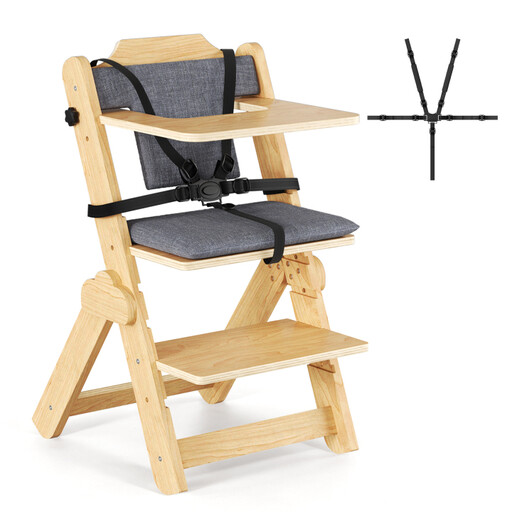
Why it suits this profile: This wooden model combines an adjustable seat and footrest with a tray, safety harness and washable seat pad. It’s a versatile first high chair for families who don’t need a folding mechanism.
The adjustable design isn’t limited to a single fixed seat height. The removable tray and wipe-clean area make everyday care easier.
Adjustable seat width and footrest, contoured backrest, removable tray and washable seat pad.
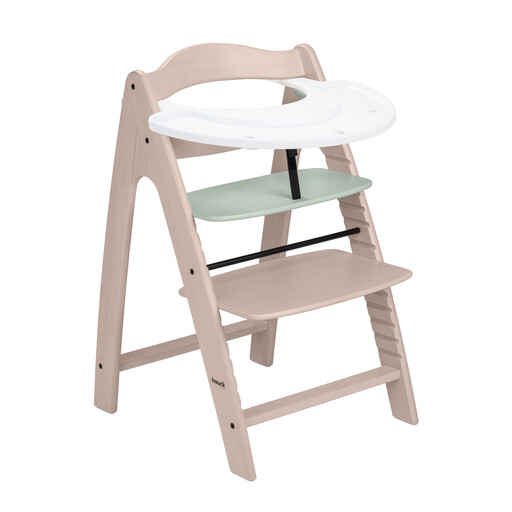
Why it suits this profile: For families looking for plenty of adjustment options and a chair that can be used at the dining table, this model offers 13 positions for the seat and footrest.
There’s more to the design than a tray: according to the product information, it includes a five-point harness, chest support and safety bar. You’ll still need to supervise your child closely.
FSC-certified beechwood, 13 adjustment positions, play tray and a stated weight limit of up to 130 kg.
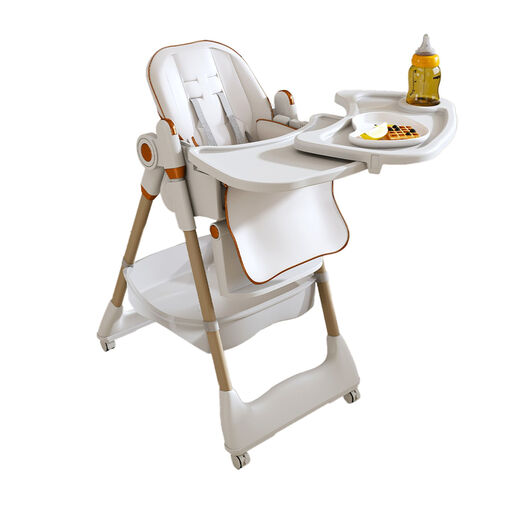
Why it suits this profile: This model is designed for homes with limited storage space and families who may want to move their high chair from time to time.
Its compact folded size is complemented by a folding design. Lockable wheels, a five-point harness and removable trays address common needs around portability and everyday cleaning.
Five height settings, three backrest positions, a double removable tray and a washable seat cover.
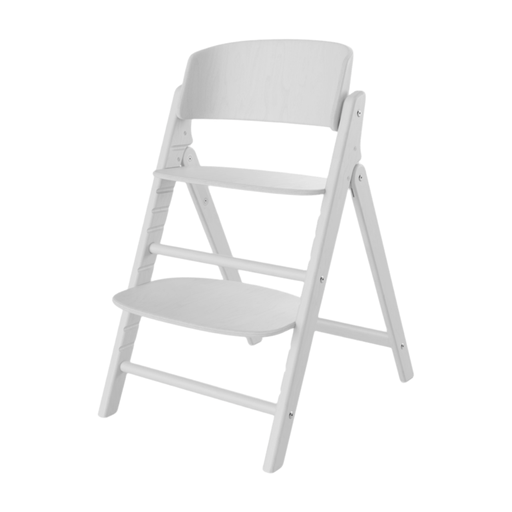
Why it suits this profile: This high chair folds down compactly. The set includes a baby attachment, seat and tray for different stages of use.
Age guidance varies by configuration: according to the product information, the baby set is suitable from 6 months to around 3 years; the standalone chair is designed for later use.
Folding mechanism for compact storage, adjustable seat and footrest positions, and FSC-certified beechwood.
We’ve put together a complete, regularly updated list of products that meet these strict selection criteria and fully comply with the safety regulations in force in the EU.
Many models are suitable from around 6 months, as long as your child can sit upright safely without support. Always follow the guidance from the manufacturer of the specific model. Don’t put a baby in a high chair just because they’ve reached a certain age.
It depends on the weight limit, seat adjustments and features. Some baby high chairs are designed for children weighing up to around 15 kg, while certain wooden high chairs can later be used as a child’s or family chair. Check the maximum weight limit for each configuration.
A foldable high chair can save storage space and make it easier to transport. Before buying, though, compare its folded dimensions, weight, locking mechanism and cleaning requirements. If the chair will stay at the dining table, a non-folding model with an adjustable footrest may be more practical.