
Lieferung heute & morgen

Qualitätsgarantie

Willkommens-Angebote freischalten: KOSTENLOSE Lieferung | Bis zu 80 % RABATT | Kostenlose 30-Tage-JoyPlus-Testphase
App herunterladen
Children’s games should be fun, easy to understand and suited to a child’s stage of development. In practice, however, unclear age recommendations, overly complicated rules or small pieces can often lead to disappointing purchases. Before buying, parents, grandparents and families should look beyond familiar characters and eye-catching packaging. The most important things to consider are the mechanics, number of players, materials and safety information.
A game marked “ages 4+” is not automatically suitable for every four-year-old. Some children can already manage simple counting tasks, while others may benefit more from matching colours or pictures to begin with. What matters is whether the rules, playing time and fine motor skills required are a good fit for the child.
For board games for ages 3+, short turns and easy-to-recognise colours are often a good choice. Board games for ages 4+ can include a few more rules, but should still be playable without lengthy explanations.
Spinning parts, sounds or an especially large amount of equipment can seem appealing at first. However, they don’t necessarily make a game more enjoyable. For younger children, clear steps, easy-to-hold playing pieces and a manageable number of components are often more practical.
Board games, card games and puzzles often contain small pieces. Before buying, parents should check the warning, age recommendation and storage options. Games with marbles or small cards are not suitable for children under three; even with older children, a storage box can make things easier day to day.
Don’t just compare the age recommendation. Also consider:
According to its product description, Schmidt Spiele’s “My First 6 Games” is designed for 2 to 4 players aged 3+ and combines six colour and skill games. It’s quite different from strategy games for children such as “Connect 4”, which focus on thinking ahead and watching your opponent.
For puzzles for children, the number of pieces, surface and piece size are important details. Schmidt Spiele’s “A Day with the Mouse” set contains three puzzles, each with 48 pieces, and is recommended for ages 4+. The product description also mentions cut-out outlines on the included posters, which can make it easier to get started.
When you’re out and about, other things matter. Travel games for children should be compact, have few loose pieces and be quick to set up. Magnetic playing surfaces or a sturdy metal tin can be handy on train journeys and trips. Even so, check that small components can be stored safely.
Learning games for children can cover colours, shapes, counting, memory, fine motor skills or following rules. These details describe the intended approach to play, but don’t guarantee a particular learning outcome. Choose a learning aim that fits into everyday life:
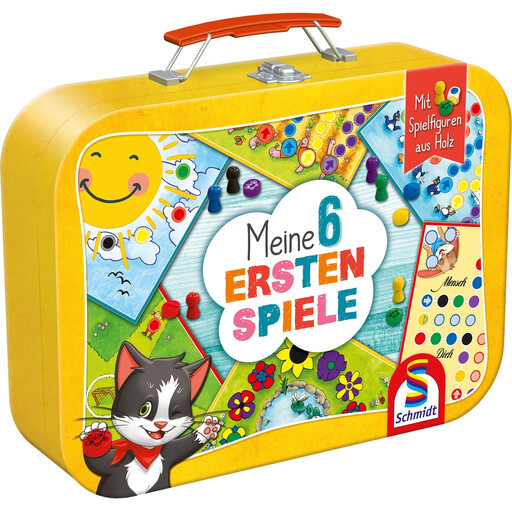
Why this product suits this profile: According to the product details, this collection is for children aged 3+ and includes six different colour and skill games in one box.
Several simple variations help prevent a single game concept from becoming boring too quickly. The recommended age is clearly stated.
Six games, 2–4 players, no batteries and suitable for children aged 3+.
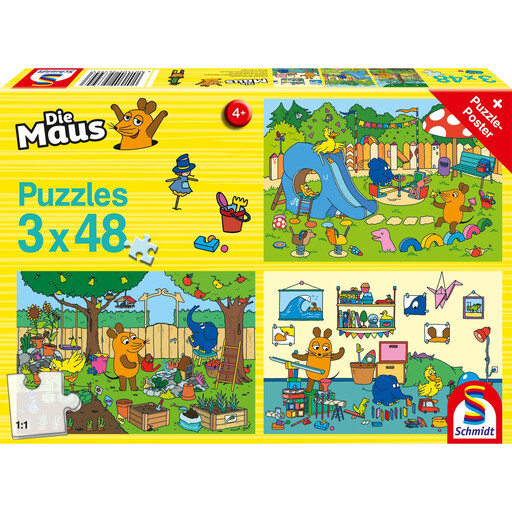
Why this product suits this profile: The set includes three 48-piece puzzles, with a linen texture and a matt, low-glare surface according to the supplier.
The number of pieces and age recommendation are clearly specified. Posters with cut-out outlines can help children find their feet.
Three pictures, 48 pieces each, suitable for ages 4+ and no batteries required.
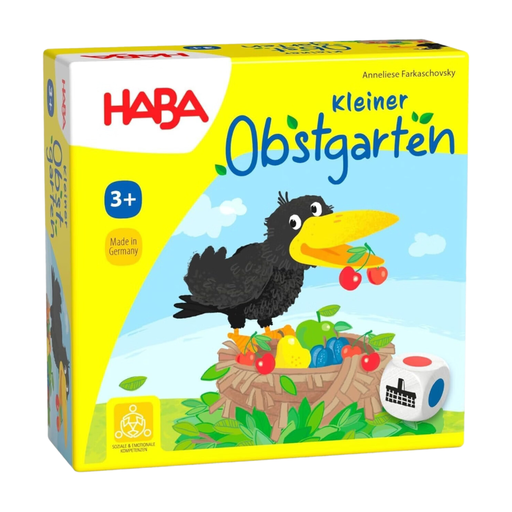
Why this product suits this profile: According to the product description, this cooperative dice game is for 1–4 children aged 3+ and takes around 5–10 minutes to play.
The short playing time reduces the risk of a round going on too long for younger children. The cooperative format means players aren’t competing directly against one another.
1–4 players, colour and shape recognition, wooden and cardboard components, and a compact size.
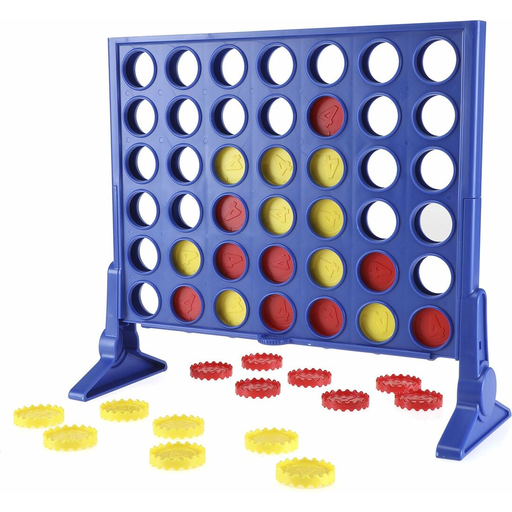
Why this product suits this profile: According to the product details, this two-player game is for children aged 6+ and centres on making a row of four.
The rules focus on one central idea. The age recommendation, number of players and included counters are all clearly specified.
Two players, suitable for ages 6+, no batteries and no lengthy set-up.
We’ve put together a complete, regularly updated list of products that meet these strict selection criteria and the safety regulations in force in the EU.
Short games involving colour or picture matching, large components and few rules are usually a good fit. Picks from our selection include “My First 6 Games”, “Bobo Dormouse” and “Little Orchard”. Always check the specific age recommendation and warnings on the packaging.
For travel, compact size, safe storage and quick set-up are important. Magnetic chess sets, compact card games or games in a tin can be handy. If a game has small pieces, check that all the components can be put away securely after each round.
How long a game lasts depends less on a single promise about the materials and more on choosing the right level of difficulty, the quality of the components and how the game is stored. Keeping the game in a dry place, putting all the pieces back in the box and using it as directed can help keep the board, cards and playing pieces in good condition for longer.