Joybuy Insights

Kitchen Appliance and Cookware Buyers Guide

Choosing new kitchen appliances and cookware can quickly become overwhelming. Manufacturers advertise innovative features and materials, but not every new development is worth the premium. As your Joybuy Product Recommendation Officer, I'll help you distinguish essential features from superfluous ones and find the right equipment for your kitchen without falling for marketing hype.

The Most Common Pitfalls When Buying Cooking Appliances

Before we dive into the technical details, let's clarify three common misconceptions that often lead to disappointment and unnecessary expense.

  1. The "Universal Compatibility" Trap in Cookware: Many pots and pans are marketed as "suitable for all hob types." In practice, however, this doesn't mean they perform equally well on every hob. Especially with an induction hob, many "compatible" pans exhibit uneven heat distribution or a very slow response time because their ferromagnetic base is too thin or of poor quality.
  2. The Myth of Unlimited Power: Features like "PowerBoost" sound tempting for bringing water to a boil in record time. However, the actual performance increase and the duration for which it is available vary greatly between models. Furthermore, hobs with a high total power output often require a high-voltage connection, which must be considered during kitchen planning. A simple portable hot plate that plugs into a standard socket cannot compete.
  3. Misconceptions About Coated Pans: A non-stick frying pan is practical, but the durability of the coating is a critical factor. Inexpensive coatings can begin to peel off after just a few months of high heat or use with unsuitable utensils. An alternative like a wok pan made of carbon steel requires initial care ("seasoning") but develops a natural and extremely durable non-stick patina.

What Really Matters: The Decisive Parameters

To make an informed decision, focus on these three core aspects. They are the primary determinants of the performance, safety, and longevity of your new kitchen equipment.

1. Hob Technology: Induction vs. Ceramic

The choice between an induction hob and a ceramic hob is fundamental.

  • Ceramic Hob: Heating elements under the glass plate heat up, which then transfer the heat to the cookware.
    • Advantage: Compatible with almost any flat-bottomed cookware. Often more affordable to purchase.
    • Disadvantage: The cooking surface gets very hot and cools down slowly (residual heat). It is less energy-efficient because the hob itself is heated, not just the pot.
  • Induction Hob: An electromagnetic field generates heat directly in the base of the cookware.
    • Advantage: Extremely fast heating and precise temperature control. The hob surface itself remains relatively cool, which increases safety and prevents food from burning onto it. This technology is among the most energy-efficient kitchen appliances.
    • Disadvantage: It requires special cookware with a magnetic base (an induction-ready cookware set is often a good initial investment).

2. Form Factor and Installation: Freestanding vs. Self-Sufficient

The structural conditions of your kitchen are crucial.

  • A freestanding cooker is an all-in-one solution that combines a hob and an oven in a single unit. It is simply placed in its designated spot and connected, which simplifies installation.
  • A self-sufficient built-in hob is integrated into the countertop independently of the oven. This offers maximum flexibility in kitchen design, as the oven can be placed, for example, in a tall cabinet at eye level. Pay close attention to the cutout dimensions and the power rating. Models with over 3,600 watts typically require a hardwired (high-voltage) connection, which must be installed by a qualified electrician.

3. Cookware Material and Construction

The material of your cookware directly influences the cooking results.

  • Stainless Steel: Robust, durable, and dishwasher-safe, but it tends to stick without a coating. A thick sandwich base is essential for good heat distribution.
  • Carbon Steel (e.g., for a wok pan): Retains heat excellently and is ideal for high temperatures. It requires maintenance and develops a natural non-stick layer over time.
  • Coated Aluminium: Lightweight and a good heat conductor. The quality of the non-stick coating (e.g., ceramic or titanium-reinforced) is crucial for its longevity.

Top Product Picks

Here are some product recommendations tailored to specific needs and household types.
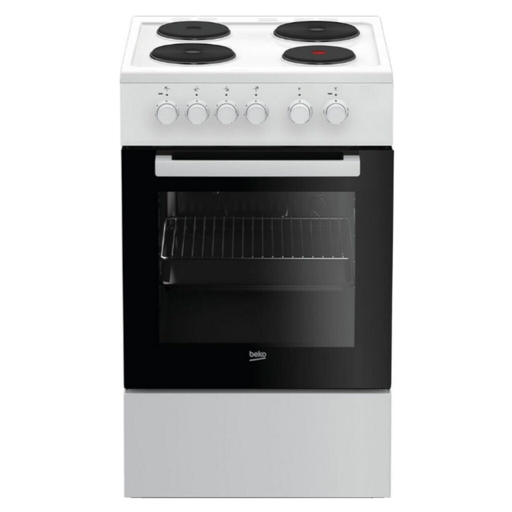
MATCH FOR: THE COMPACT ALL-IN-ONE SOLUTION
Beko FSS56000GW Freestanding Hob Combination / 50cm / SteamShine Cleaning / Flash Hob / White [Energy Class A]

Beko FSS56000GW Freestanding Cooker

Why This Fits Their Persona: Ideal for first-time setups, smaller kitchens, or rental properties where a straightforward and reliable all-in-one solution is needed. The combination of a hob and oven in a 50 cm wide unit saves space and planning effort.

How It Avoids the Trap

This appliance bypasses the compatibility trap, as the ceramic hob works with almost any existing cookware. It relies on proven technology rather than overrated extra features.

Key Advantage & Pros

Combines a hob and a 60-litre oven. The SteamShine cleaning function simplifies oven maintenance using steam. Energy efficiency class A.

MATCH FOR: MODERN SINGLE & COUPLE HOUSEHOLDS
TOPWISH 30cm 2-Zone Built-In Induction Hob 3500W, Touch Control, Child Lock

TOPWISH 30cm 2-Zone Built-In Induction Hob 3500W

Why This Fits Their Persona: Perfect for small kitchens, kitchenettes, or as a supplement to an existing kitchen setup. Two zones are often perfectly sufficient for 1- to 2-person households, enabling a space-saving, modern cooking solution.

How It Avoids the Trap

This hob avoids the pitfall of oversized power. With a 3500W total output and a boost function, it provides enough power for daily use without necessarily requiring a high-voltage connection (professional assessment is recommended).

Key Advantage & Pros

Compact 30 cm format, energy-efficient induction technology, and modern safety features like a child lock and residual heat indicator.
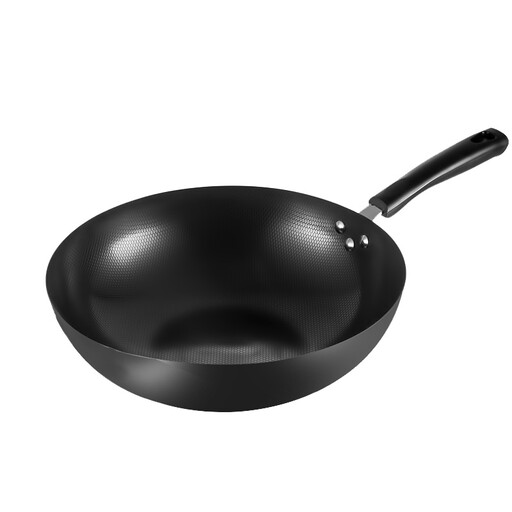
MATCH FOR: AMBITIOUS HOME COOKS
MAXCOOK 30cm Carbon Steel Wok Pan, Flat Bottom Chinese Stir?Fry Wok with Heat?Resistant Handle, Textured Wok, for Gas & Induction Stovetops MDB-30

MAXCOOK 30cm Carbon Steel Wok Pan

Why This Fits Their Persona: For cooks who want to achieve authentic stir-fry results and are willing to care for their cookware. Carbon steel is the traditional material for woks because it reaches and maintains extremely high temperatures.

How It Avoids the Trap

This wok avoids the fallacy of short-lived non-stick coatings. It is transparent about the necessary care (seasoning), which in turn is rewarded with a durable, natural non-stick patina.

Key Advantage & Pros

Excellent heat retention and distribution for authentic "wok hei." The flat bottom ensures compatibility with induction, gas, and ceramic hobs.

Looking for More Options?

We have compiled a complete, up-to-date list of products that fully meet these strict selection criteria and all relevant safety regulations.

Frequently Asked Questions (FAQ)

Do I really need to replace all my pots and pans for an induction hob?

Not necessarily. Many modern pots, especially those made of cast iron or with a multi-layer stainless steel base, are already induction-compatible. You can easily test this: hold a magnet to the bottom of the pot. If it sticks firmly, the pot is suitable for an induction hob. If it doesn't, the pot will not heat up.

What is the difference between a self-sufficient hob and a hob-dependent one?

A self-sufficient built-in hob has its own controls and can be installed anywhere in the countertop, independent of an oven. A hob-dependent model has no controls of its own; it is operated via the controls of a matching built-in oven and must therefore be mounted directly above it. The self-sufficient version offers significantly more flexibility in kitchen planning.

What are the operating costs of energy-efficient kitchen appliances in comparison?

Induction hobs are generally the most energy-efficient option. Since the heat is generated directly in the base of the pot, very little energy is lost to the surroundings. Compared to a ceramic hob, which first heats the glass plate and then the pot, cooking times with induction can be shorter and energy consumption can be up to 30% lower. However, the exact savings depend heavily on individual cooking habits and electricity prices.