
Lieferung heute & morgen

Qualitätsgarantie

Willkommens-Angebote freischalten: KOSTENLOSE Lieferung | Bis zu 80 % RABATT | Kostenlose 30-Tage-JoyPlus-Testphase
App herunterladen
New kitchen appliances can significantly simplify daily meal preparation. However, the market is saturated with devices whose marketing promises often suggest more than the products deliver in everyday use. Many buyers soon find their new electric kitchen helper gathering dust in a cupboard. As your Joybuy Product Recommendation Officer, I'll help you recognise the common pitfalls and make an informed decision.
Before you purchase your kitchen equipment, you should be wary of three common problems that often lead to disappointment:
To avoid a bad purchase, you should focus on objective and practical criteria. These three parameters are decisive for the functionality and durability of your new kitchen appliances.
Instead of just looking at the wattage, you should evaluate the entire construction. For an electric food chopper or a meat grinder, the quality of the blades and the gearbox is just as important as the motor's power. A pure copper motor often provides more stable and durable performance than cheaper alternatives. With a coffee grinder, a burr or conical grinder ensures a more uniform result than a simple blade grinder, which is crucial for the coffee's flavour.
The materials that come into contact with your food are of central importance. Look for the following standards:
Practical kitchen appliances are distinguished by their thoughtful design. Check if the device can be easily disassembled. Removable and dishwasher-safe parts are a significant advantage. A slow juicer with a filter-free design or an immersion blender with a detachable shaft reduces the cleaning effort to a minimum, ensuring that you will enjoy using the appliance frequently.
Here are some recommendations tailored to specific needs that purposefully avoid the pitfalls mentioned.

Why This Fits Their Persona: Ideal for a quick, hot breakfast or an evening snack. Its simple operation, free from complex settings, saves precious time on busy mornings.
Avoids the 'hidden cleaning effort' trap with a food-grade non-stick coating. The plates wipe clean effortlessly, encouraging daily use.
Dual-sided heating plates (750W) ensure fast, even cooking from both sides. Automatic temperature control makes operation foolproof.
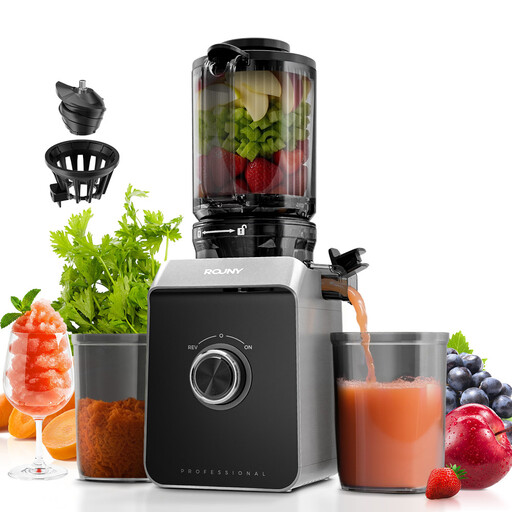
Why This Fits Their Persona: Perfect for those who prioritise fresh, nutrient-rich juices. The cold press technology operates gently to maximise juice yield. It can also make sorbet from frozen fruit.
Solves the 'hidden cleaning effort' problem with a filter-free design. Components rinse clean easily under running water, simplifying daily use.
The large 130mm feed chute reduces prep time by accommodating whole fruits. A pure copper motor ensures stable, quiet operation.
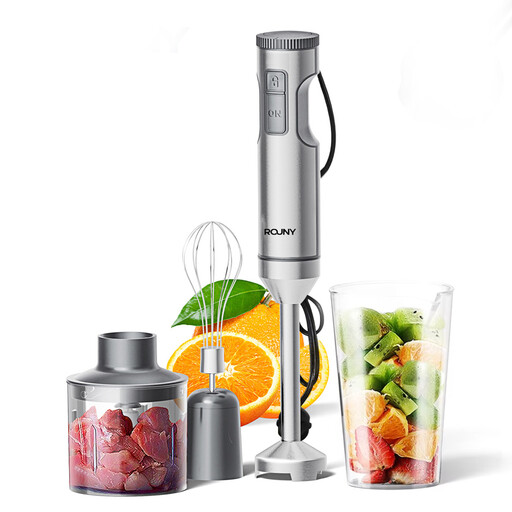
Why This Fits Their Persona: An all-rounder for soups, sauces, smoothies, and chopping herbs or nuts. It replaces multiple single-purpose gadgets, saving kitchen space.
Evades the 'material quality' trap by using a stainless steel blending shaft and blades. The detachable accessories are dishwasher-safe (below 60°C), simplifying cleanup.
The combination of a powerful motor (max 1200W) and versatile accessories (beaker, chopper, whisk) offers a wide range of applications. Stepless speed control allows for precise results.
We've curated a complete, up-to-date list of products that fully meet these strict selection criteria and German safety regulations.
The required wattage depends heavily on the type of appliance. An electric kettle benefits from high power (e.g., 2200W) for rapid heating. For a blender or electric food chopper, 300 to 800 watts are sufficient for most household applications, provided the blades and mechanics are efficient. Higher wattage alone is no guarantee of better results, but it can be advantageous when processing very hard ingredients.
Look for product descriptions that explicitly mention materials like 304 stainless steel, borosilicate glass, or tempered glass. For plastic parts, the BPA-free label is an important quality mark. Sturdier, heavier devices are often an indication of a more solid build compared to very lightweight counterparts.
Not necessarily. A higher price can be justified by high-quality materials, a longer lifespan, additional features (e.g., temperature control on a kettle), or a thoughtful design (e.g., easy cleaning). Compare the features offered with your actual needs. A simple but well-made device may be a better investment for your purposes than an expensive model with features you'll never use.