
Lieferung heute & morgen

Qualitätsgarantie

Willkommens-Angebote freischalten: KOSTENLOSE Lieferung | Bis zu 80 % RABATT | Kostenlose 30-Tage-JoyPlus-Testphase
App herunterladen
Choosing the right kitchen appliance can significantly simplify meal preparation. However, the market is flooded with devices boasting seemingly impressive performance specs and an abundance of accessories. In practice, many of these features prove less useful and often lead to a regrettable purchase. This guide will help you identify the crucial criteria and find a model that truly meets your needs.
Before we dive into the important technical details, it's worth examining the most common marketing promises that often obscure more than they clarify.
To make an informed decision, you should focus on a few critical technical features. These determine the durability, safety, and performance of your future kitchen appliance.
The type of motor and drive system is fundamental to performance.
The components that come into direct contact with food deserve special attention.
The size and type of the appliance must match your household and cooking habits.
Instead of making a one-size-fits-all recommendation, we have selected models tailored to specific use cases.

Why it's a great fit: Ideal for those who regularly prepare heavy bread or pizza doughs. The large 6-litre bowl and high-torque motor are designed to handle large batches.
This model relies on a 450W pure copper DC motor that delivers high torque with low noise. It proves that moderate wattage combined with the right technology (a DC motor) is more effective than high wattage alone.
Large 6-litre stainless steel bowl for family-sized portions; quiet and stable operation thanks to the DC motor and suction cup feet.
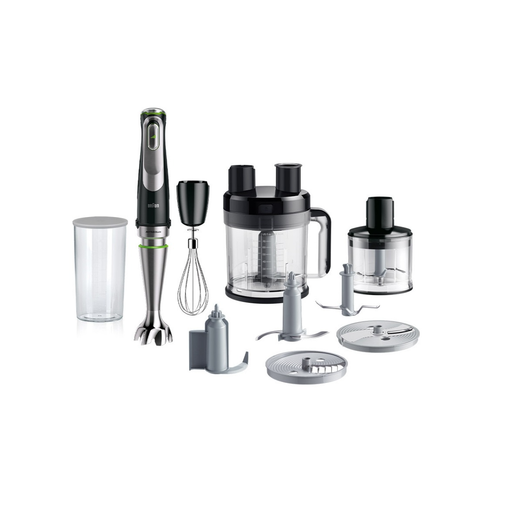
Why it's a great fit: For anyone seeking a single, powerful tool for a variety of tasks—from puréeing soups and chopping vegetables to whipping egg whites.
This set avoids the accessory trap by offering a well-designed system of high-quality, functional attachments that provide real value—instead of a collection of useless parts. Its 1200 watts are used effectively thanks to Active PowerDrive Technology.
Comprehensive 9-in-1 functionality with a food processor attachment; SplashControl Technology for clean, in-pot blending.
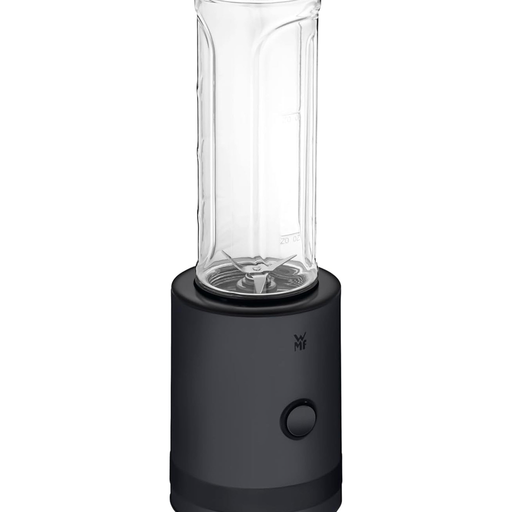
Why it's a great fit: Perfect for anyone who wants to quickly and easily prepare fresh, on-the-go smoothies. Its compact design and to-go cups make it an ideal everyday companion.
This appliance is highly specialised, avoiding the accessory overload trap. Its 300-watt motor is optimally designed for blending smoothies, proving that the highest wattage isn't always what matters.
Two 0.6-litre blending/drinking cups made from BPA-free Tritan for direct, on-the-go enjoyment; high-quality 4-pronged stainless steel blade.
We have compiled a complete, up-to-date list of products that fully meet these strict selection criteria and all relevant safety regulations.
The required wattage depends heavily on the intended use and motor design. For kneading heavy dough in a stand mixer, an efficient 450W direct current (DC) motor can be more powerful than a basic 1000W alternating current (AC) motor. For a smoothie maker, 300-500W is often sufficient. For an immersion blender that also needs to crush ice, 900W or more is a good idea. Pay more attention to the motor and transmission quality than to the raw wattage figure.
On most modern appliances, removable parts like stainless steel bowls, mixing tools, glass or BPA-free plastic blending jars, and lids are suitable for cleaning in the dishwasher. However, the motor unit itself must never be submerged in water and should only be cleaned with a damp cloth. It is always advisable to check the manufacturer's specific instructions.
A standard mixing system only rotates the dough hook or whisk on its own axis in the centre of the bowl. A planetary mixing action, as found in high-quality stand mixers, also moves the tool in a circular path along the edge of the bowl. This dual motion ensures that all ingredients at the bottom and sides of the bowl are incorporated and mixed evenly, leading to better results for doughs and creams.