
Lieferung heute & morgen

Qualitätsgarantie

Willkommens-Angebote freischalten: KOSTENLOSE Lieferung | Bis zu 80 % RABATT | Kostenlose 30-Tage-JoyPlus-Testphase
App herunterladen
The selection of kitchen appliances is vast, and the marketing claims are often grandiose. But not every gadget that promises a kitchen revolution actually delivers in daily use. Many buyers quickly find that their new appliance creates more work than it saves, or that the results don't meet their expectations. As your Joybuy Product Recommendation Officer, I'm here to help you identify the typical pitfalls and make an informed decision.
Before you invest, you should familiarise yourself with the most common issues that often only become apparent after the purchase.
To avoid a bad buy, focus on objective criteria that stand for durability, safety, and user-friendliness.
Here are some recommendations tailored to specific use cases and the criteria mentioned above.

Why it's a great fit: Ideal for those who want a quick and easy entry into the world of fresh juices. The centrifugal juicer processes hard fruits and vegetables rapidly, and the wide feed chute reduces prep time.
This device specialises in one function: juicing. It avoids the compromises of a multi-function gadget. The product description also emphasises its easy-to-clean design.
600-watt motor for efficient juicing, a wide 3-inch feed chute, and BPA-free stainless steel materials.

Why it's a great fit: For quick and versatile use in the family kitchen. This immersion blender purées soups directly in the pot, whips cream, and chops small amounts of herbs or nuts without dirtying a large machine.
The modular design is the epitome of easy to clean. The detachable blending shaft can be simply rinsed under running water. It's a functional all-rounder that doesn't pretend to be a complex "all-in-one" machine.
4-in-1 set with a whisk, chopper, and beaker. Two speed settings and detachable parts for straightforward cleaning.
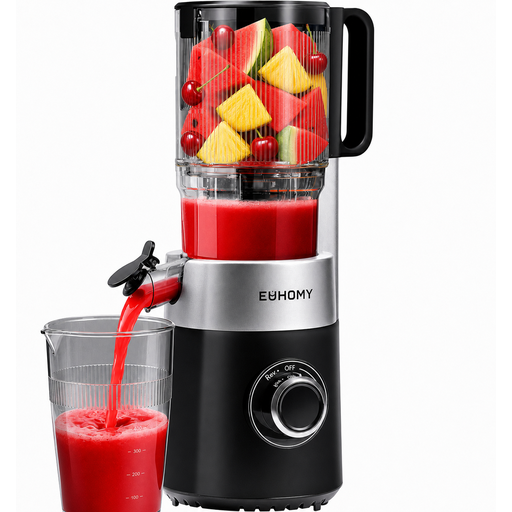
Why it's a great fit: For users who prioritise maximum nutrient retention and a high juice yield. As a slow juicer, it gently presses ingredients, which reduces oxidation and foam. Ideal for a health-conscious diet.
This device is highly specialised and designed for the highest juice quality. The description highlights the simple three-step assembly and effortless cleaning, counteracting the typical concerns with more complex appliances.
Gentle 7-stage masticating process with a stainless steel auger. Extra-large 135 mm feed chute for whole fruits and quiet operation.
We have compiled a complete, up-to-date list of products that fully meet these strict selection criteria and German safety regulations.
1. How often should you clean a juicer, and what is the easiest way? A juicer should ideally be cleaned immediately after each use. Dried-on fruit pulp is much harder to remove. The easiest way is to rinse the detachable parts under running water right away. Many modern appliances, especially those focused on being "easy to clean," have dishwasher-safe parts, which minimises the effort.
2. Is a slow juicer worth it compared to a centrifugal juicer? It depends on your priorities. A slow juicer (cold press juicer) operates at a low speed, which generates less heat and reduces oxidation. According to manufacturers, this results in higher nutrient density and juice yield, especially with leafy greens. A centrifugal juicer is faster and often more affordable, but it produces more foam and a slightly lower yield. For a quick morning juice, it's often sufficient, but for discerning users, the slow juicer is the better choice.
3. Which materials in kitchen appliances are durable and safe?Stainless steel is an excellent choice for blades, filters, and housing parts, as it is robust, rust-proof, and hygienic. For plastic components that come into contact with food, you should look for the BPA-free label. This ensures that no harmful plasticisers transfer to your food. Glass containers on blenders are also a good, hygienic alternative to plastic.