
Lieferung heute & morgen

Qualitätsgarantie

Willkommens-Angebote freischalten: KOSTENLOSE Lieferung | Bis zu 80 % RABATT | Kostenlose 30-Tage-JoyPlus-Testphase
App herunterladen
Purchasing new kitchen appliances is an investment intended to make daily life easier for years to come. However, the market is saturated with marketing promises and technical specifications that often confuse more than they clarify. Many buyers only realise months later that they have paid for superfluous features or that the appliance doesn't suit their habits. This guide focuses on the objective criteria that will help you make an informed decision and avoid common purchasing traps.
Before we delve into the selection criteria, it's wise to understand the most common mistakes that lead to dissatisfaction.
To make a sustainable and satisfying choice, you should focus on a few, but crucial, technical characteristics.
Energy-efficient home appliances are not only good for the environment but also for your budget. The EU energy label, valid since 2021 with its scale from A (very efficient) to G (less efficient), provides a good orientation. However, don't just look at the letter; pay attention to the specific consumption values. For a dishwasher, the kWh/100 cycles value in the Eco programme is decisive. Multiply this value by your electricity price to determine the operating costs per 100 wash cycles. The same applies to water consumption, which is specified in litres per cycle.
An appliance that doesn't fit into its designated niche is a costly mistake. Measure the available space precisely (height, width, depth) and account for necessary clearances for ventilation. For dishwashers, the standard width is 60 cm for family households, while models with a 45 cm width are a sensible alternative for smaller kitchens or single households. Also, clarify whether you need a freestanding unit, which can be placed anywhere, or a built-under or fully integrated model for a seamless kitchen front.
The trend is moving towards appliances that perform multiple tasks. A multi-cooker, for example, can steam, sear, and braise. A stand mixer with a meat grinder and blender attachment saves space and potentially money compared to buying several individual devices. These all-in-one wonders are ideal for home cooks with limited space. However, those who use one function very intensively (e.g., daily baking) are often better served by a specialised, high-performance single appliance. For everyday use, small kitchen appliances with precise functions, like a kettle with temperature control, are the true everyday heroes.
Based on these objective criteria, we have compiled a few products for different user profiles.
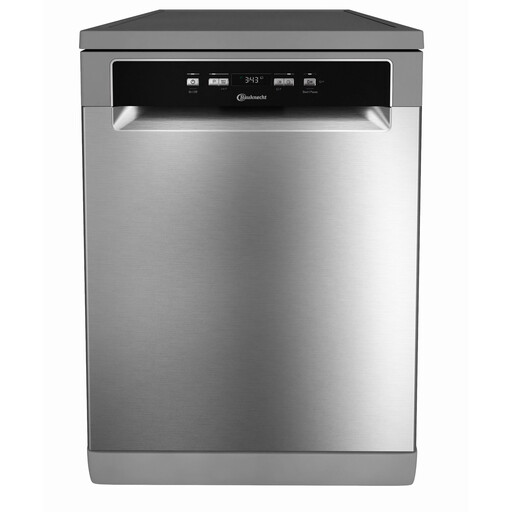
Why This Fits Their Persona: With its standard width of 60 cm and a capacity of 14 place settings, this model meets the demands of a family household. The MultiZone option allows for washing only one basket, saving water and energy on smaller loads.
The Bauknecht dishwasher focuses on useful functions like the ActiveDry system instead of unnecessary app connectivity. The energy label transparently shows a consumption of 0.644 kWh per Eco cycle, enabling clear cost calculation.
Good energy efficiency class (B), flexible loading thanks to the cutlery drawer and MultiZone function, quiet operation at 41 dB(A).

Why This Fits Their Persona: This stand mixer with a meat grinder, blender, and mixing tools is a powerhouse for ambitious cooks. It combines multiple appliances and effortlessly handles heavy doughs or grinding meat thanks to its 1300-watt motor.
Here, multifunctionality is not a gimmick but the core benefit. The device consolidates several small kitchen appliances, preventing the countertop from being cluttered with rarely used individual gadgets. The focus is on performance and versatility.
High motor power (1300 W), large bowl capacity (6.5 QT / approx. 6.2 L), extensive accessories (meat grinder, blender) included.
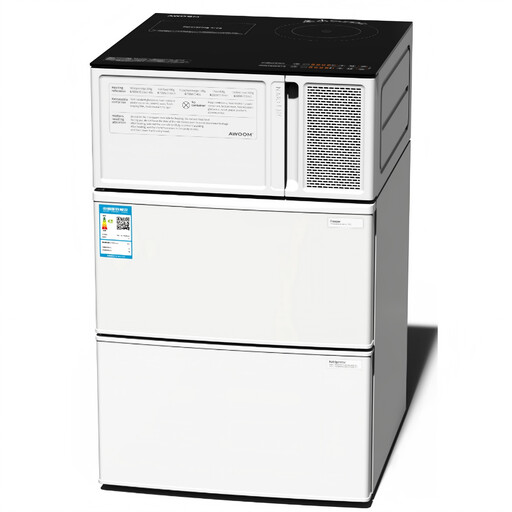
Why This Fits Their Persona: For micro-apartments, student dorms, or offices, this mobile kitchen is a radical solution. It integrates a refrigerator, freezer, microwave, and induction cooktop into a footprint of just 0.32 m?.
This product is the direct answer to the "ignoring dimensions" pitfall. It prevents the purchase of multiple ill-fitting individual appliances and solves the space problem intelligently. All components are coordinated and require only one power connection.
Extreme space-saving, integration of four core functions, simple connection via a single power cable.
We have compiled a complete, up-to-date list of products that fully meet these strict selection criteria and German safety regulations.
Focus on the absolute consumption value shown on the EU energy label, rather than just the efficiency class. For a dishwasher, this is the energy consumption in kWh per 100 cycles and the water consumption in litres per cycle. These figures allow for a direct comparison of the operating costs of different models.
The lifespan heavily depends on the material quality and usage. Look for features like a stainless steel interior in dishwashers or a robust metal housing on stand mixers. Regular maintenance, such as descaling kettles or cleaning the filters in the dishwasher, can significantly extend the lifespan.
Yes, provided a few points are considered. Buying kitchen appliances online often offers a wider selection and transparent price comparisons. Pay attention to the delivery terms—especially whether delivery is to the point of use. Also, check the return policies and warranty claim procedures to ensure that service is reliable even after the purchase.