
Lieferung heute & morgen

Qualitätsgarantie

Willkommens-Angebote freischalten: KOSTENLOSE Lieferung | Bis zu 80 % RABATT | Kostenlose 30-Tage-JoyPlus-Testphase
App herunterladen
Whether you live alone, share a student flat, work in an office or have a family kitchen, kitchen appliances should make everyday life easier without taking up unnecessary worktop space or stretching your budget. The choice ranges from multicookers and microwaves to rice cookers, kettles and electric steamers. At the same time, many product descriptions sound similar: compact, powerful, versatile and easy to clean.
That is why the most important factor is not the longest list of functions, but the right combination of capacity, operation, cleaning, safety and space requirements.
An electric cooking pot with several programmes can be practical. However, you should check whether the functions match the meals you actually prepare. If you mainly cook pasta, soup or rice, you may not need a wide range of functions. Appliances with a rotary dial or just a few power levels are often easier to operate.
A rice cooker is also worth assessing in terms of how you will actually use it. A large capacity makes sense for families, but may take up more worktop space than necessary for one person and lead to unwanted leftovers.
When it comes to space-saving kitchen appliances, the casing is not the only thing that matters. A folding handle, detachable cable or stackable inserts can make storage easier. Before buying, check:
An appliance must not be operated directly against a wall, beneath heat-sensitive wall units or next to easily flammable objects if the instruction manual prohibits this.
Coated interiors can often be cleaned with a soft sponge and warm soapy water. However, this does not necessarily apply to the electrical base, power cable or lid. These components generally must not be fully immersed in water.
Look for specific information about removable parts, dishwasher suitability and suitable kitchen utensils. Metal cutlery can damage a non-stick coating; wood or silicone is the gentler choice for many appliances.
For one person or a couple, 1.6 to 2.0 litres is often sufficient for an electric cooking pot. A 2.6-litre slow cooker is more suitable for several portions. Rice cookers with a 4-litre internal capacity are aimed at households with several people, but naturally require more space.
When considering the stated capacity, you should also check whether it refers to the maximum volume or the practically usable amount. Liquids must not be filled to the brim because foam and steam can rise during cooking.
The wattage indicates the appliance’s electrical input power, not necessarily how quickly it cooks. A 600-watt appliance may be sufficient for small portions, while a 1,500-watt model can heat larger quantities more quickly. Actual consumption depends on operating time, temperature and programme.
With a 700-watt microwave, several power levels and a timed defrost function are useful for different types of food. A 2,200-watt kettle will usually heat water quickly, but should only be filled with the amount you need. This reduces unnecessary heating time.
For households in Germany, specifications such as 220–240 volts and 50–60 hertz are important. Useful safety features include:
Steam can cause scalding. Lids should therefore be opened away from your body. With electric cooking pots, rice cookers and steamers, the base must not come into contact with water. Always follow the supplied instruction manual and the information about the EU responsible person.

Why this product suits the profile: The 1.6-litre capacity and 600-watt power are designed for individuals, students or small offices. It is suitable for pasta, soup, eggs and simple stews.
The manageable capacity reduces unnecessary space requirements. Automatic switch-off and boil-dry protection are specified as concrete safety features.
1.6-litre capacity, 600 watts, one-button operation and coated interior.

Why this product suits the profile: The set covers a range of cooking tasks and, according to the product details, is suitable for induction, electric and gas hobs. It is aimed at households looking to buy pots, pans and accessories together.
Hob compatibility is clearly specified. The coating is stated to be free from PFOA, PFOS, lead and cadmium; metal utensils and high heat should be avoided.
13 pieces, glass lids, detachable handles and compatibility with several hob types.
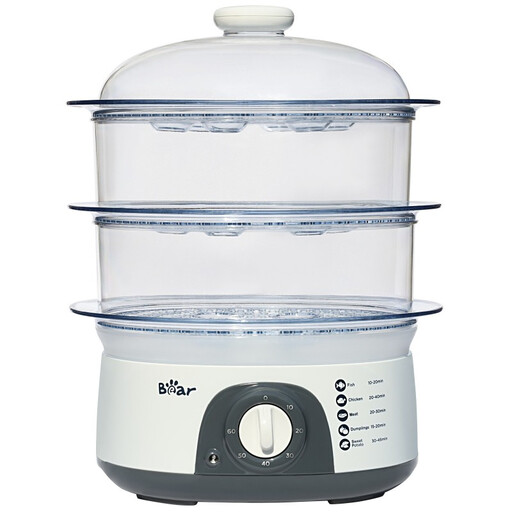
Why this product suits the profile: Three stackable tiers and a 10-litre capacity allow several ingredients to be prepared separately. This is practical for families or for preparing multiple portions.
The practical design is clear from the three tiers and 60-minute timer. Removable parts make cleaning easier.
10-litre capacity, three tiers, 650–775 watts and a timer of up to 60 minutes.

Why this product suits the profile: The 4-litre model is designed for three to four people and offers programmes for porridge and soup as well as rice. The steaming insert makes it even more versatile.
The capacity, power and accessories are clearly specified. The steam outlet must remain unobstructed, and the inner pot is not designed for use on a hob.
4 litres, 860 watts, several cooking programmes, keep-warm function and steaming insert.
We have put together a complete, regularly updated list of products that fully meet these strict selection criteria and the safety regulations applicable in the EU.
Depending on your household, combining several small appliances may be more useful than choosing a single multifunctional model. A microwave is suitable for heating and defrosting, while an electric steamer can prepare several ingredients at the same time. A kettle is designed for tea, coffee and hot water for cooking. Coffee drinkers may also want to consider an espresso machine with a visible water tank and removable drip tray.
A soya milk maker with a 600-millilitre capacity is more suited to smaller quantities. An electric double frying pan may be useful for several people, but requires enough heat-resistant surface space. Before buying a cooker hood, check the extraction route, recirculation filter, installation dimensions and the required distance from the hob.
For limited space, appliances with a compact footprint, detachable cables, folding handles or stackable components are practical. A 1.6-litre multicooker, a small microwave or a compact kettle may be sufficient for singles and couples. The key consideration is the appliance’s size when open and ready for use.
Lifespan depends on frequency of use, cleaning, storage and care. Non-stick surfaces should not be scratched with metal utensils. Electrical bases, cables and plugs must not get wet. Regular descaling of kettles and removing residue from steamers can help maintain functionality; only the respective manufacturer can provide binding durability information.
Consumption is determined by power and operating time. The simple calculation is: Wattage ÷ 1,000 × operating hours = kilowatt-hours. A 600-watt appliance running for half an hour uses 0.3 kilowatt-hours in theory. Short programmes and heating only the amount you need can help limit energy use in everyday life.