
Lieferung heute & morgen

Qualitätsgarantie

Willkommens-Angebote freischalten: KOSTENLOSE Lieferung | Bis zu 80 % RABATT | Kostenlose 30-Tage-JoyPlus-Testphase
App herunterladen
A kitchen or bathroom tap needs to be compatible with your water connections, water pressure and existing basin or sink. Good looks alone don’t tell you how well it will work day to day. Problems often arise because buyers only check the mounting type, number of connection hoses or spout height after making a purchase.
Three common buying mistakes are:
Before you buy, check how your hot water is supplied:
When choosing a kitchen tap, especially for a rented property or an older building, it’s worth checking under the sink. If you can see three connection hoses from the water heater, a low-pressure tap is more likely to be suitable. If you’re unsure, ask a qualified plumber to check the existing installation.
Many basin taps and kitchen taps are designed for single-hole mounting. Even so, make sure the hole diameter, hose length and space underneath the basin or sink are all suitable.
Check the following:
A single-lever mixer lets you adjust the water flow and temperature with one hand. It’s convenient, but you’ll still need to check that the dimensions are right for your installation.
Brass is commonly used for tap bodies, while stainless steel versions have a different feel and appearance. If you’re choosing a chrome tap, follow the care instructions and take care with cleaning products, as abrasive cleaners can damage the finish. A brushed stainless steel tap may show fewer fingerprints, but the care it needs will depend on the specific finish.
Other details worth checking:
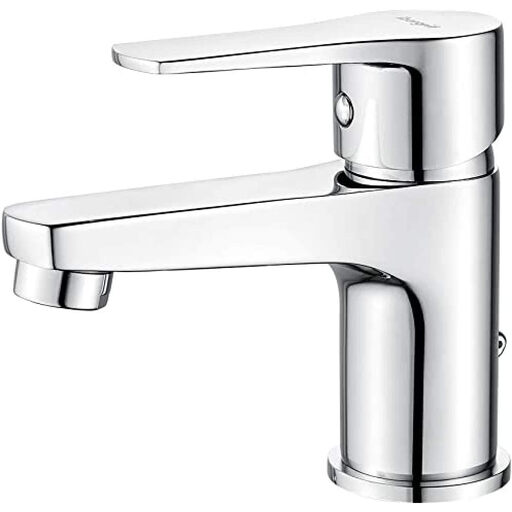
Why this product suits this type of buyer: Designed for a bathroom, this basin tap has a single-hole mounting and a single-lever handle for hot and cold water.
The product details specify standard single-hole mounting and two G3/8-inch hoses. This makes it easier to check that the connections will suit your existing basin before you buy.
According to the product description, the installation kit and two 40-centimetre hoses are included. The flow rate is stated as 10 litres per minute.
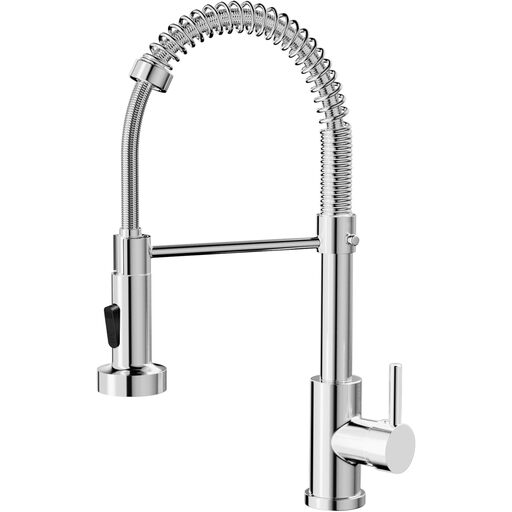
Why this product suits this type of buyer: This kitchen tap combines a high, swivel spout with a pull-out spray head and two selectable spray patterns.
The mounting hole is specified as 33–42 millimetres. This lets you check it will fit your existing worktop before you buy, rather than relying on looks alone.
According to the product description, the body and hose are made from stainless steel or stainless steel materials. Two 600-millimetre connection hoses are listed, along with Stream and Spray modes.
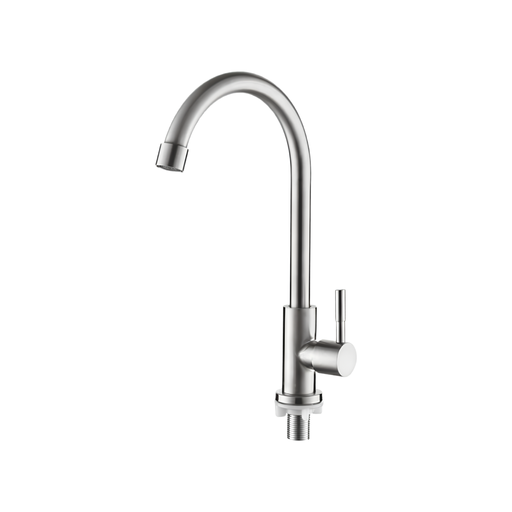
Why this product suits this type of buyer: This cold-water tap is designed for outdoor kitchens, gardens, utility rooms, campervans or a separate sink supplied with cold water only.
It is clearly labelled as a cold-water tap, so you won’t mistake it for a hot-water mixer.
According to the product description, the tap is made from stainless steel, has a 360° swivel spout and comes with an installation kit and G3/8-inch hoses.
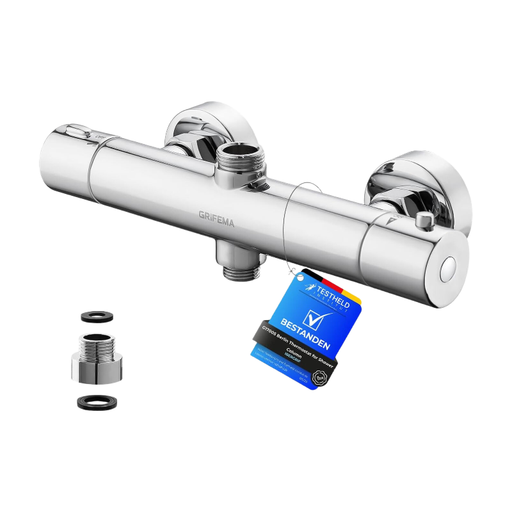
Why this product suits this type of buyer: Designed for wall mounting, this thermostatic shower mixer has two controls and lets you switch between the upper and lower outlets.
The connections are listed as 3/4 inch at the top and 1/2 inch at the bottom. Check these against your existing wall connections before replacing your tap.
According to the product description, the tap has a preset temperature stop at 38 °C and a chrome-plated brass body.
We’ve put together a complete, regularly updated list of products that meet these strict selection criteria and the safety regulations in force in the EU.
Before installation, turn off the water supply and check that all the parts are included. In particular, check the seals, fixing nut, connection hoses and existing isolation valves. Once the tap is fitted, slowly turn the water back on and check all the connections for leaks.
To help your tap last longer:
An open-vented under-sink boiler will usually need a low-pressure tap with three connections. A high-pressure tap may not be suitable for this system. Always check the boiler specifications and details of your existing installation.
A tap’s lifespan depends on water hardness, how often it’s used, its materials, the cartridge and how well it’s maintained. A single figure in years won’t be reliable for every tap. Replaceable cartridges and readily available spare parts can make maintenance easier.
A reduced flow rate can lower water use per minute. The actual saving depends on how long the tap runs, the water pressure and whether the aerator stays clean. Treat the manufacturer’s figures as technical estimates, not guaranteed savings.