
Lieferung heute & morgen

Qualitätsgarantie

Willkommens-Angebote freischalten: KOSTENLOSE Lieferung | Bis zu 80 % RABATT | Kostenlose 30-Tage-JoyPlus-Testphase
App herunterladen
Choosing the right recycling bin seems simple at first glance. In practice, however, many models turn out to be impractical. A wobbly pedal mechanism, a lid that doesn't reliably seal in odours, or a cumbersome cleaning process can complicate daily life. Before you make a decision, it's helpful to know the common pitfalls that often only become apparent after a few weeks of use.
A frequent issue is an undersized or poorly designed pedal mechanism. If the pedal or the mechanism breaks, a hygienic kitchen pedal bin quickly becomes a nuisance. Another drawback is lids that don't close flush. This not only leads to the spread of odours but can also attract pests. Finally, the handling of the inner buckets is crucial: if they get stuck, lack handles, or are made of brittle plastic, emptying and cleaning them becomes a tedious chore.
To make an informed decision, you should examine three key factors. These largely determine the durability, hygiene, and daily convenience of your new waste bin.
The material of the body has a direct impact on stability, ease of cleaning, and appearance.
A well-designed opening mechanism is essential for hygienic use. A pedal bin allows you to open the lid without touching it with your hands—a clear advantage in the kitchen.
The soft-close pedal feature is another key convenience. A dampened mechanism ensures the lid closes slowly and silently. This not only prevents annoying clatter but also protects the material and the mechanism itself, extending the bin's lifespan.
The right size and division are crucial for a functional waste separation system.
Instead of making a one-size-fits-all recommendation, we have identified models tailored to specific needs and household sizes.
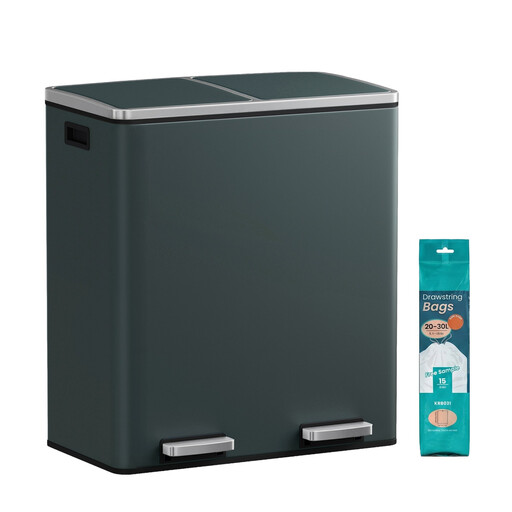
Why This Fits Their Persona: Ideal for families who generate a lot of waste and are looking for a practical solution for separating waste directly in the kitchen. The large volume minimises how often it needs to be emptied.
The sturdy pedals are designed for frequent use. The two separate 30-litre inner buckets made of PP plastic with metal handles make emptying and cleaning straightforward and hygienic.
Large total capacity of 60 litres for efficient waste separation. The soft-close mechanism ensures the lids close silently.
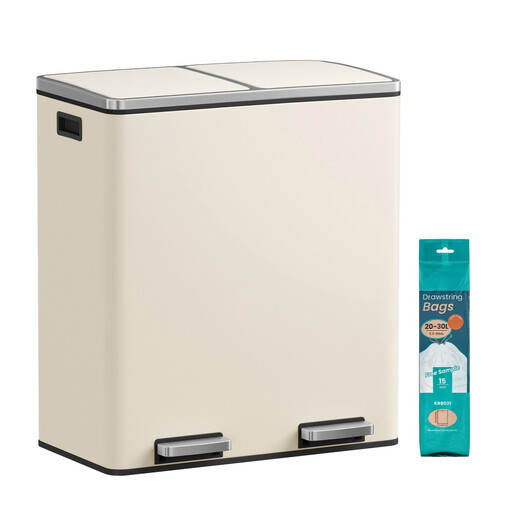
Why This Fits Their Persona: For users who value cohesive aesthetics and see their kitchen bin as part of the interior design. The cream-coloured finish and minimalist design blend seamlessly into modern kitchens.
This model proves that design doesn't have to come at the expense of function. The steel body is durable, and the tight-sealing lids with a soft-close function combine aesthetics with hygiene and quiet operation.
Elegant, understated design in a cream colour. The two compartments allow for discreet waste separation, while the soft-close mechanism ensures a quiet kitchen.
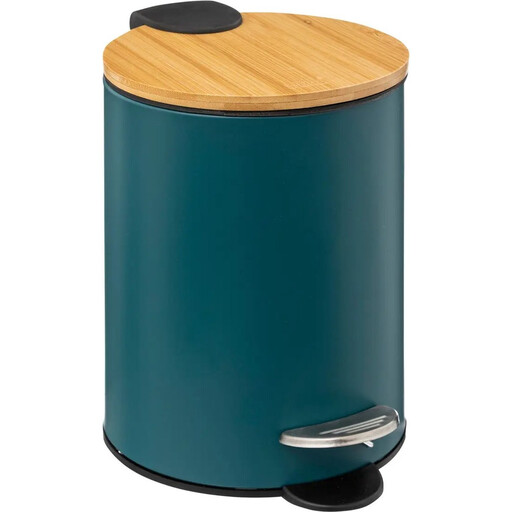
Why This Fits Their Persona: Perfect for the bathroom, guest toilet, or home office. Its compact size and appealing design with a bamboo lid make it a stylish accessory rather than just a necessary utility item.
The soft-close mechanism prevents the lid from slamming shut, which is especially beneficial in quiet spaces like the bathroom. The removable inner bucket with a handle solves the problem of cumbersome cleaning in small bins.
A combination of a compact 3-litre size and a high-end look. The quiet-closing lid and removable bucket offer premium convenience for a bathroom vanity bin.
We've compiled a complete, up-to-date list of products that fully meet these strict selection criteria.
As a rule of thumb, 20 to 30 litres of total volume is usually sufficient for a 1- to 2-person household. A family of 3 to 4 people will likely need 40 to 60 litres. Also, consider how often your waste is collected and how much packaging waste you generate to best configure the compartments for your separation system.
To clean, use a soft microfibre cloth, warm water, and a splash of mild washing-up liquid. Always wipe in the direction of the stainless steel's grain. Afterwards, dry the surface completely with a clean, dry cloth to prevent water spots and streaks. Avoid using harsh cleaners or abrasive sponges.
High-quality soft-close mechanisms are built to last and are designed for tens of thousands of closing cycles. To maximise the life of the damper, avoid forcing the lid shut by hand. Let the mechanism do the work.