Choosing the right kitchen bin is more important than you might think. The wrong solution can disrupt your workflow, take up valuable space, and make proper waste separation difficult. As your Joybuy product recommendation specialist, my goal is to give you a clear overview of the available systems. This article introduces various models and provides guidance to help you find a functional solution for your kitchen that is perfectly tailored to your needs.
What to Consider When Choosing a Kitchen Bin
Before you decide on a model, the following three points will help you define your requirements and narrow down your options.
1. Location and Type: Integrated, Hanging, or Freestanding?
The available space in your kitchen is a key factor in determining the type of bin you should choose.
- Built-in Bins: Also known as integrated waste systems, these are mounted directly inside a base cabinet. They offer a discreet solution that keeps waste out of sight and your floor space clear. Pull-out models are especially popular as they provide easy access.
- Hanging Bins: A hanging model is ideal for kitchens with limited space or for collecting organic waste right at your workstation. It can be attached to a cabinet door or drawer, allowing you to sweep scraps directly from the countertop while cooking.
- Freestanding Bins: The classic choice, offering flexibility in placement and often available in larger capacities and a wider range of designs. Modern models may feature sensors for touchless opening or special odour filters.
2. Capacity and Waste Separation System
The size of your household and your recycling habits are crucial for choosing the right capacity and system.
- Capacity: A single-person household typically requires a smaller capacity (10–20 litres) for general waste than a family of four (40–60 litres).
- Kitchen Recycling Systems: Systems with two or more compartments make it much easier to separate general waste, packaging (recyclables), paper, and organic waste. A dedicated compost bin with a lid, often smaller and separate, helps to minimise odours and maintain hygiene.
3. Material and Special Features
Modern kitchen bins offer more than just simple waste storage.
- Material: Stainless steel is robust, durable, and visually appealing, but it can be prone to fingerprints. Plastic is lighter, often more affordable, and available in many colours. Look for a smooth interior surface for easy cleaning.
- Special Features: Soft-close mechanisms prevent the lid from slamming shut. More technologically advanced solutions, like a food waste disposer, can be an alternative to traditional organic waste disposal by grinding it up and flushing it away through the drain.
Our Top Kitchen Bin Picks
Here is a selection of different systems designed for various needs and kitchen layouts.
For Integrated Recycling: Lovewind Tandem Waste Bin (10 L + 20 L)
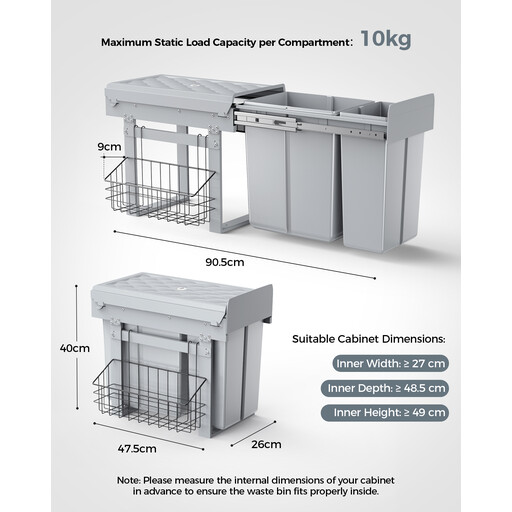
What makes this model stand out: This built-in recycling system is designed for installation in kitchen base cabinets, offering an organised solution for waste separation in a small footprint. Thanks to its compact design, it's suitable for cabinets as narrow as 30 cm.
Advantages:
- Dual-Compartment System: With a 10-litre and a 20-litre container, the system allows for the simultaneous separation of different types of waste.
- Full-Extension Runners: The runners allow the bins to be pulled out completely, making access easy even in deep cabinets.
- Additional Storage: Side-mounted hanging baskets provide space for cleaning supplies or bin liners.
- Easy Installation: The system is delivered pre-assembled and is secured to the cabinet floor with just four screws.
Who is this model for? Ideal for households looking for an invisible, space-saving recycling solution directly inside a kitchen cabinet and who value a tidy, streamlined look.
For Flexible Waste Collection: Hanging Kitchen Bin with Lid
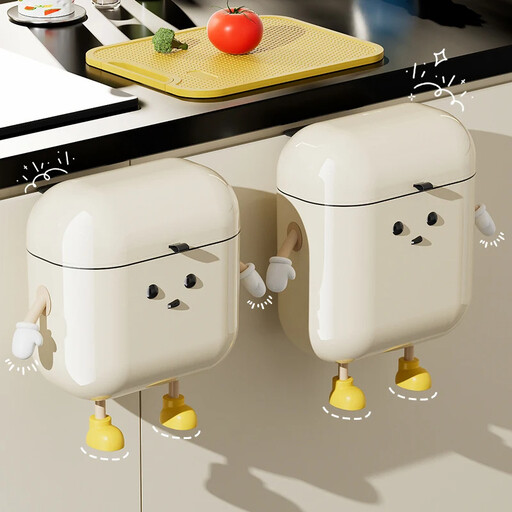
What makes this model stand out: This compact hanging bin is a flexible solution for disposing of waste directly from your countertop. It can be easily hung on cabinet doors or drawers with no installation required.
Advantages:
- Space-Saving Design: Keeps the floor clear and is perfect for small kitchens or as an additional container for organic waste.
- Flexible Mounting: Can be hung on the doors of kitchen cabinets, pantry cupboards, or drawers.
- Convenient for Cooking: Allows you to slide fruit and vegetable scraps directly from the work surface.
- Easy to Clean: Made from PP plastic that is simple to wipe clean.
Who is this model for? Suitable for anyone looking for a simple and mobile compost caddy or wanting to create extra waste capacity in a small kitchen without sacrificing floor space.
For Modern Waste Processing: ROUNY Food Waste Disposer
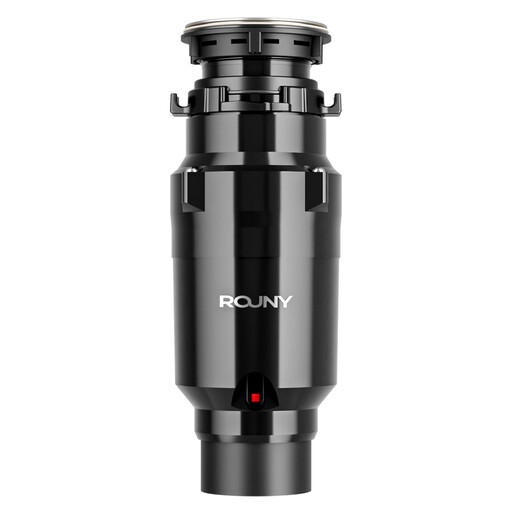
What makes this model stand out: The ROUNY food waste disposer is a high-tech alternative to the traditional compost bin. It is installed under the sink and grinds organic kitchen waste, which is then flushed away through the wastewater system.
Advantages:
- Efficient Grinding: The stainless steel grinding system continuously processes food scraps in its 1000 ml grinding chamber.
- Quiet Operation: With an operating noise level of ≤50 dB, the unit runs comparatively quietly.
- Integrated Safety Features: Overheat and overload protection, along with a resettable safety switch, contribute to safe operation.
- Simplified Installation: The quick-lock mounting system is designed for a straightforward setup under the sink.
Who is this model for? For tech-savvy households that want to reduce the volume of their organic waste, prevent odours, and integrate a modern method of food scrap disposal into their kitchen.
Discover More Options
Haven't found the right solution for your base cabinet yet? In our category for cabinet-mounted bins, you'll find more models that can be seamlessly integrated into your kitchen design.
Discover more cabinet-mounted bins here
Frequently Asked Questions (FAQ)
1. How do you separate waste correctly in the kitchen?
Effective waste separation in the kitchen starts with a suitable recycling system. Ideally, you should use separate containers for general waste, packaging (recyclables), paper, and organic waste. Label the containers to avoid mix-ups. Empty the organic waste bin regularly, in particular, to minimise odours.
2. What size kitchen bin should I get?
The optimal size depends on your household size and cooking habits. As a general guide:
- 1-2 people: 20–30 litres total capacity
- 3-4 people: 40–50 litres total capacity
- 5+ people: 60 litres or more With a recycling system, this capacity is distributed across multiple compartments. The container for general waste is often the largest.
3. What can go into a food waste disposer?
A food waste disposer is typically for soft and organic food scraps like fruit and vegetable peels, coffee grounds, eggshells, and small amounts of cooked leftovers. Hard or fibrous materials such as large bones, oyster shells, corn cobs, and celery stalks, as well as non-organic materials like metal, glass, or plastic, should not be put in, as they can damage the grinding mechanism. Always follow the manufacturer's specific instructions.


