
Lieferung heute & morgen

Qualitätsgarantie

Willkommens-Angebote freischalten: KOSTENLOSE Lieferung | Bis zu 80 % RABATT | Kostenlose 30-Tage-JoyPlus-Testphase
App herunterladen
A kitchen bin needs to do more than simply hold waste. It should fit the available space, be hygienic to use and cope with the amount of waste your household produces each day. Buying mistakes are particularly common when shoppers focus solely on design, capacity or a low price.
A small bin may initially seem practical in a compact kitchen. However, in a multi-person household, it may need emptying frequently. Conversely, a large kitchen bin takes up a lot of floor space and can feel unnecessarily bulky if you produce little waste.
As a general guide:
The total capacity is not the only important factor. Check the external dimensions and the space needed for the lid to open.
A bin with a lid can limit direct access to the waste. However, this does not automatically mean that it will block odours completely. A lid that closes as tightly as possible, a suitable bin bag and regular emptying are all important.
A soft-close bin mainly reduces the noise made when the lid slams shut. A pedal bin also allows you to operate it without much hand contact. This is practical for everyday kitchen use, but it does not replace cleaning or suitable waste storage.
A wall-mounted bin or hanging kitchen bin saves floor space. Before buying, check whether the cupboard door or wall can safely support the intended fixing method. Adhesive hooks require a clean, dry and smooth surface.
For a freestanding model, a removable inner bin is particularly useful. It makes changing the bag easier and prevents liquids from getting directly into the outer container. Without this insert, cleaning can become considerably more time-consuming.
Measure the width, depth and height of the intended space. If the bin is going under a worktop, also check whether the lid can open fully. Slim models, such as a small bin or a foldable door-mounted container, are suitable for narrow alcoves.
A wall-mounted bin can be useful in the kitchen, on the balcony or in the utility room. Pay attention to the maximum load, secure attachment and ensure that the container does not come into contact with hob rings or naked flames.
PP plastic is lightweight, resistant to moisture and can be cleaned with a damp cloth. With a stainless steel bin, the surface is generally durable and visually neutral. Coated metal surfaces should not be cleaned with abrasive cleaners or wire wool, as these can damage the coating.
For bathrooms and cloakrooms, moisture-resistant surfaces and a removable plastic inner bin are practical features. In the kitchen, the container should be cleaned regularly with a mild cleaning product and then dried thoroughly.
A pedal bin can be opened without touching it by hand. The base must remain stable during use. Place the bin on a level surface and avoid overfilling it, particularly in the case of lightweight plastic models.
A kitchen waste separation system should have easily accessible compartments and clearly identifiable openings. Two 15-litre compartments may be sufficient for smaller households, while a 45-litre recycling bin with two levels offers greater capacity. Also check whether the inner bins can be removed separately.
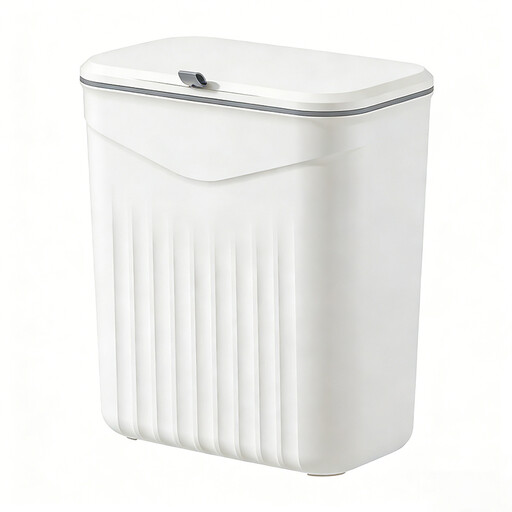
Why this product suits this profile: Measuring 26 × 16 × 23.5 cm, this wall- or door-mounted model is ideal for kitchens with limited floor space. The PP plastic is lightweight and the smooth surface can be cleaned with a damp cloth.
The dimensions and intended hook mounting make the space requirements clear. Before installation, check the door thickness, surface and load-bearing capacity.
Compact dimensions, PP plastic, hinged lid with pull handle and flexible use in the kitchen, dining area or on the balcony.
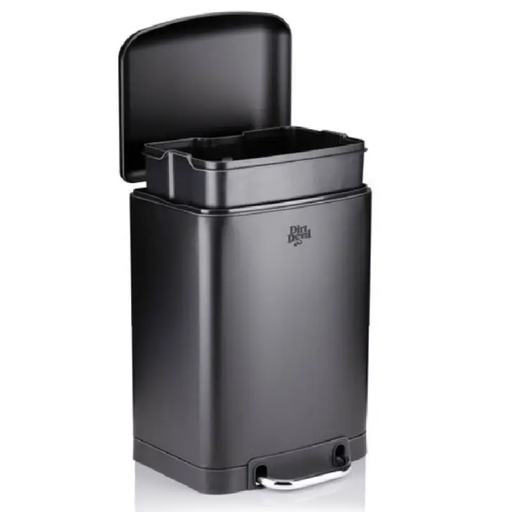
Why this product suits this profile: This 6-litre pedal bin combines a stainless steel body with a soft-close mechanism and removable inner bin. Its format is well suited to smaller kitchens, bathrooms or work areas.
The stated capacity prevents unrealistic expectations about how much it can hold. The removable inner bin makes changing the bag and cleaning easier.
6-litre capacity, stainless steel outer material, foot pedal, soft-close function and removable inner bin.
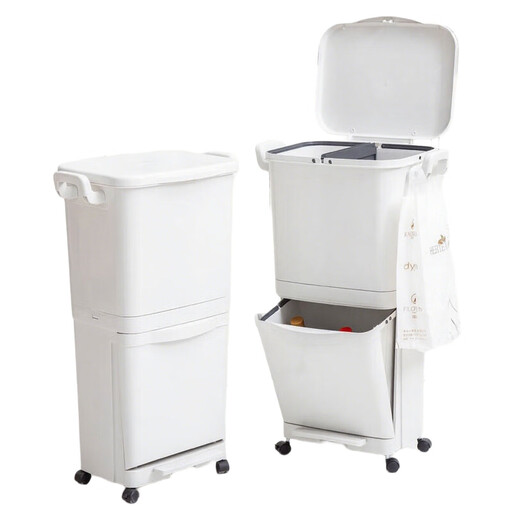
Why this product suits this profile: Two separate sections and a total capacity of 45 litres support the separation of general waste and recyclable materials. Wheels make it easier to move around the kitchen or living area.
The separate compartments are more clearly defined than those of a simple large container. Before buying, consider the available floor space, how smoothly the wheels move and local waste separation requirements.
45-litre total capacity, two compartments, removable inner bins, lid and wheels for more flexible placement.
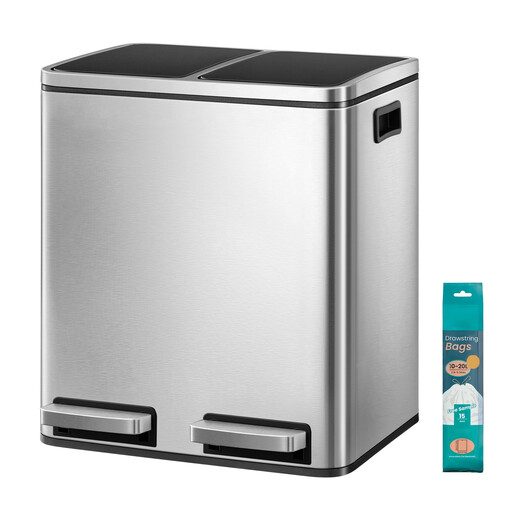
Why this product suits this profile: Two separate 15-litre compartments and individual pedals allow you to separate waste directly during everyday kitchen use. The steel body is designed for indoor use.
The compartment layout makes the usable capacity clear. Separate inner bins and bag holders reduce the effort required when emptying it.
2 × 15 litres, separate pedals, soft-close lids, removable inner bins and side handles.
We have put together a complete, regularly updated list of products that fully meet these strict selection criteria and the safety regulations applicable in the EU.
Not every container designed for kitchen use needs to stay in the kitchen. A cosmetic bin with a 3-litre capacity is suitable for a bathroom or cloakroom. A small metal pedal bin can be used in the office or beside your desk. For food waste, a compost caddy with a 5-litre capacity is a practical choice, provided you follow local disposal requirements and only put in approved waste.
For larger households, a 60-litre stainless steel model with a soft-close lid and removable inner bins may be worth considering. With models of this type, pay particular attention to the footprint, pedal operation and total weight when fully loaded.
For a one- or two-person household, 10 to 30 litres is often sufficient. Families generally need 40 to 60 litres or a waste separation system with several compartments. The right capacity depends on the amount of waste produced, your emptying routine and the available space.
A removable inner bin makes cleaning and changing the bin bag easier. It does not automatically prevent odours or germs, but it supports hygienic handling when the container is emptied and wiped out regularly.
Soft-close is particularly useful if you want to reduce noise or the bin is used frequently. The function relates to how the lid closes. Capacity, stability, material and ease of cleaning remain equally important when making your decision.