
Lieferung heute & morgen

Qualitätsgarantie

Willkommens-Angebote freischalten: KOSTENLOSE Lieferung | Bis zu 80 % RABATT | Kostenlose 30-Tage-JoyPlus-Testphase
App herunterladen
A powerful kitchen blender is an indispensable tool in many households. Whether for preparing nutritious smoothies, creamy soups, or prepping ingredients, the right appliance can significantly simplify daily kitchen tasks. However, the selection is vast, ranging from a simple immersion blender to a multifunctional food processor. This guide will help you understand the different types and make an informed decision tailored to your specific needs.
Before you decide on a model, it's helpful to consider a few basic criteria. These factors will determine how well a device meets your expectations.
The motor's power, measured in watts, is a crucial indicator of a blender's performance.
The range of functions is largely determined by the design and the included accessories.
The materials used affect durability and handling. Glass blending jars are robust, scratch-resistant, and do not absorb odours or stains, but they are heavier than jars made from BPA-free plastic. Look for dishwasher-safe parts to simplify cleaning.
Here we present a selection of appliances that are suited for different use cases due to their distinct features.
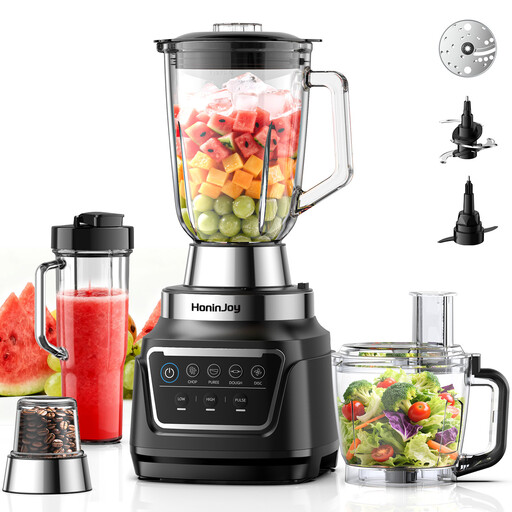
Why this model stands out: The HoninJoy FP12 is a combination of a countertop blender and a food processor, bundling a multitude of tasks into a single device. With a maximum power of 1300 watts and an extensive accessory package, it is designed to handle everything from blending smoothies and crushing ice to preparing dough. The preset programs make it easy to use, especially for novice cooks.
Advantages:
Who is this model for? This appliance is an excellent choice for households and home cooks looking for a versatile all-in-one solution to save space and the cost of multiple individual devices. It is suitable for daily meal prep, from morning smoothies to more elaborate recipes.
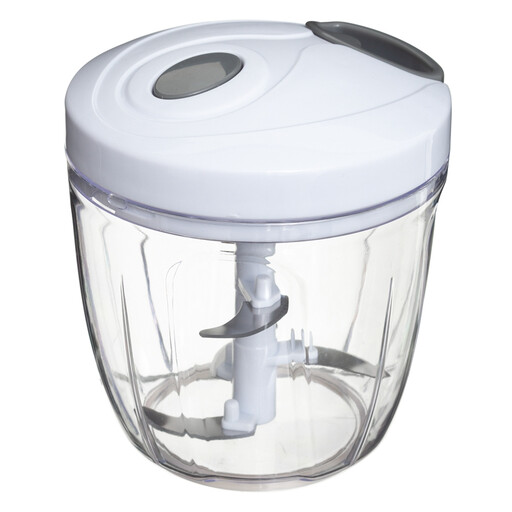
Why this model stands out: This manual chopper operates completely without electricity, offering a simple yet effective solution for smaller kitchen tasks. The pull-cord mechanism allows you to quickly chop vegetables, herbs, or nuts with controllable consistency. With the additional mixing attachment, you can also blend dressings or dips.
Advantages:
Who is this model for? This manual chopper is perfect for individuals who need a quick and straightforward solution for chopping smaller quantities. It's a practical addition to any kitchen and is especially useful for preparing salsa, pesto, or baby food.

Why this model stands out: The Kenwood Triblade XL Pro is a powerful immersion blender set that masters even demanding tasks with its 1200-watt motor. The Triblade system with three blades is designed to purée ingredients particularly finely and evenly. According to the manufacturer, the wider blending foot achieves up to 5 times finer results compared to the Kenwood HDP1 hand blender (tested with almond milk).
Advantages:
Who is this model for? This immersion blender is aimed at ambitious home cooks who need a powerful and precise tool for a variety of techniques such as puréeing, emulsifying, and chopping. Thanks to its extensive accessories, it is a flexible alternative to a large food processor.
The selection presented here covers common use cases. However, if you are looking for a device for a very specific purpose or simply want to compare a wider range of models, you can find more alternatives in our Choppers & Blenders category.
1. What is the difference between a countertop blender and an immersion blender? A countertop blender consists of a motor base and a jar that sits on top. It is well-suited for larger quantities and tasks like making smoothies or crushing ice. An immersion blender (or hand blender) is a handheld device used directly in pots, bowls, or beakers. It is ideal for puréeing soups directly in the pot or for preparing smaller amounts of sauces and dips.
2. How many watts should a good kitchen blender have? The required power depends on the intended use. For puréeing soft ingredients, models with 300–600 watts are sufficient. For regularly crushing ice, frozen fruits, or nuts, a kitchen blender should have at least 1000 watts of power to achieve a fine consistency and avoid overloading the motor.