
Lieferung heute & morgen

Qualitätsgarantie

Willkommens-Angebote freischalten: KOSTENLOSE Lieferung | Bis zu 80 % RABATT | Kostenlose 30-Tage-JoyPlus-Testphase
App herunterladen
The search for the right kitchen blender can quickly become overwhelming. Manufacturers advertise ever-increasing wattages and extensive accessory packages. But not every feature that sounds impressive on paper proves useful in daily life. Often, these exaggerated promises lead to disappointment and an appliance that ends up unused in a cupboard after a short time.
As your Joybuy Product Recommendation Officer, I'll help you recognise the common pitfalls and make an informed decision. We'll focus on the objective features that truly matter.
The 3 Most Common Blender-Buying Traps:
To avoid a bad buy, you should focus on a few crucial technical features. These determine whether a device will meet your daily kitchen needs.
The required power depends directly on your intended use. It's not necessary to purchase a high-performance machine for the occasional puréeing of soups.
The material of the components has a direct impact on durability, safety, and hygiene.
Instead of being dazzled by the number of accessories, check their utility and quality.
Here are some models tailored to specific use cases that avoid the aforementioned traps.
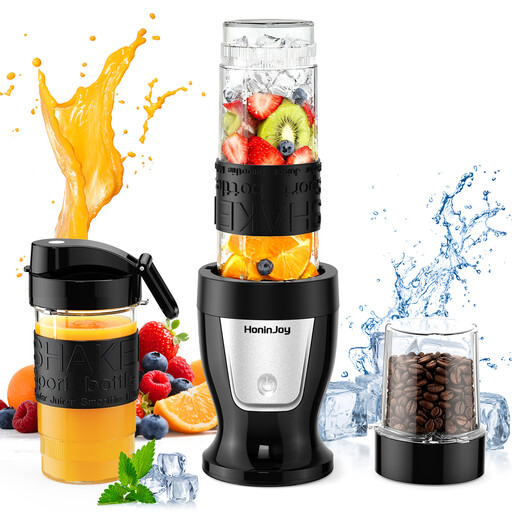
Why This Fits Their Persona: Ideal for individuals seeking a straightforward, cost-effective solution for daily smoothies. The appliance is compact, fitting well in small kitchens or offices.
Avoids the "all-in-one" trap by focusing on its core function. Instead of unnecessary extras, it offers two useful to-go cups and a grinding cup, enhancing its practical value.
The 650-watt power is sufficient for most smoothies. The dishwasher-safe, BPA-free cups make cleaning significantly easier.
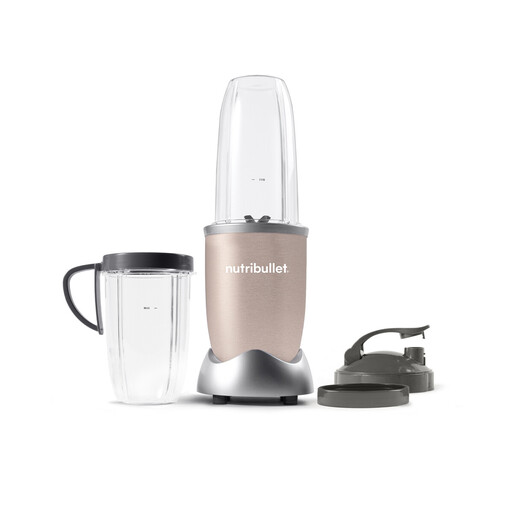
Why This Fits Their Persona: Perfect for health-conscious users who value exceptionally smooth, nutrient-rich results and want to process tough ingredients like nuts, seeds, or kale.
Debunks the wattage myth by demonstrating that 900 watts, combined with an optimised blade system (extraction blades), achieves higher efficiency than many appliances with nominally more power.
The powerful 900-watt motor and specialised blades effectively break down cellular structures for high nutrient availability. Its simple operation and cleaning are further advantages.
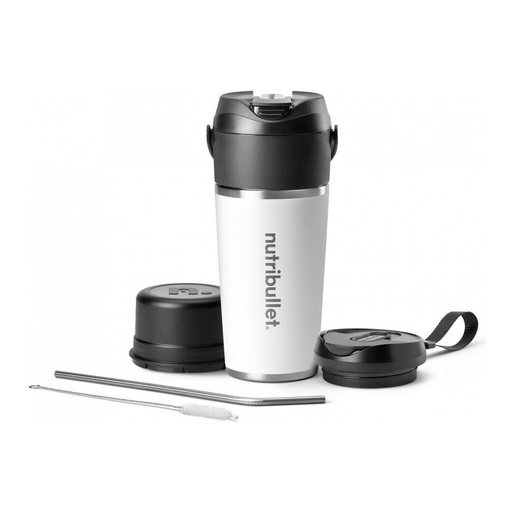
Why This Fits Their Persona: For commuters, athletes, and travellers who don't want to miss out on freshly made smoothies on the go. This cordless blender is designed for maximum portability.
This device doesn't promise the performance of a countertop blender. It's an honest, specialised portable blender whose value lies in its mobility and thoughtful design.
Rechargeable via USB-C for easy charging anywhere. The double-walled stainless steel cup acts as an insulated bottle, keeping drinks cold for longer. Blend and drink from the same vessel.
We have compiled a complete, real-time updated list of products that fully meet these strict selection criteria and the German safety regulations.
The required wattage depends on the intended use. For soft fruits and liquids, 300–600 watts are often sufficient. If you plan to regularly process frozen fruits, ice cubes, or hard vegetables like carrots, models with 600–1000 watts are a more solid choice, as they blend ingredients more finely and put less strain on the motor.
No, this is a critical safety warning. Never blend hot liquids in a sealed blending container, which is common with many personal or smoothie blenders. The heat creates high pressure that can cause the container to burst. For hot soups, exclusively use an immersion blender (ideally one with a stainless steel wand) directly in the pot, or a countertop blender with a heat-resistant glass jar and a vented lid to allow steam to escape.
The easiest method is the self-cleaning function. Immediately after use, fill the blender jar halfway with warm water and add a drop of dish soap. Run the blender on its highest setting for about 30 seconds. Then, rinse it out, and the jar is clean. Also, check if the removable parts (jar, blade assembly, lid) are dishwasher-safe according to the manufacturer's instructions. This significantly simplifies a thorough cleaning.