
Lieferung heute & morgen

Qualitätsgarantie

Willkommens-Angebote freischalten: KOSTENLOSE Lieferung | Bis zu 80 % RABATT | Kostenlose 30-Tage-JoyPlus-Testphase
App herunterladen
A high-performance kitchen blender can significantly simplify food preparation, from nutritious morning smoothies to creamy evening soups. But the market is crowded and saturated with marketing claims that often create more confusion than clarity. Many buyers invest in an appliance that ends up gathering dust in a cupboard because it's impractical, difficult to clean, or unsuitable for its intended purpose.
This guide will help you navigate the common pitfalls. We focus on the objective criteria that truly matter, so you can make an informed decision and choose a blender that meets your specific needs.
Before we dive into the technical details, let's look at three common marketing traps that often lead to disappointment:
To find the right kitchen blender, you should focus on a few crucial technical parameters. These will help you objectively evaluate a device's performance and durability.
As mentioned, wattage alone is not a reliable indicator. Look at the complete package:
The materials used to make the blender are crucial for both health and durability.
The right type of blender depends on your cooking habits.
Here are some recommendations tailored to different user profiles and their specific requirements.
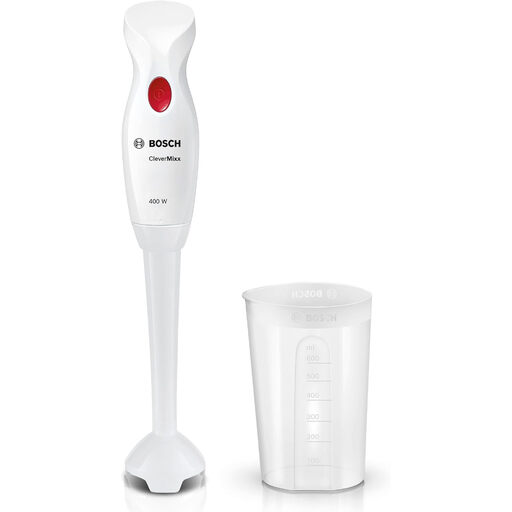
Why This Fits Their Persona: Ideal for those who need a quick, straightforward solution for puréeing soups, sauces, or dips. Its lightweight body and ergonomic design make it comfortable to handle, even during prolonged use. It's space-saving and ready for immediate action.
This device is a specialised immersion blender, avoiding the 'all-in-one' trap. The detachable, dishwasher-safe blending shaft directly addresses the problem of cleaning effort.
Lightweight (600 g) and ergonomic; QuattroBlade system for efficient blending; low-splash operation thanks to a special blending shaft design.
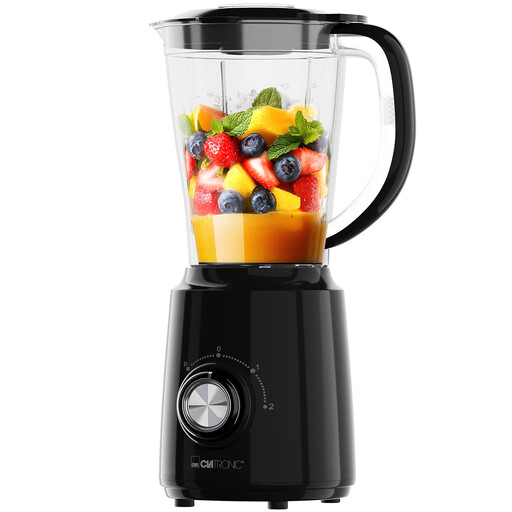
Why This Fits Their Persona: A solid choice for families who regularly prepare smoothies, shakes, or soups. The 1.5-litre jar offers ample capacity, and the ice-crush function is practical for cold drinks in the summer. A functional all-rounder for daily use.
This model sidesteps the wattage myth by combining a moderate 500-watt power with an effective 4-blade stainless steel system. The BPA-free blender jar and removable blades for cleaning also solve material safety and cleaning concerns.
Large capacity (1.5 litres); dedicated ice-crush function; removable blade assembly for easy cleaning.

Why This Fits Their Persona: For those who want to do more than just blend. This appliance combines a fully-fledged food processor with a blending function, meat grinder, and other attachments. It's ideal for home bakers and cooks who need to knead dough, whip cream, and simultaneously have a powerful blender for other preparations.
This model is an example of how an 'all-in-one' solution can work. It offers a powerful motor and dedicated, robust attachments for each function, rather than making weak compromises.
True multifunctionality (kneading, mixing, blending, meat grinding); large 6-litre stainless steel bowl; 8 speed settings plus a pulse function for precise control.

Why This Fits Their Persona: Specially designed for users who regularly make their own plant-based milk from nuts, soy, or oats. The integrated heating function allows for the preparation of warm soy milk or soups, while the automatic programs simplify the process.
This specialised appliance is the answer to the 'all-in-one' trap for this specific use case. Instead of achieving unsatisfactory results with a regular stand blender, it offers optimised programs and a heating function. The self-cleaning feature also solves the cleaning problem.
Specialised programs for plant-based milk; integrated heating, keep-warm, and self-cleaning functions; no filtering required, according to the manufacturer.
We have compiled a complete, up-to-date list of products that fully meet these strict selection criteria and German safety regulations.
Wattage isn't the only criterion. For simple tasks like puréeing cooked vegetables or soft fruits, models with 300 to 500 watts are often sufficient. For regularly making smoothies with frozen fruit or ice cubes, 500 to 1000 watts is a good benchmark. If you want to process very hard ingredients like nuts into butter or purée fibrous vegetables until they are very fine, a model with over 1000 watts can be advantageous, provided the blade design and jar shape are also high-quality.
No, caution is advised here. Always check the manufacturer's instructions. Glass jars are generally suitable for hot liquids. With plastic jars, even if they are BPA-free, there is a risk they could warp or get damaged if not explicitly designed for high temperatures. A vented lid is important to allow steam pressure created by the heat to escape. A safe alternative is often an immersion blender with a stainless steel shaft, which allows you to blend directly in the pot.
A smoothie maker, also known as a personal blender, is typically smaller and designed for preparing single servings. Its blending jar often doubles as a travel cup for on-the-go use. It is compact and practical for a quick blender for smoothies. A stand blender is larger, more powerful, and more versatile. It is suitable for larger quantities, can process a wider range of ingredients, and often offers more features, such as programs for soups or crushing ice.